

When people start vaping, they often think they’re making a safer choice-especially if they’re trying to quit smoking. But the truth is, vaping isn’t harmless. It’s not the same as smoking cigarettes, but it’s not safe either. Your lungs aren’t designed to inhale vaporized chemicals, no matter how sweet the flavor or how clean the device looks. Over the past decade, research has piled up showing that vaping directly harms lung health, and the damage isn’t always obvious right away.
What’s Really in Vape Aerosol?
Most e-cigarettes heat a liquid made of propylene glycol and vegetable glycerin, along with nicotine and flavorings. At first glance, that sounds harmless. But when you heat these substances, they break down into something far more dangerous. A study from the University of North Carolina found that the more ingredients in the e-liquid, the more toxic the vapor becomes. Even the base chemicals-propylene glycol and vegetable glycerin-are toxic to lung cells when inhaled repeatedly.
The aerosol doesn’t stop there. It carries volatile organic compounds like benzene, a chemical found in car exhaust. It also contains heavy metals-nickel, tin, and lead-that come from the heating coils inside the device. And then there are flavorings. Diacetyl, once used in butter-flavored popcorn, was linked to a rare but severe lung disease called bronchiolitis obliterans, or "popcorn lung." While diacetyl has been banned in many countries, other flavoring chemicals still in use have similar effects. The American Lung Association lists acetaldehyde, acrolein, and formaldehyde as common toxins in vape aerosol-all known to cause lung damage and increase cancer risk.
How Vaping Affects Your Lungs
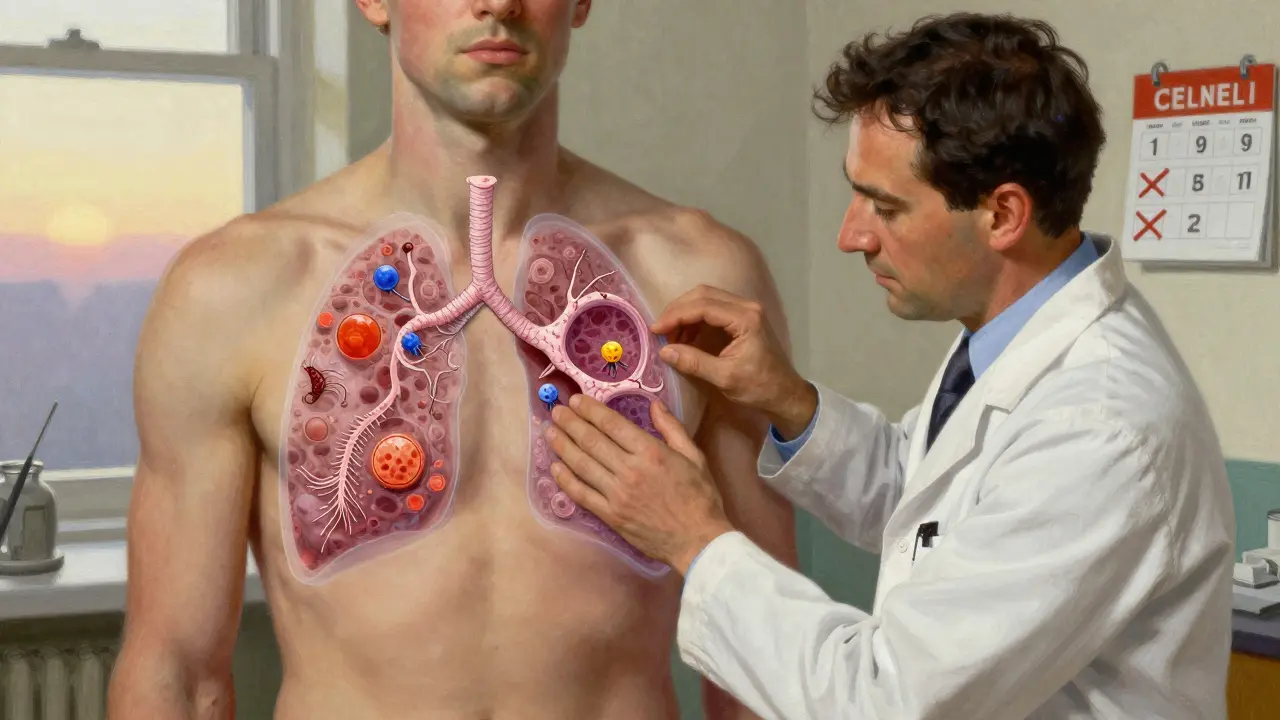
Your lungs have a natural defense system. Tiny hairs called cilia sweep out dust and germs. Immune cells patrol for invaders. Vaping disrupts both. Research from the American Thoracic Society shows that e-cigarette vapor suppresses these defenses. In one study, lung cells exposed to vape aerosol were 30% less able to fight off bacteria like Staphylococcus aureus and Streptococcus pneumoniae. That means vapers are more likely to catch pneumonia, bronchitis, or other infections-and they’re more likely to get seriously sick from them.
Even if you don’t get an infection, vaping causes inflammation. Chronic airway inflammation doesn’t feel like a cold. It shows up as a persistent cough, wheezing, or shortness of breath during light activity. A 2025 report from Lyracore confirmed that nearly 40% of regular vapers report these symptoms-even if they’ve never smoked tobacco. This inflammation isn’t temporary. It can lead to scarring and stiffening of lung tissue over time, reducing your ability to take deep breaths.
The EVALI Crisis: A Wake-Up Call
In 2019, the U.S. saw a sudden surge in severe lung injuries linked to vaping. Over 2,800 people were hospitalized. At least 68 died. This outbreak, called EVALI (E-cigarette or Vaping Use-Associated Lung Injury), shocked public health officials. The cause? Vitamin E acetate, a thickening agent added to THC vape cartridges. It wasn’t in nicotine vapes, but it was everywhere in the black market.
What made EVALI so dangerous was how fast it struck. People went from feeling fine to struggling to breathe in days. CT scans showed their lungs filled with oily fluid. Some needed ventilators. Others never recovered full lung function. The CDC confirmed vitamin E acetate was the main culprit. But EVALI wasn’t just about illegal products. It revealed a bigger truth: we don’t fully understand how most vape chemicals behave in the lungs. Even legal products carry unknown risks.

Vaping and Chronic Lung Disease
One of the most alarming findings in recent years is the link between vaping and COPD-chronic obstructive pulmonary disease. A major NIH study published in 2024 analyzed data from over 120,000 adults. It found that current e-cigarette users had a 48% higher risk of developing COPD compared to people who never vaped. That’s not a small increase. That’s the same risk level as someone exposed to secondhand smoke for years.
Traditional cigarette smokers still have a higher risk-about 3 to 4 times greater-but vaping isn’t just a "light" version. It’s a different kind of damage. While smoking burns tar into the lungs, vaping coats them in fine particles and chemicals that trigger inflammation and cell death. Over time, that leads to the same outcome: narrowed airways, mucus buildup, and reduced oxygen flow.
Even more concerning? The effect on young adults. The National Academies of Sciences found that teens and young adults who vape are more likely to develop asthma, have more asthma attacks, and suffer from chronic coughing. Many of them had never smoked. Their lungs were damaged before they ever touched a cigarette.
Is Vaping Better Than Smoking?
Yes, vaping is less harmful than smoking. That’s not up for debate. The World Health Organization and the U.S. Surgeon General both agree: if you’re a current smoker, switching completely to vaping reduces your exposure to tar, carbon monoxide, and dozens of cancer-causing chemicals. For some, it’s a real step toward quitting nicotine altogether.
But here’s the catch: the goal shouldn’t be to swap one harmful habit for another. Vaping introduces its own set of risks-especially to lung function. And for non-smokers, especially teens, vaping isn’t a harm reduction tool. It’s a gateway. The same flavorings that make vaping appealing to young people are the ones that damage lung tissue. A 2025 study showed that 62% of high school vapers had no intention of smoking cigarettes-but 18 months later, 37% had tried traditional cigarettes.
What Symptoms Should You Watch For?
If you vape, your lungs might be telling you something. Pay attention to these signs:
- A cough that won’t go away, even after weeks
- Shortness of breath during normal activities-like walking up stairs
- Chest tightness or pain that comes and goes
- Frequent bronchitis or pneumonia
- Decreased stamina during exercise
These aren’t "just allergies" or "getting out of shape." They’re warning signs. Lyracore’s 2025 report recommends that anyone with these symptoms, even mild ones, see a pulmonary specialist. Early detection can prevent irreversible damage.
Can Your Lungs Heal?
The good news? Some damage is reversible. If you quit vaping, your lung inflammation can begin to calm down within weeks. Cilia start regrowing. Immune function improves. One study found that after three months without vaping, participants showed measurable improvements in lung function tests.
But not all damage fades. If you’ve been vaping for years, especially with high-nicotine or THC products, you may have scarring or stiffening of lung tissue that won’t go away. That’s why timing matters. The sooner you stop, the better your chances.
There’s no magic cure. No supplement or inhaler will undo the harm. The only proven step is quitting. And if you’re using vaping to quit smoking, experts now say the safest path is to quit both. Nicotine replacement therapy, counseling, and FDA-approved medications like varenicline are more effective and carry far less lung risk than continuing to vape.
What’s the Bottom Line?
Vaping isn’t a safe alternative. It’s a different kind of risk. It doesn’t burn your lungs like cigarettes. Instead, it slowly poisons them with chemicals your body wasn’t meant to inhale. The evidence is clear: vaping causes airway inflammation, weakens your immune defenses, raises your risk of COPD and asthma, and can lead to sudden, life-threatening lung injury.
If you vape, you’re not just risking your own health-you’re normalizing a habit that’s reshaping lung health in a generation. The next time someone says "vaping is harmless," ask them this: Do you really want your lungs to be the lab for an experiment no one fully understands?
Can vaping cause permanent lung damage?
Yes. While some inflammation improves after quitting, long-term vaping can lead to scarring and stiffening of lung tissue, which is irreversible. Conditions like bronchiolitis obliterans and early-stage COPD may not show symptoms until significant damage has already occurred.
Is vaping safer than smoking?
For current smokers, switching completely to vaping reduces exposure to tar and many carcinogens, making it less harmful than continuing to smoke. But vaping is not risk-free. It still introduces toxic chemicals into the lungs and carries its own risks, including COPD, asthma, and immune suppression. The safest choice is to quit nicotine entirely.
Does vaping affect non-users nearby?
Yes. Secondhand vape aerosol contains nicotine, ultrafine particles, and toxic chemicals like formaldehyde and acrolein. The U.S. Surgeon General has confirmed that these emissions pose health risks to bystanders, especially children and people with asthma or lung conditions.
Can vaping lead to smoking cigarettes?
Research shows it can. Studies tracking teens who vape found that nearly 4 in 10 tried cigarettes within two years. Nicotine addiction from vaping makes the brain more receptive to other forms of tobacco. This is especially concerning for young people whose brains are still developing.
What should I do if I vape and have breathing problems?
See a pulmonary specialist. Persistent cough, shortness of breath, or frequent respiratory infections aren’t normal-even if you think they’re "just from vaping." Early evaluation can catch damage before it becomes permanent. Stop vaping immediately and tell your doctor your full vaping history, including device type and frequency.
If you’re trying to quit vaping, you’re not alone. Support is available through counseling, nicotine replacement therapy, and apps designed for quitting. Your lungs will thank you-for decades to come.
Mayank Dobhal
February 8, 2026 AT 21:00Savannah Edwards
February 10, 2026 AT 05:51AMIT JINDAL
February 11, 2026 AT 04:46Gouris Patnaik
February 11, 2026 AT 11:31Ashley Hutchins
February 11, 2026 AT 18:51Lakisha Sarbah
February 12, 2026 AT 06:05Ariel Edmisten
February 14, 2026 AT 03:44Mary Carroll Allen
February 15, 2026 AT 14:03Heather Burrows
February 17, 2026 AT 02:00Ritu Singh
February 17, 2026 AT 14:44Mark Harris
February 18, 2026 AT 23:27Niel Amstrong Stein
February 20, 2026 AT 05:17Paula Sa
February 20, 2026 AT 22:11Joey Gianvincenzi
February 22, 2026 AT 04:23Amit Jain
February 23, 2026 AT 14:14