

Thiazide Diuretic & Gout Risk Calculator
Your Risk Assessment
Additional Risk Factors
If you're taking a thiazide diuretic like hydrochlorothiazide for high blood pressure, you might not realize it could be raising your risk of gout. This isn't a rare side effect-it's common, well-documented, and often overlooked. About 12 to 15% of people on these medications develop higher-than-normal uric acid levels. For 1 to 2%, that leads to actual gout attacks-sudden, intense pain in the big toe, ankle, or knee that can last days or weeks.
How Thiazide Diuretics Raise Uric Acid
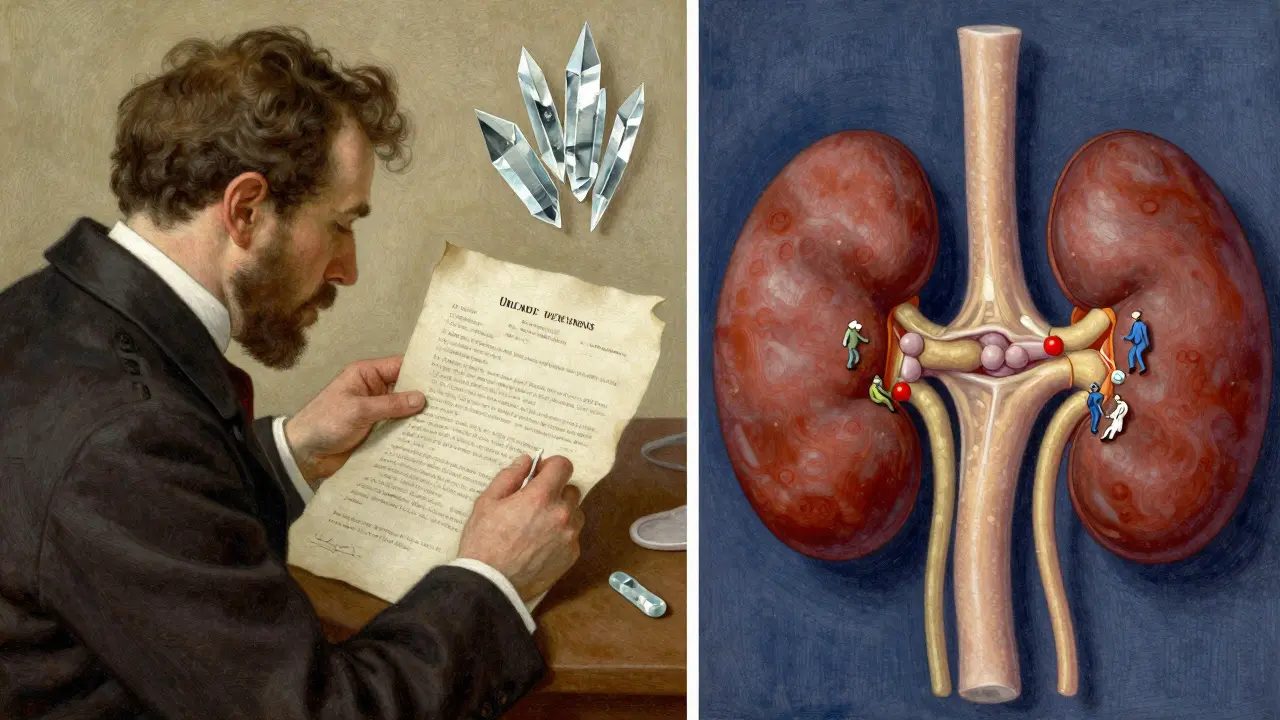
Thiazide diuretics, including hydrochlorothiazide and chlorthalidone, work by helping your kidneys flush out extra sodium and water. That lowers blood pressure. But here’s the catch: they also interfere with how your kidneys handle uric acid. Normally, your kidneys filter uric acid out of your blood and excrete it in urine. Thiazides mess with that process.
The key players are transporters in the kidney tubules-OAT1 and OAT4. These are like tiny doors that move substances in and out of kidney cells. Thiazides sneak into these doors and swap places with uric acid. Instead of uric acid being pushed out, it gets pulled back into your bloodstream. This happens within just 3 to 7 days of starting the medication. Studies show serum uric acid levels can rise by 6% to 21% compared to baseline. The higher the dose, the worse it gets.
This isn’t just a temporary spike. If you stay on the drug, uric acid stays elevated. And once it crosses 6.8 mg/dL-the saturation point in blood-uric acid crystals start forming in your joints. That’s when gout hits.
Who’s Most at Risk?
Not everyone on thiazides gets gout. But some people are far more likely to. If you already have high uric acid (over 7.0 mg/dL in men, over 6.0 mg/dL in women), a past gout attack, or a family history of gout, you’re in the high-risk group. Obesity, kidney disease, and heavy alcohol use also stack the odds.
Research from 2024 tracked over 247,000 people with high blood pressure but no prior gout. Those who took thiazides for more than 180 days had a 41% higher chance of needing gout medication compared to those who didn’t. The risk didn’t jump overnight-it built up slowly. After six months, the chance of a gout flare nearly doubled.
Even more telling: 18.7% of people on thiazides ended up needing gout drugs like allopurinol or colchicine within two years. That’s nearly one in five. Compare that to people on other blood pressure meds-only 14.2% needed them. That gap matters.
Is Chlorthalidone Worse Than Hydrochlorothiazide?
For years, doctors assumed chlorthalidone was riskier than hydrochlorothiazide because it’s stronger and lasts longer. But a 2019 study compared them directly. The results? Both raised uric acid to similar levels. Both carried nearly identical risks of triggering gout. So if your doctor switches you from HCTZ to chlorthalidone thinking it’s safer for your joints, they’re wrong. The risk stays the same.
That’s important because chlorthalidone is often used for long-term blood pressure control. It’s not a “better” version of HCTZ-it’s a different tool with the same side effect profile.
Gout Symptoms Don’t Change-But Diagnosis Often Does
Thiazide-induced gout looks just like any other gout. The big toe swells, turns red, and feels like it’s on fire. The pain is sharp, throbbing, and often hits at night. You might also notice swelling in the ankle, knee, or fingers. Blood tests will show uric acid above 6.8 mg/dL in 90% of cases.
The problem? Many doctors don’t connect the dots. If you’ve been on HCTZ for years and suddenly get a gout flare, they might treat the flare without questioning the drug. That’s a prescribing cascade: the diuretic causes high uric acid, which causes gout, which leads to more drugs (allopurinol, colchicine), which don’t fix the root cause.
According to the American College of Rheumatology, you shouldn’t start urate-lowering therapy unless your uric acid is consistently above 8.0 mg/dL and you’ve had multiple gout attacks. But if the diuretic is still in your system, your levels will stay high. You’ll end up on lifelong meds for a problem caused by a blood pressure pill.
What Should You Do?
If you’re on a thiazide and have gout or high uric acid, don’t stop cold turkey. High blood pressure is dangerous too. But you need a plan.
Step 1: Get your uric acid checked. If you haven’t had a test in the last year, ask for one. Baseline levels are critical. A 2022 study found that only 85% of doctors with gout patients actually checked uric acid before starting thiazides. You shouldn’t be in the 15% who weren’t.
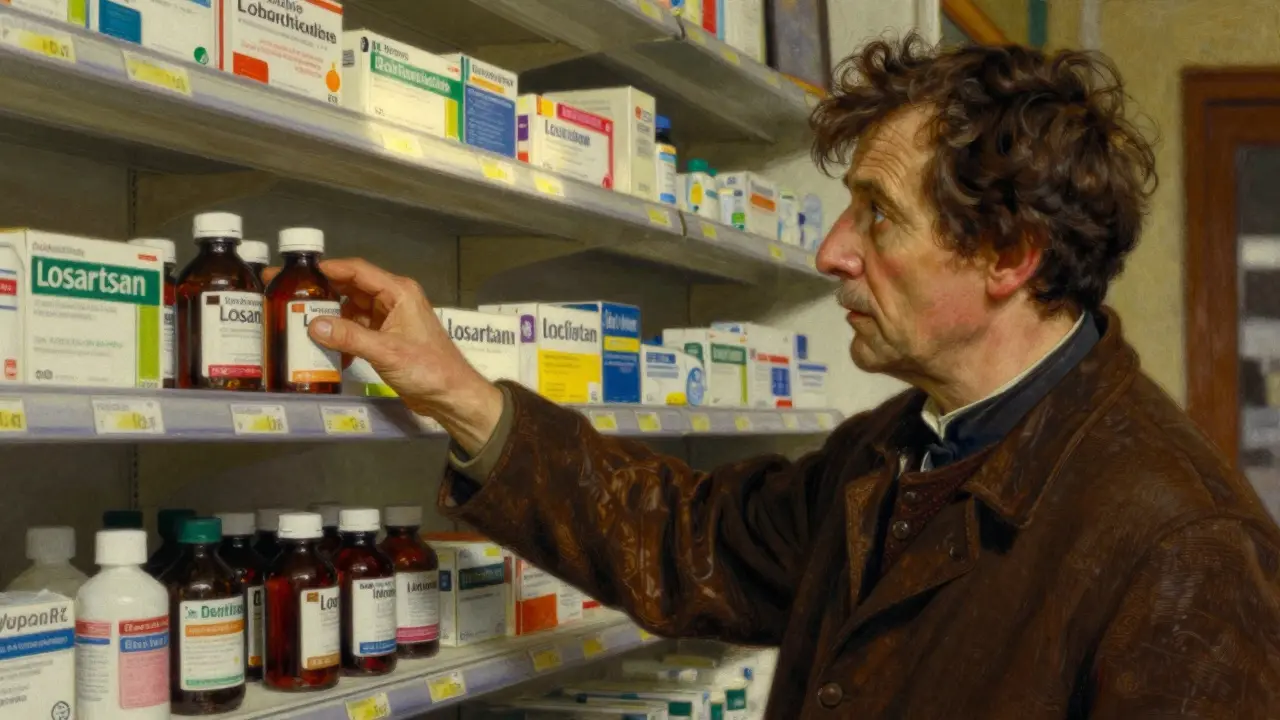
Step 2: Talk about alternatives. Not all blood pressure meds raise uric acid. Losartan (an ARB) actually helps your kidneys flush out more uric acid. Calcium channel blockers like amlodipine have no effect on uric acid. Spironolactone, a potassium-sparing diuretic, doesn’t interfere with urate transporters at all. These are viable options.
Yes, generic thiazides cost about $4 for 90 tablets. Losartan and amlodipine cost more-25% to 30% higher. But if you’re spending hundreds a year on gout meds, pain relief, and missed work, the math changes.
Step 3: Lifestyle tweaks matter. Reducing alcohol, especially beer and liquor, cuts gout flare risk by up to 50%. Avoid organ meats, shellfish, and sugary drinks. Stay hydrated. Losing even 5% of your body weight lowers uric acid. The European League Against Rheumatism recommends keeping uric acid below 6.0 mg/dL if you’ve had gout. That’s harder to do if you’re still on thiazides.
When Thiazides Are Still the Best Choice
There are cases where thiazides are still the right call. If you have heart failure, kidney disease, or are over 65, they’re often the most effective first-line option. The American College of Cardiology and European Society of Cardiology both still list them as preferred for uncomplicated hypertension.
But they say this: Don’t use them alone if you have gout or uric acid above 8.0 mg/dL. If you must use them, pair them with urate-lowering therapy from the start. Don’t wait for the first flare.
And here’s the reality: most people with gout don’t know their uric acid levels. Most doctors don’t screen unless they’re told to. You have to ask. You have to push.
What’s Next?
Scientists are working on new diuretics that don’t mess with uric acid. A phase II trial (NCT04892105) is testing a sodium-chloride cotransporter inhibitor that lowers blood pressure without triggering hyperuricemia. Results won’t be out until late 2025.
In the meantime, the best defense is awareness. If you’re on hydrochlorothiazide or chlorthalidone and have joint pain, ask your doctor: Could this be gout? Could my medication be causing it? Don’t assume it’s just aging or overuse. It might be the pill you take every morning.
High blood pressure needs treatment. But it shouldn’t cost you your mobility, your sleep, or your quality of life. You don’t have to choose between lowering your pressure and avoiding gout. You just need the right conversation-and the right medication.
Can thiazide diuretics cause gout even if I’ve never had it before?
Yes. Even if you’ve never had gout, thiazide diuretics can raise your uric acid enough to trigger your first attack. About 1 to 2% of people on these drugs develop gout within a few years. The risk increases with longer use, higher doses, and other factors like obesity or kidney problems.
How soon after starting thiazides does uric acid rise?
Uric acid levels can rise within 3 to 7 days of starting a thiazide diuretic. This isn’t a slow build-it happens fast. That’s why doctors should check baseline levels before prescribing. If you develop joint pain in the first few weeks, don’t ignore it.
Is chlorthalidone more likely to cause gout than hydrochlorothiazide?
No. Studies show both drugs raise uric acid to similar levels and carry nearly identical risks of triggering gout. Chlorthalidone isn’t stronger in this regard-it’s just longer-lasting. The risk is the same.
What blood pressure meds don’t raise uric acid?
Losartan (an ARB) actually helps lower uric acid by blocking its reabsorption in the kidneys. Calcium channel blockers like amlodipine and diltiazem have no effect on uric acid. Potassium-sparing diuretics like spironolactone also don’t raise uric acid. These are better options if you have gout or high uric acid.
Should I stop taking my thiazide if I develop gout?
Don’t stop on your own. Talk to your doctor. Stopping suddenly can spike your blood pressure. Instead, ask about switching to a different medication like losartan or a calcium channel blocker. You can manage both conditions at once-just not with the same drug.
Can lifestyle changes help if I’m on thiazides?
Yes. Cutting out alcohol, especially beer, can reduce gout flares by up to 50%. Avoiding organ meats, shellfish, and sugary drinks also helps. Staying hydrated and losing weight lowers uric acid. These changes won’t cancel out the drug’s effect, but they can reduce how often you flare.
Wesley Pereira
January 5, 2026 AT 06:39So let me get this straight - we’re giving people a $4 pill that turns their toes into lava lamps, and the fix is to switch to a $50 pill? 💸
Meanwhile, my doc just shrugs and says ‘take colchicine.’ Like, cool, I’ll just keep paying for painkillers while my BP stays down. Classic medical capitalism.
And don’t even get me started on how no one checks uric acid before prescribing HCTZ. It’s like handing out matches at a fireworks factory and calling it ‘preventative care.’
Also, chlorthalidone isn’t ‘stronger’ - it’s just the same poison with a longer shelf life. Thanks, Big Pharma, for the rebranding.
I’ve been on HCTZ for 5 years. My first gout flare was at 3am. I thought I’d slept wrong. Turns out, my kidneys were busy rejecting uric acid like it owed them money.
Now I’m on losartan. No flares. No extra meds. Just a slightly higher co-pay. Worth it.
Doctors need to stop treating symptoms like they’re optional add-ons. This isn’t ‘side effect’ - it’s a direct mechanism. Read the damn pharmacokinetics.
Also, why is ‘lifestyle changes’ always the last slide? Like, ‘oh btw, stop drinking beer and lose weight’ - said while handing you a script for a drug that makes your joints scream.
Someone should make a meme: ‘When your BP med is also your gout trigger.’ Caption: ‘I didn’t choose this life. My doctor did.’
Also, why is there no FDA warning label on these pills? If it were a supplement, it’d be banned.
And yes, I know losartan costs more. But when you factor in ER visits, missed work, and the $200/month colchicine bill? You’re already losing.
TL;DR: Thiazides = uric acid landmines. Don’t wait for the explosion. Ask for a switch before your toe turns into a stop sign.
Kelly Beck
January 6, 2026 AT 03:37OMG YES!!! 😭💖 I’ve been on HCTZ for 7 years and thought my toe pain was just ‘old age’… until I Googled ‘gout + diuretics’ at 2am and cried for 45 minutes. I’m now on losartan and my flares dropped from monthly to NEVER. 🙌
My doctor was like ‘oh, that’s common’ like it’s normal to have your body betray you. NOPE. Not acceptable.
Also, I cut out beer and lost 8 lbs. My uric acid dropped from 8.2 to 5.9. I’m basically a new person. 🥹
Everyone reading this: ASK FOR A URIC ACID TEST. Seriously. It’s a $15 blood test. Don’t let them brush you off.
And if your doc says ‘it’s just gout’ - ask ‘is it the pill causing it?’ They’ll either panic or admit they didn’t know. Either way - WIN.
Also, I made a spreadsheet. It’s chaotic. But it saved my life. 📊
Love you all. You’re not alone. 💕
Isaac Jules
January 7, 2026 AT 20:28Wow. So the entire medical system is just a money funnel. Give a cheap drug → cause a chronic condition → sell expensive drugs to fix it. Genius business model.
And the fact that you need to Google this yourself instead of being warned at the pharmacy? That’s not negligence. That’s corporate malpractice.
Also, ‘lifestyle changes’? Sure, I’ll just stop eating meat and beer while working two jobs and living paycheck to paycheck. Realistic.
Meanwhile, the guy who invented this drug probably never had gout. Probably lives in a mansion with a personal chef.
And the fact that chlorthalidone and HCTZ are functionally identical in this regard? That’s not science. That’s lazy prescribing.
Next up: statins cause diabetes, so we’ll just prescribe metformin. Rinse. Repeat.
Healthcare isn’t broken. It’s working exactly as designed.
Pavan Vora
January 8, 2026 AT 19:45Dear all, I am from India, and here, many patients are prescribed hydrochlorothiazide, because it is cheap, and available in government hospitals. But, we have a very high incidence of gout, and many elderly patients suffer. I have seen patients with swollen feet, and they are given painkillers, and no one checks uric acid. It is a tragedy. We need awareness. In my village, people think gout is ‘vata’ imbalance, and go to ayurvedic doctors. But, if the cause is drug-induced, then ayurveda won’t fix it. We need doctors to be trained. And patients need to ask. Please, if you are on diuretics, ask for a uric acid test. It is simple. It is cheap. It is life-changing. Thank you.
Indra Triawan
January 10, 2026 AT 06:32It’s not just the drugs… it’s the entire system. We’re all just pawns in a game where health is commodified. The body is a machine to be fixed, not a temple to be honored. You take a pill, you become a symptom. You don’t get to be human anymore. The real question isn’t ‘which drug causes gout’ - it’s ‘why do we let our bodies be this disposable?’
And the fact that we’re told to ‘just change your lifestyle’ while the system profits from your pain… that’s not healthcare. That’s spiritual violence.
I cried for three days after my first flare. Not because of the pain. Because I realized - I was never really seen.
Susan Arlene
January 11, 2026 AT 19:28my doc gave me hctz for bp. 6 months later, my toe exploded. i thought i broke it. turns out, it was the pill. switched to amlodipine. no more flares. no drama. just… quiet. weird how the simplest fix is the one no one talks about.
Mukesh Pareek
January 12, 2026 AT 16:32Thiazide-induced hyperuricemia is a well-documented pharmacodynamic phenomenon. The inhibition of URAT1 and OAT4 transporters in the proximal tubule is the primary mechanism. This is not speculative - it’s in Goodman & Gilman. The 12–15% incidence is conservative; in metabolically compromised populations, it’s closer to 25%. And yes, chlorthalidone has a longer half-life, but the pharmacokinetic profile does not alter the pharmacodynamic outcome. The risk is equivalent. Furthermore, the ACR guidelines are clear: urate-lowering therapy should not be initiated unless recurrent flares occur. But if the inciting agent remains, the therapy is futile. You must remove the trigger. This is not opinion. This is clinical logic.
Leonard Shit
January 14, 2026 AT 08:27Yeah, I’ve been there. Took HCTZ for 3 years. Thought I was just getting older. Then one night, my ankle looked like a boiled lobster. Went to urgent care. Doctor said ‘gout.’ Asked if I was on diuretics. I said ‘yeah.’ He said ‘oh.’ Then he wrote me a script for colchicine. Didn’t mention switching meds.
Found out on my own. Switched to losartan. Life changed.
Why is this not common knowledge? Why do we treat symptoms like they’re separate from the cause?
It’s not just the drug. It’s the silence.
Gabrielle Panchev
January 16, 2026 AT 07:57Actually, the data is misleading. The 1-2% gout incidence? That’s only if you define gout as ‘clinical flare with crystal confirmation.’ But what about subclinical crystal deposition? That’s way higher - like 20-30% in long-term users. And it’s still damaging joints. Just silently. So maybe the real problem isn’t ‘gout attacks’ - it’s silent, progressive joint destruction that no one’s tracking.
Also, the study comparing HCTZ and chlorthalidone? They used 25mg vs 12.5mg. That’s not equivalent dosing. Chlorthalidone at 25mg is way more potent. And it’s used at 12.5–25mg routinely. So the comparison is rigged.
And don’t even get me started on the ‘lifestyle changes’ nonsense. I’m a single mom who works nights. You think I have time to ‘avoid shellfish’? The system is designed to fail people like me.
Also, why is there no public health campaign about this? It’s like they want us to suffer quietly.
Melanie Clark
January 16, 2026 AT 08:23What if this is all a cover-up? What if the pharmaceutical companies know exactly what they’re doing? They know thiazides cause gout. They know people will need lifelong medication. They know the profit margin on allopurinol and colchicine is 400%. They’ve been doing this for decades. They fund the guidelines. They pay the doctors. They control the narrative. This isn’t an accident. It’s a business model. And you’re the product.
They’re not ‘overlooking’ it. They’re banking on it.
Check your pills. Look up the manufacturer. See who owns the patent. Then ask yourself: who benefits?
I’m not paranoid. I’m informed.
Harshit Kansal
January 17, 2026 AT 02:47bro i had a gout flare last month after being on hctz for 4 years. i thought i was just eating bad. turned out it was the pill. switched to amlodipine. no more pain. no more meds. just chill. also stopped drinking beer. not because i had to, but because i didn’t want to feel like that again. peace.
Brian Anaz
January 18, 2026 AT 08:17Why are we even talking about this? Just stop taking the pill. If you can’t afford the better meds, go to a community clinic. They’ll help you. Stop whining. This isn’t a conspiracy. It’s medicine. You have options. Use them.
Also, get off your couch. Lose weight. Stop drinking. You think the pill is the only problem? You’re part of the problem.
Venkataramanan Viswanathan
January 20, 2026 AT 00:37As a physician in India, I can confirm: thiazide diuretics are prescribed without any baseline uric acid testing. The concept of ‘drug-induced gout’ is rarely considered. Patients are treated with NSAIDs and colchicine, and the root cause remains unaddressed. The cost barrier prevents switching to ARBs or CCBs. We need policy changes, not just patient awareness. This is a public health crisis masked as a clinical footnote.
Vinayak Naik
January 20, 2026 AT 08:19Man, I used to think gout was just for old guys who drank too much whiskey. Then I got it at 38. Took me 8 months to figure out it was the HCTZ. My doc was like ‘oh, that’s a thing?’
Switched to losartan. My uric acid dropped from 8.9 to 5.4 in 3 months. I’m not even trying - I just took the pill and stopped eating junk. My toe stopped looking like a red sausage.
Also, I started drinking lemon water. Not because it’s magic, but because I needed to feel like I was doing something. Turns out, hydration helps. Who knew?
Biggest lesson? Don’t trust the first answer. Ask again. And again. Until someone actually listens.
Kiran Plaha
January 21, 2026 AT 13:11just wondering - if i’m on hctz and my uric acid is 7.1 but i’ve never had a flare, should i still switch? or is it okay to wait until i get symptoms?
Wesley Pereira
January 22, 2026 AT 23:56Wait - you’re asking if you should wait for your toe to explode before acting? That’s not a question. That’s a death sentence.
Look, uric acid above 7.0 is a warning light. Not a suggestion. You don’t wait for the engine to catch fire before checking the oil.
Switch now. Even if you feel fine. You’re not ‘fine.’ You’re just not in pain yet.
And if your doc says ‘wait and see’ - find a new doc.