

Statin Risk Assessment Tool
Assess Your Statin Myopathy Risk
This tool helps you understand your personalized risk for statin-related muscle problems based on your medications and health factors.
Risk Assessment Result
Important: This tool provides general guidance only. Always consult your doctor for personalized medical advice.
More than 30 million Americans take statins every day. These pills lower cholesterol and prevent heart attacks. But for some people, they cause something far more troubling: muscle pain, weakness, and in rare cases, a life-threatening condition called rhabdomyolysis. The problem isn’t always the statin itself. Often, it’s what you’re taking with it.
Why Some Statins Are Riskier Than Others
Not all statins are the same. Some are more likely to cause muscle problems because of how they’re processed in the body. Simvastatin and lovastatin are broken down mostly by the CYP3A4 enzyme. That’s a problem when you take other drugs that block this enzyme - like clarithromycin or erythromycin. These antibiotics can make simvastatin levels spike by up to 10 times. That’s why the NHS recommends stopping simvastatin entirely during short courses of these antibiotics. Atorvastatin is also metabolized by CYP3A4, but less so - about 70%. That means the risk is there, but lower. On the other end of the spectrum, pravastatin, rosuvastatin, and fluvastatin don’t rely on CYP3A4. They’re cleared by different pathways, making them much safer when used with common interacting drugs. There’s another layer: lipophilicity. Lipophilic statins - like simvastatin and atorvastatin - dissolve easily in fat. That means they can penetrate muscle tissue more deeply. Hydrophilic statins like pravastatin and rosuvastatin don’t cross into muscle as easily. Animal studies suggest this might explain why pravastatin has a myalgia rate as low as 0.6%, while rosuvastatin can be as high as 12.7% in some reports. That’s not a typo - the numbers vary widely depending on the population and dose.Top Medications That Raise Myopathy Risk
Certain drugs are red flags when taken with statins. Here’s who to watch out for:- Clarithromycin and erythromycin: These macrolide antibiotics are the most common culprits. They block both CYP3A4 and OATP transporters, which help move statins out of liver cells. Result? Statin levels build up dangerously.
- Cyclosporine: Used after organ transplants, this immunosuppressant can increase statin levels by 3 to 13 times. Even low doses of simvastatin become risky. Pravastatin is often the only safe option here.
- Gemfibrozil: This fibrate (used for triglycerides) doubles statin levels. The FDA added a black box warning for this combo in 2010. Fenofibrate is a safer alternative - it doesn’t interfere the same way.
- Diltiazem and verapamil: These calcium channel blockers for high blood pressure inhibit CYP3A4. The FDA now limits simvastatin to 20mg max if you’re on either drug. Higher doses are no longer approved.
- Amiodarone: This heart rhythm drug also blocks CYP3A4. It’s another reason simvastatin doses must be capped.
One exception: azithromycin. It doesn’t affect CYP3A4, so it’s generally safe with statins. If you need an antibiotic and you’re on a statin, ask your doctor if azithromycin is an option.
Dose Matters - A Lot
Higher doses = higher risk. Simvastatin 80mg carries a 0.44% annual risk of myopathy. That’s more than 20 times higher than the 0.02% risk with low-dose pravastatin. That’s why the European Atherosclerosis Society recommended in 2015 that simvastatin 80mg be avoided entirely. It offers no extra heart protection over 40mg, but the muscle risk jumps sharply. The same applies to atorvastatin and rosuvastatin. A 40mg dose of rosuvastatin might be fine for someone with normal kidney function and no interacting drugs. But add a calcium channel blocker or age over 75? That same dose becomes risky. Dose isn’t just a number - it’s a safety factor.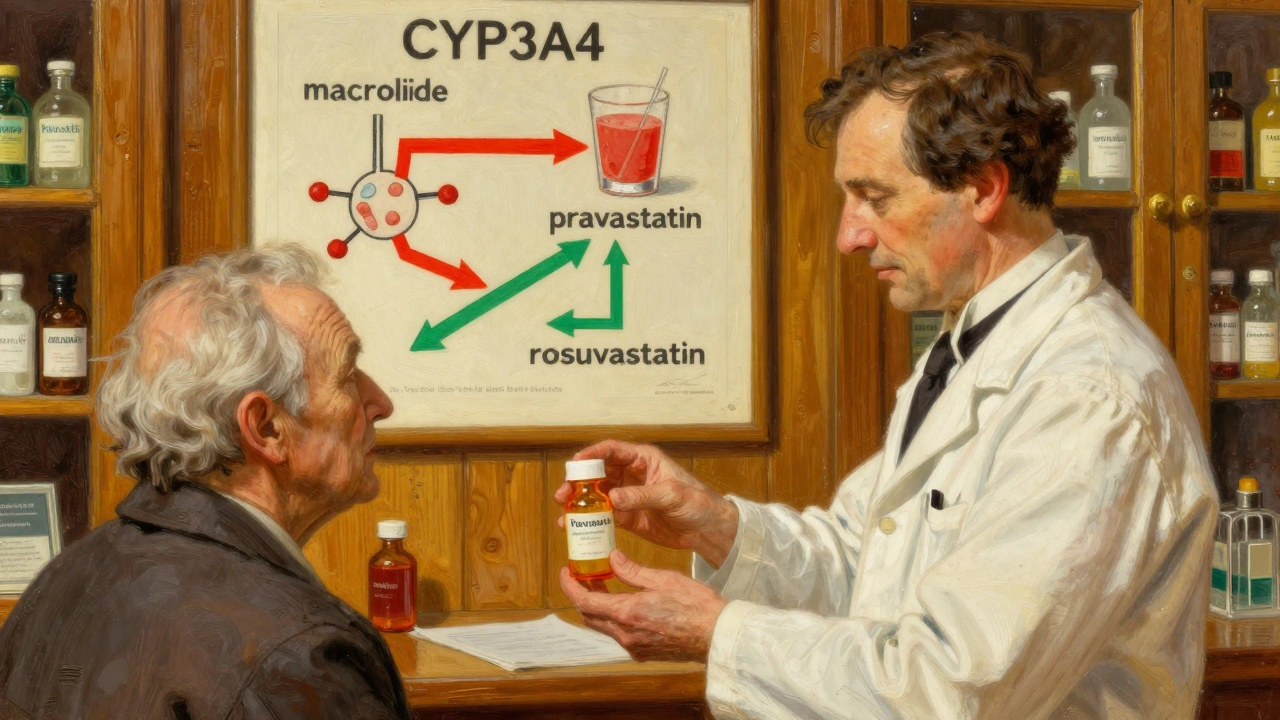
Who’s Most at Risk?
It’s not just about the drugs. Certain people are more vulnerable:- Age over 75: Muscle repair slows down. The body can’t clear statins as efficiently.
- Small body frame or low BMI: Less muscle mass means higher concentration of statin per pound of tissue.
- Chronic kidney disease: Impaired clearance means statins hang around longer.
- Hypothyroidism: Low thyroid function reduces muscle metabolism and increases sensitivity to statins.
- Heavy alcohol use: Damages liver and muscle function.
- Intense exercise: Especially if you’re not used to it. Muscle stress + statin = higher chance of damage.
One study in the UK found that simvastatin users had more than twice the rate of muscle pain compared to pravastatin users - even without any interacting drugs. But when you add just one risk factor - say, age 78 and taking diltiazem - the risk multiplies.
What to Do If You Have Muscle Pain
Don’t ignore it. Muscle pain from statins isn’t just soreness. It’s a warning sign. If you feel unexplained weakness, cramping, or aching - especially in your thighs, shoulders, or lower back - talk to your doctor. The first step? Check your creatine kinase (CK) levels. A level more than 10 times the upper limit of normal confirms myopathy. Even if your CK is only 5x higher, and you’re not feeling well, your doctor may recommend stopping the statin. Many people assume they can’t take statins anymore if they have muscle pain. That’s not true. Studies show 71% of people who stopped statins due to muscle symptoms can tolerate a different statin at a lower dose. Switching from simvastatin to pravastatin 20mg is a common fix. Rosuvastatin 10mg may also work. Some patients even do well on ezetimibe or bempedoic acid - newer drugs that don’t cause muscle issues.
Monitoring and Prevention
There’s no need to panic. Statins save lives. The key is smart management.- Baseline CK test: Before starting a statin, get your CK checked - especially if you have risk factors.
- Review all meds: Every time you get a new prescription, ask: “Could this interact with my statin?”
- Temporary hold: If you’re prescribed clarithromycin or erythromycin, pause your statin for the duration of the antibiotic course. Restart it when you’re done.
- Choose safer options: For patients on multiple interacting drugs, pravastatin or fluvastatin are often the best choices.
- Check for SLCO1B1 gene variants: This genetic test isn’t routine, but it can identify people with 4.5x higher risk of simvastatin myopathy. If you’ve had muscle problems before, it’s worth asking about.
Some doctors suggest coenzyme Q10 supplements (100-200 mg daily) for muscle symptoms. The evidence isn’t strong, but it’s low-risk. If it helps you feel better, it’s worth a try.
The Bigger Picture
Statins aren’t going away. In 2022, global sales hit $14.4 billion. They’re still the most effective tool we have for preventing heart attacks in high-risk people. The FDA hasn’t changed its stance: the benefits outweigh the risks - if used correctly. New alternatives like bempedoic acid (Nexletol) are available for those who can’t tolerate statins. But they cost about $4,000 a year - compared to $6.60 for generic atorvastatin. That’s not an option for most people. The real solution? Personalized care. Not everyone needs high-dose statins. Not everyone should take simvastatin. The right statin, at the right dose, with the right drug combo, makes all the difference.Can I take ibuprofen with statins?
Yes, ibuprofen and other NSAIDs like naproxen don’t interact with statins in a way that increases myopathy risk. But if you’re already experiencing muscle pain, NSAIDs won’t fix the root problem. They might mask symptoms, making it harder to detect worsening muscle damage. Always talk to your doctor before combining any new medication with your statin.
Does grapefruit juice affect statins?
Yes - but only for some. Grapefruit juice blocks CYP3A4 in the gut, which can raise levels of simvastatin, lovastatin, and atorvastatin. A single glass can have effects lasting 24 hours. Pravastatin, rosuvastatin, and fluvastatin are not affected. If you drink grapefruit juice regularly, ask your doctor if your statin is safe. Switching to orange juice is a simple fix.
I stopped my statin because of muscle pain. Can I restart it?
Many people can. About 71% of those who stopped statins due to muscle symptoms can tolerate a different statin at a lower dose. Try switching from simvastatin to pravastatin 20mg, or rosuvastatin 10mg. Start low, go slow, and monitor for symptoms. If pain returns, it’s likely the statin - not something else.
Are there statins that don’t cause muscle pain at all?
No statin is completely free of muscle risk. But pravastatin and fluvastatin have the lowest reported rates - around 0.6% to 1.4%. Rosuvastatin has higher rates in some studies, but that’s often linked to higher doses. The key isn’t finding a statin with zero risk - it’s finding the one with the best risk-to-benefit balance for your body and other medications.
Should I get genetic testing before taking statins?
Routine genetic testing isn’t standard yet. But if you’ve had muscle pain with statins before, or you’re planning to take simvastatin and have other risk factors (like age, kidney issues, or other meds), asking about SLCO1B1 testing can be helpful. It identifies people with a genetic variant that increases simvastatin myopathy risk by 4.5 times. The FDA has added this info to simvastatin labels. It’s not perfect, but it’s a useful tool for high-risk patients.
Scott van Haastrecht
December 4, 2025 AT 12:42Statins are a scam pushed by Big Pharma to keep people hooked on lifelong medication. If you want to lower cholesterol, eat less sugar and move your body. No pill replaces real lifestyle changes. I’ve seen too many people take 80mg simvastatin and wonder why their legs feel like concrete.
Chase Brittingham
December 5, 2025 AT 21:03Thanks for laying this out so clearly. I was on simvastatin for years and had constant muscle cramps. Switched to pravastatin 20mg after my doctor flagged the interaction with my blood pressure med - boom, symptoms vanished. It’s not about avoiding statins, it’s about matching the right one to your body.
Bill Wolfe
December 7, 2025 AT 01:17Let’s be honest - most people don’t have the intellectual capacity to understand CYP3A4 metabolism or OATP transporters. That’s why we’re in this mess. The FDA’s guidelines are technically sound, but the average patient reads a pill bottle like it’s a horoscope. If you’re taking grapefruit juice with your statin and you’re over 65? You’re not a patient - you’re a walking clinical trial gone wrong. And yes, I’ve seen this exact scenario three times in my practice. The data doesn’t lie. The patients do.
Ollie Newland
December 7, 2025 AT 10:54Pravastatin’s renal clearance pathway makes it the gold standard for polypharmacy patients - especially those on cyclosporine or with CKD. The pharmacokinetic profile is clean. No CYP3A4 inhibition, minimal muscle penetration. I’ve switched over a dozen transplant patients to it with zero myopathy recurrence. Rosuvastatin’s higher myalgia rates? Likely due to dose escalation in low-BMI populations. It’s not the drug - it’s the dosing strategy.
Rebecca Braatz
December 8, 2025 AT 12:13If you’re reading this and you’re scared of statins - don’t be. Be informed. Talk to your doctor. Ask about alternatives. You deserve to protect your heart without sacrificing your quality of life. This post is a roadmap - use it. You’ve got this.
Michael Feldstein
December 8, 2025 AT 22:31Biggest thing I tell my patients: don’t panic about every muscle ache. But don’t ignore it either. If you start feeling like you’re dragging your legs around, and you’re on simvastatin + diltiazem? That’s not normal aging. That’s a red flag. I’ve had patients come in thinking it’s just ‘getting older’ - turns out they were one step away from rhabdo. Get your CK checked. Seriously.
jagdish kumar
December 9, 2025 AT 08:50Life is pain. Statins are pain. Accept it.
Benjamin Sedler
December 10, 2025 AT 12:00Wait - so you’re telling me the same drug that’s supposed to save my heart might turn my quads into Jell-O? And the only safe statin is the one that costs $6.60? That’s not medicine. That’s Russian roulette with a prescription pad. I’d rather eat a bowl of oatmeal and pray.
zac grant
December 10, 2025 AT 13:03CoQ10 supplements? Worth a shot. Low risk, zero downside. I’ve had patients swear by it - even if the science is shaky, if it helps them sleep better and stop wincing when they climb stairs, why not? And yeah, azithromycin over clarithromycin? Absolute no-brainer. Ask for it. Your muscles will thank you.
michael booth
December 12, 2025 AT 04:41Statins remain the cornerstone of cardiovascular risk reduction. Their net benefit is unequivocal. However, individualized selection based on metabolic pathways and concomitant medications is not optional - it is imperative. Pravastatin and fluvastatin represent optimal choices in complex pharmacologic profiles. Dose titration must be guided by clinical context and laboratory monitoring.
Carolyn Ford
December 14, 2025 AT 01:32Of course you’re having muscle pain - you’re taking a statin. Everyone knows statins cause muscle damage. Why are we still prescribing simvastatin 80mg? It’s like handing someone a chainsaw and saying ‘be careful.’ And don’t get me started on people who think grapefruit juice is ‘natural’ so it’s fine. Natural doesn’t mean safe. Your doctor should’ve known better.
Heidi Thomas
December 15, 2025 AT 06:57You’re all overthinking this. If you have muscle pain, you’re not supposed to be on statins. Period. No genetic tests. No switching. Just stop. Your heart will be fine. You’re not a heart attack waiting to happen - you’re a muscle damage waiting to happen. And you’re wasting money on pills that don’t work for you.
Alex Piddington
December 15, 2025 AT 09:56Thank you for this comprehensive overview. I’ve shared this with my patients who are on multiple medications. Many were unaware that their blood pressure pill could be interacting with their cholesterol med. Knowledge is power - and this post is a gift to anyone navigating complex regimens.
Libby Rees
December 16, 2025 AT 06:00It’s important to remember that statins prevent heart attacks. That’s the goal. Muscle pain is a side effect. But it’s real. The solution isn’t to stop everything - it’s to find the right balance. Pravastatin for the elderly. Azithromycin instead of clarithromycin. Avoid grapefruit. Check your CK. Simple steps. Big results.