

Every time you pick up a prescription, there’s a good chance the pill in your hand isn’t the exact brand your doctor wrote on the script. In fact, in most states, your pharmacist can swap it out for a cheaper generic version - without asking you first. This isn’t a mistake. It’s called presumed consent, and it’s the law in 43 states and Washington, D.C.
How Presumed Consent Works (And Why It Exists)
Presumed consent means the law assumes you’re okay with getting a generic drug instead of the brand-name one, unless you say otherwise. Pharmacists don’t need to stop you at the counter and ask, "Hey, do you mind if I give you this cheaper version?" They can just do it. The system was built to save money - and it works. The U.S. healthcare system spends about $1.68 trillion less over the last decade because of generic drugs. That’s thanks to laws like the Hatch-Waxman Act of 1984, which made it faster and cheaper for companies to get generic versions approved. Today, 90% of all prescriptions filled are for generics, but they only make up 15% of total drug spending. That’s the power of presumed consent: it keeps the system moving without slowing down for paperwork. In states with presumed consent, pharmacists can substitute any drug rated "A" by the FDA’s Orange Book - meaning it’s proven to work the same as the brand name. If your doctor prescribes Lipitor, you might get atorvastatin. If it’s Plavix, you get clopidogrel. Same active ingredient. Same effect. Same safety profile, according to the FDA.Where It’s Allowed - And Where It’s Not
Not all states are the same. In 19 states, pharmacists are required to substitute generics if available. That’s mandatory substitution. In 31 others, they’re allowed to - but not forced to. That’s permissive substitution. But here’s the twist: in 7 states - Alaska, Delaware, Hawaii, Maine, Maryland, New Mexico, and West Virginia - pharmacists must ask you for permission before swapping. Washington, D.C. also requires explicit consent. Why the difference? Some states worry about patient control. Others care more about speed and cost. The result? A patchwork of rules that even pharmacists struggle to keep up with. A new pharmacist spends nearly 18 hours in their first year just learning state-specific substitution laws. And they have to relearn them every year.When Substitution Can Be Risky
For most drugs, generics are perfectly safe. But not all medications are created equal. Some have what’s called a narrow therapeutic index - meaning even tiny differences in how the drug is absorbed can cause big problems. Think seizures, blood thinners, or thyroid meds. The American Epilepsy Society tracked 178 cases of breakthrough seizures between 2018 and 2022 linked to generic switches. In 15 states, including Tennessee and Hawaii, pharmacists can’t substitute certain antiepileptic drugs without your explicit okay. Same goes for warfarin (Coumadin), lithium, and some immunosuppressants. These are the drugs where your body is super sensitive to small changes. Pharmacists in presumed consent states still have to check for these restrictions. If your script says "do not substitute," that overrides the law. But if it doesn’t? The pharmacist can assume you’re fine with the switch - even if you didn’t know the option existed.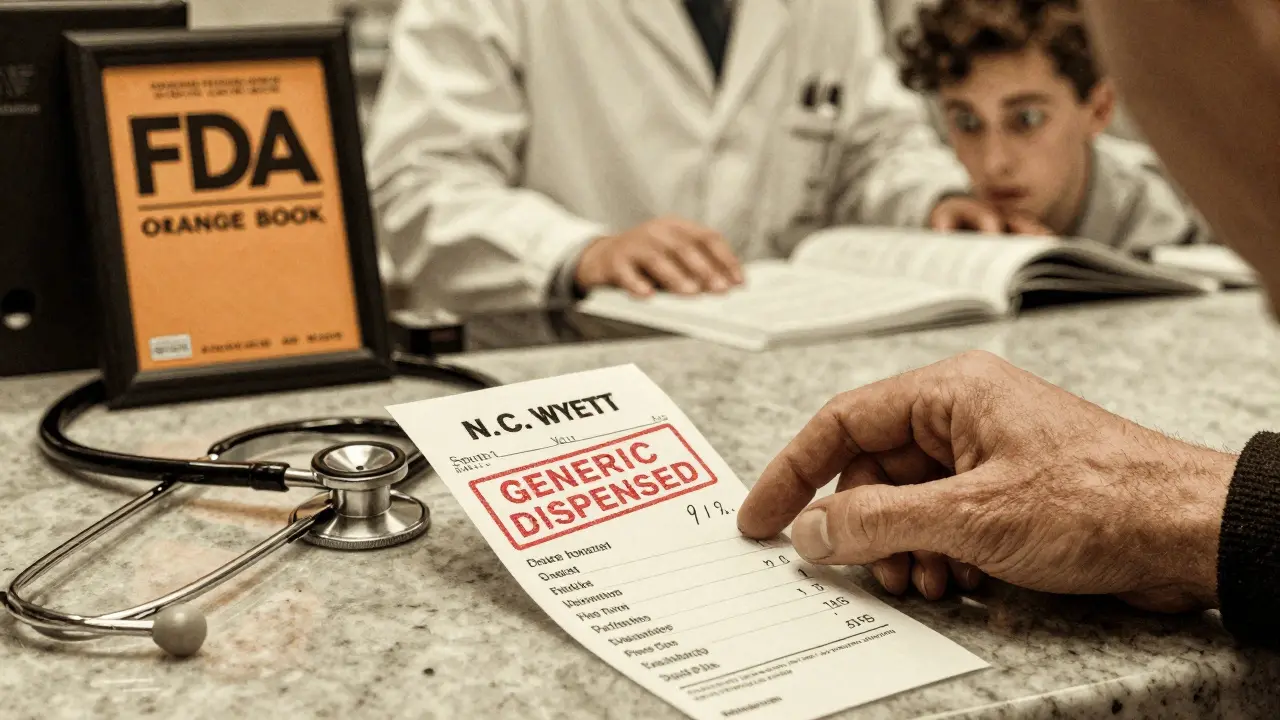
What Happens After the Swap?
Even in presumed consent states, 31 states plus D.C. require pharmacists to notify you after the substitution. That means your receipt might say: "Generic dispensed: atorvastatin instead of Lipitor." Your pharmacy app might send a notification. Your pill bottle might have a sticker. But here’s the catch: most people don’t read the fine print. A Reddit post from an Ohio pharmacist said 95% of patients never notice the switch. The other 5%? They get angry. "I thought I was getting the real thing," one patient wrote. "Now I’m scared my meds aren’t working." That’s the tension in presumed consent: efficiency vs. trust. Pharmacists save about 1.7 minutes per prescription by not asking. That adds up to $2.8 billion in labor savings nationwide each year. But when a patient finds out they were switched without being told, trust in the system cracks.Biosimilars: The New Wild West
The rules get even messier with biosimilars - cheaper versions of complex biologic drugs like Humira or Enbrel. Unlike small-molecule generics, biosimilars aren’t exact copies. They’re made from living cells, so tiny differences can matter more. Only 6 states let pharmacists automatically swap biosimilars without permission. Four states - North Carolina, Oklahoma, Pennsylvania, and Texas - ban automatic substitution entirely. In 45 states, pharmacists must get your okay before switching you to a biosimilar, even if it’s labeled "interchangeable." And here’s the kicker: the FDA’s Purple Book (the biosimilar version of the Orange Book) isn’t always easy to find. Many pharmacists still don’t know which biosimilars are officially interchangeable. That’s why some states are updating their laws - California passed a new rule in 2022 requiring extra notification for biosimilar switches.
What You Can Do
You don’t have to accept a substitution you didn’t agree to. Here’s how to take control:- Ask for the brand - Say "no substitutions" when your doctor writes the script. Or ask your pharmacist to mark it as "dispense as written" (DAW 1).
- Check your receipt - Look for the generic name listed next to the brand. If it’s different, you were switched.
- Call your pharmacy - If you notice a change in how your medication works, ask if a substitution happened.
- Know your drug - If you’re on a narrow therapeutic index drug (like seizure meds, blood thinners, or thyroid pills), assume substitution is risky unless you’ve been told otherwise.
What’s Next?
The pressure to standardize is growing. Right now, pharmacists in New York have to document every substitution electronically. In Michigan, notification systems are so clear that patient trust remains high. But in other states, rules are still scattered. The Uniform Law Commission is pushing a Model State Substitution Act to bring consistency across all 50 states. If it passes, we could see a unified system where presumed consent applies to most drugs - but explicit consent is required for high-risk ones. For now, the system works - mostly. It saves billions. It keeps prescriptions moving. But it also assumes you’re okay with being switched without asking. And that’s a choice you should understand - not just accept.Can my pharmacist substitute my medication without telling me?
In 43 states and Washington, D.C., yes - they can swap your brand-name drug for a generic without asking you first. But in 7 states, including Hawaii and Maine, they must get your permission. Even in states where consent is presumed, 31 states require pharmacists to notify you after the switch - usually on your receipt or via a pharmacy app.
Are generic drugs as safe as brand-name ones?
For most medications, yes. The FDA requires generics to have the same active ingredient, strength, dosage form, and route of administration as the brand. They must also prove they’re absorbed into the body at the same rate and amount. Over 90% of prescriptions in the U.S. are for generics, and they’ve been used safely for decades. But for drugs with a narrow therapeutic index - like seizure medications, blood thinners, or thyroid pills - even small differences can cause problems. In those cases, some states restrict substitution.
How do I know if I was switched to a generic?
Check your prescription receipt or pharmacy app - it should list both the brand name and the generic name. Your pill bottle may also have a sticker saying "generic equivalent." If you’re unsure, call your pharmacy and ask: "Was my medication substituted?" You have the right to know.
Can I refuse a generic substitution?
Yes. You can ask your doctor to write "dispense as written" or "no substitutions" on your prescription. You can also tell your pharmacist at pickup that you want the brand name. If your state requires explicit consent, they can’t substitute without your approval. Even in presumed consent states, you can always say no - and they must honor it.
Why do some states require consent and others don’t?
It comes down to priorities. States with presumed consent focus on cost savings and efficiency - they want generics to be easy to use. States requiring explicit consent prioritize patient autonomy and control. Some states, like Hawaii and Tennessee, added extra protections after reports of patients having bad reactions to generic switches. There’s no national standard, so rules vary widely.
Are biosimilars treated the same as generics?
No. Biosimilars are more complex than traditional generics because they’re made from living cells, not chemicals. Only 6 states allow automatic substitution of biosimilars without patient consent. Four states ban it entirely. In most states, pharmacists must get your permission before switching you to a biosimilar - even if the FDA says it’s interchangeable. The rules are still evolving, and many pharmacists aren’t fully trained on them yet.
Meenakshi Jaiswal
December 20, 2025 AT 07:44Just had my thyroid med switched last week and didn’t notice until I checked the bottle. Scared the hell out of me until I called my doc. Glad I asked. Always check the label now. You’re not crazy for worrying.
Monte Pareek
December 21, 2025 AT 04:10Look I get it the system saves billions but you cant just assume people are cool with their meds being swapped like its a grocery item. I had a cousin go into seizures after a generic switch and the pharmacist said oh we assumed youd be fine. Assumed. Thats not consent thats negligence. We need a federal standard not this patchwork mess where your rights depend on which state you were born in. This isnt efficiency this is medical gambling and its not okay.
Lynsey Tyson
December 22, 2025 AT 04:11I get why pharmacists do it honestly. Theyre swamped. But I also think they should be required to say something at pickup even if its just a quick "Hey this is a generic version". A little heads up goes a long way. No need to make people feel like they got scammed.
Edington Renwick
December 22, 2025 AT 17:14Of course the system works. Because people are too lazy to read their receipts. Thats not a win. Thats a failure of accountability. And dont even get me started on biosimilars. Those are barely even generics. Theyre like knockoff designer handbags made in a basement. And now theyre just handing them out like candy? Someone is going to die from this.
Allison Pannabekcer
December 23, 2025 AT 09:55My grandma takes warfarin and we always make sure her script says "do not substitute". I know its a pain but its worth it. If you take anything that affects your blood clotting or your brain, dont trust the system. Ask. Double check. Write it down. Your life matters more than a few bucks saved.
Sarah McQuillan
December 23, 2025 AT 12:17Why are we even talking about this like its a big deal? Its just a pill. The FDA says its the same. If you cant trust your meds you shouldnt be taking them. This is why America is so paranoid. We think every little change is a conspiracy. Chill. The system works. Let pharmacists do their job without treating them like criminals.
Kitt Eliz
December 25, 2025 AT 10:18OMG YES. I work in pharmacy and we just got a new biosimilar for Humira and the paperwork alone is insane. Even though its labeled "interchangeable" we still have to get verbal consent. Its a nightmare. But its worth it. Patients deserve to know. We use emojis in our app notifications now 🚨⚠️💡 to make sure they see it. Small thing. Big impact.
Gloria Parraz
December 25, 2025 AT 16:13Ive been on the same generic for 8 years. Never had an issue. But I still check the bottle every time. Not because I dont trust it. Because I dont trust the system. Its not paranoia. Its self-preservation. And if your pharmacist doesnt offer a quick explanation? Walk out. Find one who does.
Sahil jassy
December 25, 2025 AT 23:54in india we dont have this problem because generics are the only thing available. brand name is luxury. but still people ask. they want to know. its not about money its about knowing. simple as that. 🤝
Kathryn Featherstone
December 27, 2025 AT 03:27My pharmacist always writes "GENERIC DISPENSED" on the bag. Small thing. But it makes me feel seen. Like they remember I exist. Maybe thats the real win here-not just saving money but treating people like humans.
Chris Clark
December 29, 2025 AT 03:17wait so if i get a biosimilar and the doc writes do not substitute does that even matter if the state allows auto swap? i think i read somewhere that the script overrides state law but im not sure. anyone know for real?
Dorine Anthony
December 31, 2025 AT 01:03My sister got switched to a generic for her epilepsy med and had a seizure at work. She was fine but it scared the crap out of her. Now she only takes brand. And her doctor always writes DAW 1. If you take meds that affect your brain or heart-dont play around. Ask. Always.
Nancy Kou
January 1, 2026 AT 12:58Just want to say thank you to the pharmacist who called me last month when they switched my thyroid med. Said "I know you’ve had issues before so I wanted to check in." That’s the kind of care we need more of. Not just compliance. Humanity.