

Every day, doctors face a simple but powerful choice: prescribe a brand-name drug or its generic version. For most patients, the generic is just as safe, just as effective, and saves them hundreds of dollars a month. Yet, despite generics making up 90% of all prescriptions filled in the U.S., many physicians still hesitate. Why? Because outdated myths, confusing guidelines, and lack of practical tools keep them from fully embracing generics - even when they know it’s the right call.
Why Generics Matter More Than Ever
In 2023, Americans filled over 4 billion prescriptions. Nine out of every ten were for generic drugs. That’s not a trend - it’s the new normal. Generic medications saved the U.S. healthcare system more than $2.29 trillion between 2010 and 2020. Projections show another $1.87 trillion in savings by 2025. These aren’t abstract numbers. They’re real dollars kept in patients’ pockets and out of insurance deductibles. But savings alone don’t drive change. Adherence does. Studies show that 20-30% of patients stop taking their meds because they can’t afford them. Switching from a $300/month brand-name drug to a $37.50 generic? That’s a $262.50 monthly saving. For a diabetic patient on insulin or an elderly person on a statin, that difference means taking the pill - or skipping it. The FDA and major medical groups like the American College of Physicians have been clear: prescribe generics whenever possible. But knowing that and actually doing it in a 10-minute office visit are two different things.What the FDA Really Says About Generic Equivalence
The biggest myth? That generics are “weaker” or “less tested.” They’re not. Every generic drug must pass the same rigorous standards as the brand-name version. The FDA requires proof of bioequivalence - meaning the generic delivers the same amount of active ingredient into the bloodstream at the same rate as the brand. The acceptable range? 80% to 125% of the brand’s absorption. That’s not a guess. It’s science, tested in 24-36 healthy volunteers across multiple trials. The FDA’s Generic Drugs Stakeholder Toolkit breaks this down visually. One infographic shows side-by-side comparisons of brand and generic manufacturing facilities. Spoiler: they’re often the same plant. Another explains how the ANDA (Abbreviated New Drug Application) process works - no need for new clinical trials, just proof that the body handles the drug the same way. And here’s something most doctors don’t know: in 2022, the FDA analyzed nearly 12,500 adverse event reports for generics and just over 11,800 for brand-name drugs. The safety profiles are nearly identical. If anything, generics are monitored just as closely - if not more - because of their volume.Where Education Falls Short - And How to Fix It
The FDA offers free, downloadable resources: flyers, infographics, even social media templates. But most doctors never see them. A 2022 survey found only 48% of physicians even knew the toolkit existed. Why? Because these tools aren’t built into the workflow. Doctors aren’t ignoring generics. They’re overwhelmed. In a 10-minute visit, you’ve got to check vitals, review labs, answer three urgent questions, and now explain why a $30 pill works as well as a $300 one? No wonder they default to the brand. The fix? Integration. Kaiser Permanente did it right. They embedded FDA-approved generic drug facts directly into their Epic EHR system. When a doctor types in a brand-name drug, a pop-up appears: “Generic available. Saves patient $262/month.” Within six months, brand-name prescribing dropped 18.7%. Other clinics are using simple tricks: adding a checklist to intake forms - “Patient asked about generic substitution?” - or using monthly feedback reports that show how their prescribing compares to peers. One rural family doctor in Nebraska increased her generic prescribing from 62% to 89% in 18 months - not because she read a manual, but because she saw the data.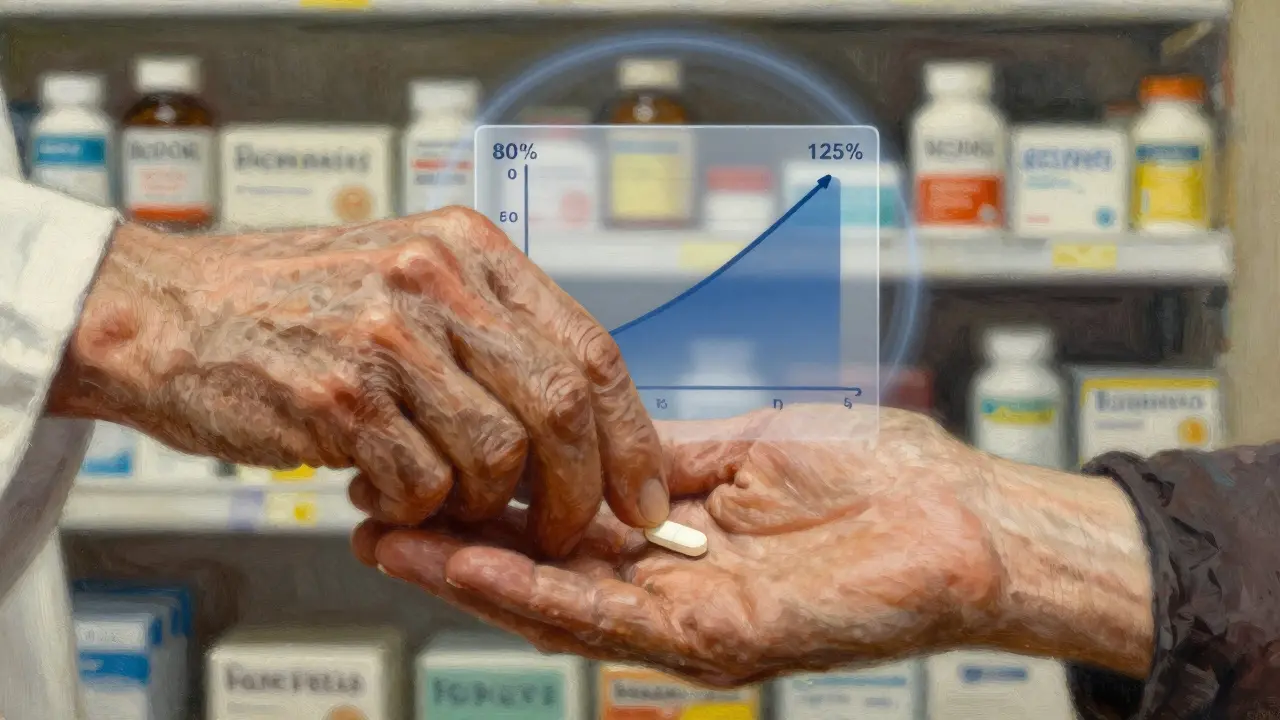
What Patients Really Think - And How to Talk to Them
Patients aren’t just worried about cost. They’re worried about quality. A 2021 FDA survey found 42% of Hispanic patients believed generics were less safe. Older patients often say, “My doctor said the brand works better.” The right response isn’t jargon. It’s clarity. The FDA provides ready-made scripts: “The FDA requires generics to work the same way as the brand. The only differences are in the color or shape - not the medicine. The same company that makes the brand often makes the generic too.” For patients on complex meds - inhalers, topical creams, injectables - the conversation needs more detail. That’s where the FDA’s Generic Drugs and Health Equity Handout helps. It explains that low-income patients are 3.7 times more likely to quit their meds due to cost. That’s not a statistic - it’s someone in your waiting room. One study found that physicians who received structured training on generics were 2.3 times more likely to start cost conversations with patients. That’s not about persuasion. It’s about trust.What’s Missing - And What’s Coming
The biggest gap? Complex generics. Inhalers, nasal sprays, and topical formulations are harder to copy. Their effectiveness depends on delivery systems, not just chemistry. Only 42% of prescribers feel confident prescribing biosimilars or complex generics. Yet these are the drugs where savings are highest - and misunderstandings are most dangerous. The FDA is trying to fix this. In July 2023, they launched a pilot connecting generic drug data directly to Epic and Cerner systems. Early results? A 15.2% rise in generic prescribing among participating doctors. That’s not magic. That’s smart tech meeting real need. And the future? AI. IBM Watson Health tested a tool that generates personalized messages based on patient history - “Your cholesterol is high, and this generic statin cuts your risk the same way as the brand - for $18 a month.” In a trial, patient acceptance jumped 29 points.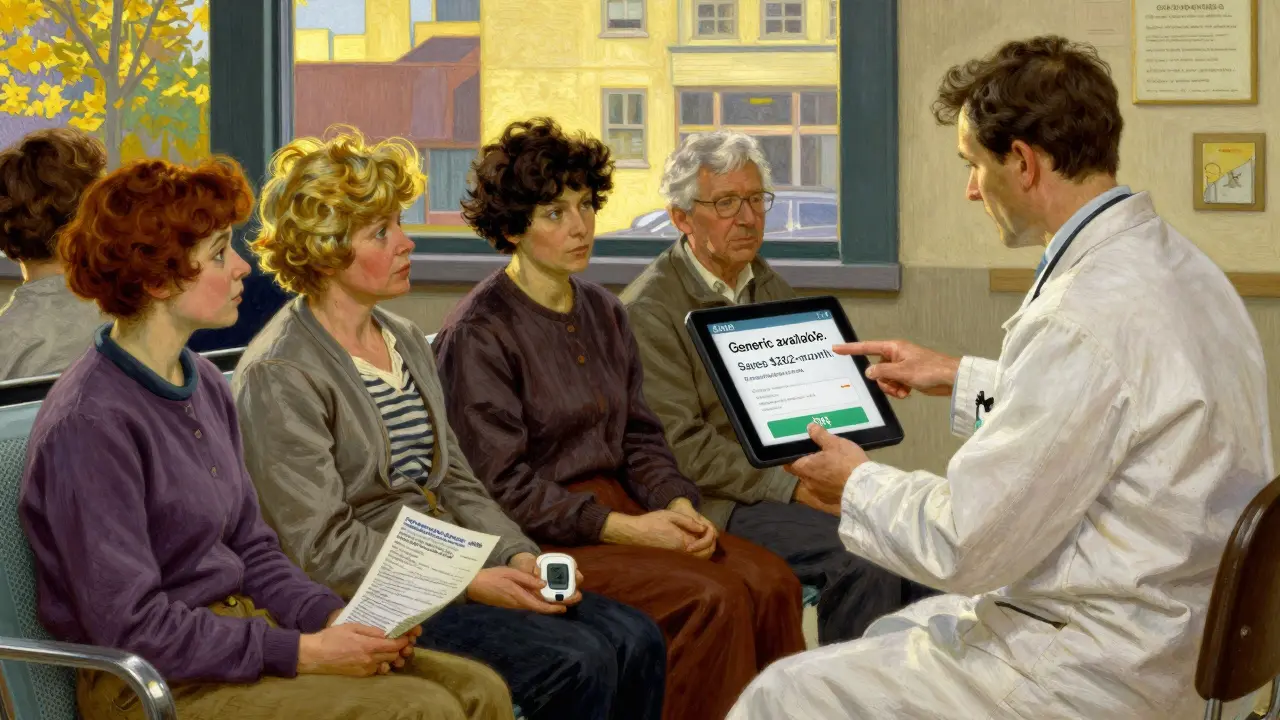
How to Start Today - Even If You’re Busy
You don’t need a grand plan. Start small.- Download the FDA’s Prescriber Flyer (Version 2, 2022). Print one. Tape it to your desk.
- Use the QR code on the flyer to show patients the Spanish-language version if needed.
- When a patient asks about switching, say: “Let me show you what the FDA says about this.”
- Ask your EHR vendor: “Can you add a generic substitution alert for high-cost drugs?”
- Track your own rate. How many generics do you prescribe now? Could you hit 80% in six months?
Why This Isn’t Just About Money
Prescribing generics isn’t a cost-cutting tactic. It’s a clinical decision. It’s about removing barriers to care. It’s about respecting a patient’s right to affordable treatment. It’s about matching the science with the reality of their lives. The data is clear. The tools exist. The only thing missing is time - and the courage to use what’s already there.Are generic drugs really as effective as brand-name drugs?
Yes. The FDA requires generics to deliver the same active ingredient at the same rate and strength as the brand-name version. This is proven through bioequivalence testing, where the generic must show absorption levels between 80% and 125% of the brand. Thousands of studies and millions of patient prescriptions confirm they work the same way.
Why do some doctors still prefer brand-name drugs?
Some doctors were trained when generics were less common, and old habits stick. Others worry about patient concerns or complex medications like inhalers, where delivery matters. A 2023 survey found that 68% of doctors found FDA materials useful but too technical for quick use during visits. Lack of integration into EHRs also makes it harder to access the right info at the right time.
Do generics have the same side effects as brand-name drugs?
Yes. In 2022, the FDA analyzed over 24,000 adverse event reports - nearly equal numbers for brand and generic drugs. The safety profiles are virtually identical. The only differences come from inactive ingredients (like dyes or fillers), which rarely cause issues and are listed on the label.
Can I trust generics made overseas?
Yes. The FDA inspects all manufacturing facilities - whether in the U.S., India, or China - using the same standards. Over 50% of generic drugs sold in the U.S. are made overseas, but every facility must meet U.S. quality requirements. The FDA conducts more inspections now than ever before, and many U.S. brand-name drugs are also made overseas.
How can I start prescribing more generics without spending extra time?
Start by asking: “Is there a generic version?” for every new prescription. Use the FDA’s free Prescriber Flyer as a quick reference. Ask your EHR vendor to add a generic alert for high-cost drugs. Even small changes like this can increase your generic prescribing rate by 20% or more within months - without adding minutes to your day.
What about authorized generics?
Authorized generics are brand-name drugs sold under a generic label - same formula, same maker, lower price. They’re not “different” or “second-rate.” In fact, they’re often the best value. A 2023 study found 61% of physicians didn’t realize these existed. If your patient’s brand drug has an authorized generic, it’s usually the smartest choice.
Are there cases where I shouldn’t switch to a generic?
Rarely. For most drugs - including blood pressure meds, antidepressants, and statins - generics are equally effective. Exceptions are complex formulations like inhalers, topical creams, or certain seizure drugs where delivery matters. Even then, generics are often approved. The key is checking the FDA’s database or consulting a pharmacist before deciding. Never assume a generic won’t work - test it first.
Liam Tanner
January 2, 2026 AT 16:16Just saw this and had to say - I’ve been using the FDA’s flyer on my desk for months now. Simple, no fluff. Patients appreciate it when I point to it and say, ‘This is what the FDA says.’ No need to lecture. Just show them the facts. It’s changed how I talk about meds.
Palesa Makuru
January 3, 2026 AT 05:31Oh please. You’re all acting like generics are some kind of miracle cure. My cousin took a generic antidepressant and ended up in the ER because ‘it didn’t work the same.’ You think the FDA’s infographics fix that? Please. The system is rigged. Big Pharma owns the FDA. Wake up.
Sarah Little
January 3, 2026 AT 16:29While the bioequivalence thresholds (80–125% AUC and Cmax) are statistically sound, the clinical heterogeneity in pharmacokinetic profiles across polypharmacy populations remains under-addressed. The ANDA pathway, while efficient, lacks longitudinal real-world pharmacovigilance granularity. We’re optimizing for cost, not individualized therapeutic outcomes.
innocent massawe
January 4, 2026 AT 14:11Good post. 😊 I’m from Nigeria - here, generics are all we have. No choice. But I’ve seen people get better. Same medicine. Same results. The problem isn’t the drug. It’s the trust. If doctors show patients the truth, it works. Simple.
Ian Ring
January 4, 2026 AT 17:25Love the Kaiser Permanente example. Seriously. I work in a small clinic in Wales. We added a pop-up alert for statins last month. Generic prescribing jumped from 54% to 78%. It’s not magic - it’s just making the right choice the easy choice. Thank you for highlighting this.
Shanahan Crowell
January 6, 2026 AT 09:19THIS. This is the stuff that actually moves the needle. Not more meetings. Not more pamphlets. Just one alert in your EHR. One moment where the system says, ‘Hey, this patient can save $200.’ That’s all it takes. Let’s get this into every system. Now.
Kerry Howarth
January 7, 2026 AT 03:33Authorized generics are the secret weapon. Most docs don’t know they exist. Same pill. Same maker. Half the price. If your brand has one, prescribe it. No compromise. No risk. Just savings.
Joy F
January 8, 2026 AT 15:42Let’s be real - this isn’t about science. It’s about control. Who gets to decide what’s ‘good enough’ for patients? The FDA? The insurance companies? The hospital administrators? We’re just the middlemen, forced to pick sides. And patients? They’re the ones paying the price - literally and emotionally. This whole system is a performance. The ‘science’ is just the script.
And don’t even get me started on the ‘same manufacturing facility’ myth. Sure, sometimes it’s the same plant. But who’s running it? Who’s inspecting it? And when was the last time you saw an FDA inspector walk through a factory in India? Exactly.
It’s not about generics being safe. It’s about whether we’re willing to let profit dictate access. And the answer? We’re not. We’re just good at pretending we are.
Haley Parizo
January 9, 2026 AT 13:39Generics aren’t just cheaper - they’re a moral imperative. In a world where people choose between insulin and groceries, prescribing a brand-name drug isn’t clinical judgment. It’s negligence wrapped in tradition. We’re not just doctors. We’re gatekeepers of dignity. And if we’re not using every tool to remove cost barriers, we’re failing our patients - and our profession.
Ian Detrick
January 10, 2026 AT 22:48My grandma’s on a generic statin. She’s 78. No side effects. Her cholesterol’s down. She pays $4 a month. She asked me once, ‘Why did they ever make the expensive one?’ I didn’t have a good answer. This post? It gives me one now. Thank you.
Angela Fisher
January 12, 2026 AT 12:36EVERYTHING IS A LIE. The FDA doesn’t inspect factories. They get photos. The same photos, over and over. The ‘bioequivalence’ range? 80-125%? That’s a 45% swing. ONE PILLS COULD BE HALF AS STRONG AS ANOTHER. And they call that ‘safe’? My neighbor’s husband died because his generic blood thinner didn’t work. The family sued. The FDA said ‘no evidence.’ Of course they did. They’re paid by the drug companies. I’ve seen the emails. I have screenshots. This isn’t medicine. It’s a scam.
And now they want us to trust AI? IBM Watson? Please. They’re training it on the same biased data. You’re not saving money. You’re sacrificing lives. Wake up.
Neela Sharma
January 13, 2026 AT 05:01Back home in Mumbai, we call generics ‘desi medicine’ - local, honest, real. My uncle, a village doctor, prescribes nothing else. He says: ‘If the body doesn’t know the brand, why should it care?’ He’s never lost a patient. The truth? It’s not about the label. It’s about the heart behind the prescription. When you care, the medicine works - brand or not.