

Nocebo Risk Calculator
How Expectations Shape Your Medication Experience
Based on clinical studies, your brain can create real physical symptoms from the expectation of side effects. This calculator estimates your potential nocebo risk based on factors mentioned in the article.
Your Risk Factors
Your Estimated Nocebo Risk
%What does this mean?
When you take a pill, your body doesn’t just react to the chemicals inside it. It also reacts to what you expect to happen. That’s the quiet, powerful force behind the placebo and nocebo effects - two sides of the same psychological coin that shape how you feel when you’re on medication.
Let’s say you’re prescribed a new drug for migraines. The doctor explains it might cause dizziness or nausea. A week later, you start feeling dizzy. Was it the drug? Or did your brain just anticipate it? You’re not alone. In clinical trials, 50 to 76% of people who took a sugar pill reported side effects that matched the real drug’s profile. These aren’t imaginary. They’re real physical symptoms - headaches, fatigue, stomach upset - triggered by nothing more than the expectation that they’d happen.
What Exactly Is a Nocebo Effect?
The word "nocebo" comes from Latin: "I shall harm." It’s the dark twin of the placebo effect. While placebos can make you feel better because you believe the treatment will help, nocebos make you feel worse because you believe it will hurt you.
It’s not just about fear. It’s about information. When you read the long list of side effects on a medication leaflet, hear a friend talk about how sick they got on a drug, or even watch a news report about a drug’s risks, your brain starts preparing for harm. Studies show that 70-80% of nocebo responses come from verbal suggestions - what doctors, pharmacists, or ads tell you. Another 15-20% come from watching others react badly. The rest? Past bad experiences.
And these aren’t just in your head. Brain scans show that when someone expects pain or nausea from a treatment, areas like the anterior cingulate cortex and insula light up - the same regions that process real pain. Your body responds with measurable changes: cortisol levels rise, heart rate increases, and even your immune system shifts. In one study, 76% of people who got a fake COVID-19 vaccine reported headaches and fatigue - exactly what the real vaccine was known for.
Placebo vs Nocebo: The Real Difference
People often think placebo and nocebo are just opposites. But they’re not mirror images. They work differently - and nocebo is stronger.
Placebo effects usually fade over time. If you take a sugar pill for pain and feel better on day one, that improvement often lessens by day five or six. But nocebo effects? They stick. A 2025 study found that negative symptoms from expectations didn’t just last - they barely budged over eight days. The brain holds onto negative predictions like a bad memory.
And the numbers don’t lie. In trials, placebo effects typically improve symptoms by 30-60%. Nocebo effects worsen them by 20-45%. That’s not a small difference. It’s enough to make people quit their meds.
Here’s the kicker: the side effects you blame on the drug might not even be from the drug at all. In trials for anticonvulsants used for migraines, 12.3% of people on sugar pills reported loss of appetite. 8.7% reported memory problems. 9.1% reported upper respiratory infections. All of these are common side effects of the real drug. But the sugar pill has none of those chemicals. The brain made them up - and your body believed it.
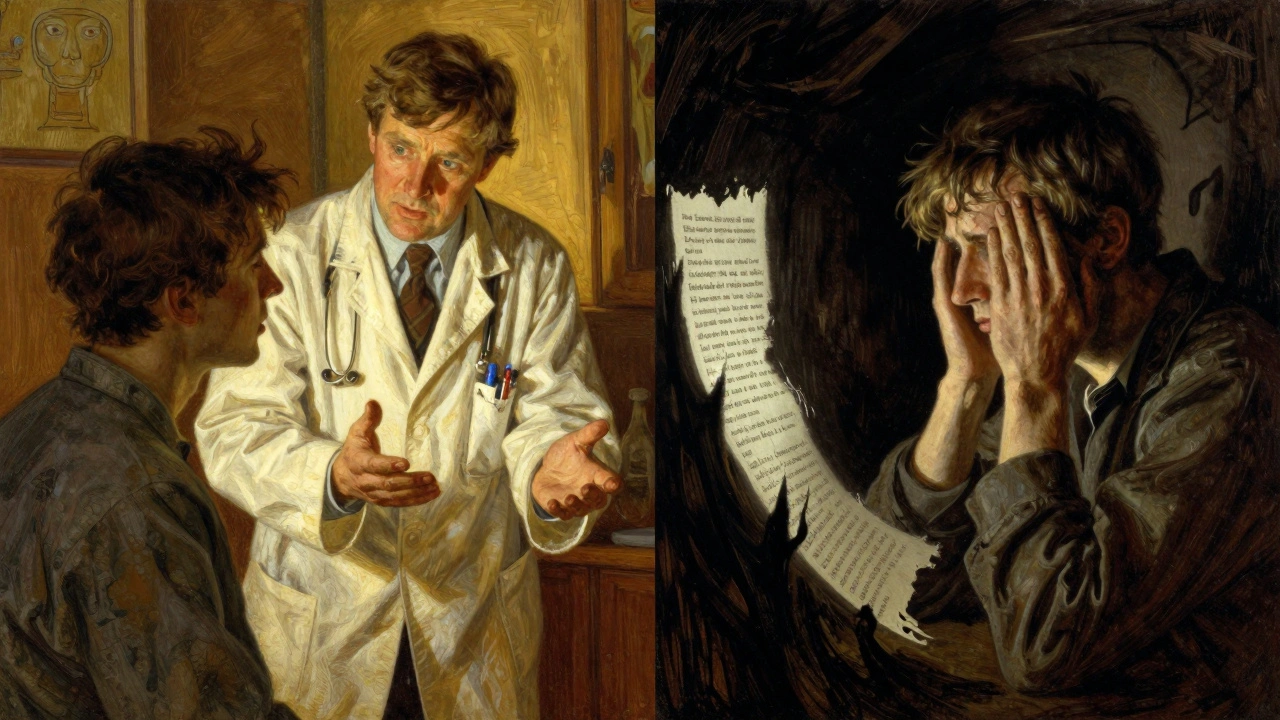
Who’s Most Likely to Experience a Nocebo Effect?
Not everyone reacts the same way. Some people are more wired for nocebo responses. Research shows that if you have:
- An anxiety disorder - your risk is 2.3 times higher
- A history of bad reactions to medicine - your risk is 3.1 times higher
- A tendency to catastrophize (always expecting the worst) - your risk is 2.8 times higher
It’s not about being "weak" or "overly sensitive." It’s about how your brain processes threat and expectation. People with these traits aren’t broken - they’re just more attuned to signals of danger, even when they’re not real.
And it’s not just about personality. The way information is delivered matters. Telling someone "3% of patients get nausea" sounds small. But saying "3 out of every 100 people feel sick" makes it feel more personal - and more likely to happen to them. Studies show that using absolute numbers instead of percentages reduces nocebo responses by 15-25%.
Real-World Impact: When Expectations Cost Lives
This isn’t just academic. Nocebo effects have real consequences - in clinics, pharmacies, and emergency rooms.
One in four people on antidepressants or blood pressure meds stop taking them because they think they’re causing side effects - even when the side effects came from the nocebo effect, not the drug. That’s 25-35% discontinuation rates directly tied to expectation, not pharmacology.
Doctors see patients who come in with new symptoms after reading a drug’s warning label. They order tests, prescribe more drugs to counteract the "side effects," and sometimes even switch to a different medication - all because the patient believed they were supposed to feel bad.
In the U.S., these unnecessary visits, tests, and prescriptions cost $1.2 billion a year. That’s not just waste - it’s harm. People end up on more drugs, with more side effects, because they were scared by the first one.
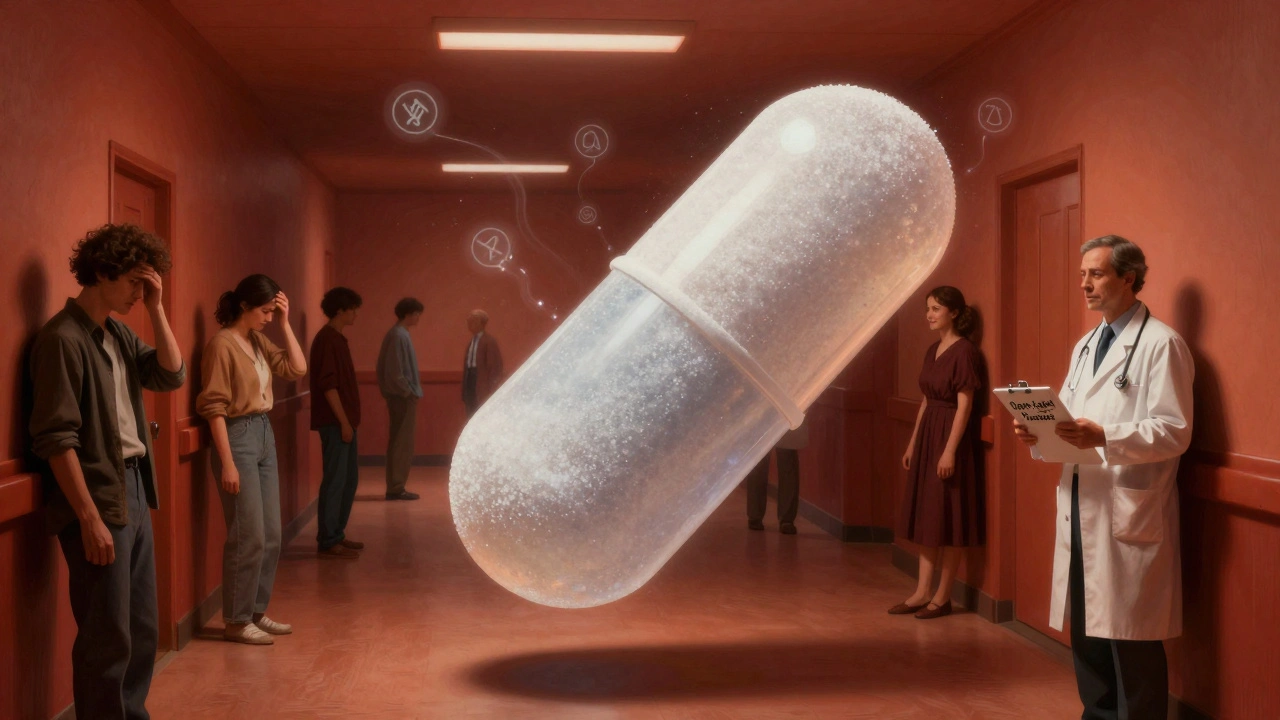
How Doctors Are Fighting Back
Some clinicians are learning how to talk about side effects without triggering nocebo responses. It’s not about hiding risks - it’s about framing them differently.
Instead of saying, "This drug can cause nausea," a better approach is: "Most people don’t feel sick, but if you do, it’s usually mild and goes away in a few days. Many people feel fine."
There’s also something called "expectation reframing" - where doctors acknowledge possible side effects but emphasize the odds of improvement. In trials, this method cut nocebo responses by 30-40%.
Some hospitals now use AI tools that analyze how patients speak during appointments - looking for signs of anxiety or catastrophizing - to warn doctors about who might be at higher risk. Others are testing "open-label placebos" - giving patients real sugar pills but telling them: "This is a placebo, but studies show it can still help pain because your brain can heal you." In irritable bowel syndrome, this approach improved symptoms by 25-35%.
Even drug companies are getting involved. They now spend $50-75 million per drug just on designing patient information that minimizes fear. The European Medicines Agency and FDA now require nocebo effects to be analyzed in clinical trial reports. The FDA estimates that 20-40% of reported side effects in placebo groups are nocebo-driven - and they want that data separated from true drug reactions.
What You Can Do
If you’re starting a new medication, here’s what helps:
- Ask your doctor: "What percentage of people actually get this side effect?"
- Don’t read the full leaflet right before taking the pill. Save it for later.
- Focus on how you feel after a few days - not what you were told might happen.
- If you start feeling weird, don’t assume it’s the drug. Wait. Track it. Talk to your doctor.
- Remember: if you’ve taken a placebo and felt side effects before, your brain might be doing the same thing again.
And if you’re a patient who’s stopped a medication because of side effects you think were caused by the drug - consider this: what if they weren’t?
There’s a growing movement to teach medical students about nocebo effects. If we start treating expectations like part of the medicine - not just the pills - we could reduce unnecessary suffering and save hundreds of millions in healthcare costs.
The truth is, your mind doesn’t just react to what’s in the bottle. It reacts to what you believe is in it. And sometimes, that belief is stronger than the drug itself.
Can you really get side effects from a sugar pill?
Yes. In clinical trials, 50-76% of people taking placebo pills report side effects like headaches, nausea, or fatigue - even though the pill has no active ingredients. These are real physical reactions triggered by expectations, not chemicals. Studies show these symptoms match the side effect profile of the real drug being tested.
Is the nocebo effect just in my head?
No. While it starts with expectation, your brain triggers real biological changes. Brain imaging shows increased activity in pain-processing areas. Your body releases more cortisol, your heart rate goes up, and your immune system can shift. These aren’t imagined symptoms - they’re measurable physiological responses.
How do I know if my side effect is from the drug or the nocebo effect?
It’s hard to tell for sure without a controlled test. But if you’ve had similar symptoms after taking a placebo before, or if the side effect appeared right after reading the warning label or hearing a negative story, it’s likely nocebo. Talk to your doctor - they can help you track patterns and rule out true drug reactions.
Are nocebo effects common in all types of medication?
Yes. They’re seen across conditions: migraines (20-30% nocebo response), depression (25-35%), menopause (30-40% hot flash reports), IBS (22-32%), and even vaccines. The more attention a drug’s side effects get - from ads, media, or friends - the stronger the nocebo effect tends to be.
Can I reduce my risk of a nocebo effect?
Absolutely. Focus on positive outcomes. Ask your doctor to explain side effects using absolute numbers (like "3 out of 100") instead of percentages. Avoid reading side effect lists right before taking your pill. Stay aware of your expectations - if you’re anxious about the drug, your brain may be priming you for symptoms. Open-label placebos and expectation reframing by clinicians are proven methods to reduce these effects.
Kidar Saleh
December 3, 2025 AT 20:51The nocebo effect is one of those things that sounds like pseudoscience until you realize your body literally manufactures symptoms from fear alone. I’ve seen patients in the ER who swore they were having a heart attack after reading the leaflet on a blood pressure med-turns out their EKG was perfect, cortisol levels were through the roof, and they’d never even had hypertension before. The mind doesn’t distinguish between real threat and imagined threat. It just reacts. And that’s terrifying when you think about how much medical harm comes from a poorly worded warning label.
Makenzie Keely
December 4, 2025 AT 12:33Let’s be crystal-clear: this isn’t ‘just in your head.’ It’s neurobiology. The anterior cingulate cortex, the insula, the HPA axis-they all activate identically whether the pain is chemical or psychological. And yes, 76% of placebo groups report side effects that mirror the real drug? That’s not coincidence. That’s conditioning. The FDA’s push to separate nocebo data from true adverse events? Long overdue. We’ve been misdiagnosing fear as pharmacology for decades. It’s time to reframe how we communicate risk-not by sugarcoating, but by grounding it in statistics that don’t trigger panic. ‘3 out of 100’ isn’t just clearer-it’s kinder.
Francine Phillips
December 6, 2025 AT 10:33so yeah i took a sugar pill once and got a headache
Katherine Gianelli
December 8, 2025 AT 06:40I used to think people who blamed side effects on meds were just being dramatic-until my mom stopped her antidepressant because she ‘felt weird’ after reading the leaflet. She’d never had nausea before. Never. But once she saw ‘possible nausea’ on the bottle, her stomach clenched every time she swallowed the pill. We tried open-label placebos-gave her sugar pills and told her exactly what the research says-and within two weeks, her anxiety dropped, her sleep improved, and the ‘side effects’ vanished. It’s not magic. It’s neuroscience. And if doctors learned to talk like this instead of reading from a script, so many people wouldn’t quit their meds out of fear. We need more of this kind of care.
James Kerr
December 10, 2025 AT 00:03bro i took a placebo once and my back hurt for a week 😅 turns out i was just scared of the pill
vinoth kumar
December 10, 2025 AT 06:20in india, people often say ‘this medicine is too strong’ when they feel tired after starting a new drug-but most times, it’s because they heard someone else say it made them sick. My uncle stopped his diabetes meds because his neighbor said it caused leg pain. Turned out the neighbor had neuropathy from 20 years of uncontrolled sugar. We need better education. Not just about drugs, but about how our minds trick us.
bobby chandra
December 11, 2025 AT 10:57This is the most profound insight in modern medicine-and it’s being buried under bureaucratic jargon. The placebo effect gets all the TED Talks. But the nocebo? It’s the silent epidemic. It’s why 30% of antidepressant discontinuations are pure psychological fallout. It’s why people are terrified of vaccines because of anecdotal horror stories. And it’s why drug companies spend millions redesigning leaflets to sound less apocalyptic. Your brain doesn’t need chemicals to hurt you-it just needs a suggestion, a headline, a whisper from a friend. We’re not just treating bodies anymore. We’re treating belief systems. And if we don’t start treating the narrative as part of the prescription, we’re just pouring medicine into a leaky cup.
Archie singh
December 11, 2025 AT 17:28How is this even a topic? People are just weak. If you can’t handle a little nausea because you read about it, maybe you shouldn’t be taking medicine at all. This isn’t psychology-it’s a failure of personal responsibility. Stop blaming your brain for your lack of discipline. The drug works. If you feel bad, it’s because you’re fragile. Stop coddling yourselves with this placebo-nocebo nonsense. It’s just a distraction from the real issue: people who can’t handle basic discomfort.