
When a child takes a medicine meant for adults, it’s not just a smaller dose-it’s a completely different experience. Kids don’t just shrink down to fit adult formulas. Their bodies are still growing, changing, and learning how to process chemicals. That’s why a drug that’s safe for a 40-year-old can cause serious problems in a 4-year-old. Every year, pediatric medication side effects land nearly 10% of hospitalized children in the ER, and nearly half of those cases are life-threatening. This isn’t rare. It’s systemic.
Why Children’s Bodies Handle Drugs Differently
Children aren’t small adults. Their organs don’t work the same way, and their chemistry changes fast. Take liver enzymes, for example. These are the body’s main drug processors. In newborns, they’re only 30-40% as active as an adult’s. By age one, some enzymes are working at 200% capacity. That means a drug that’s slowly broken down in an adult might be flushed out too quickly-or too slowly-in a child, leading to underdosing or overdose without anyone realizing it. Body composition plays a huge role too. Babies have more water and less fat than adults. That changes how drugs spread through the body. A water-soluble drug might flood a newborn’s system, while a fat-soluble one might not reach effective levels at all. Even drug transporters-proteins that move medicines in and out of cells-change dramatically as kids grow. One study found that kids under two had a 3.2 times higher risk of psychiatric side effects from montelukast, an asthma drug, than older children. Why? Because the brain and liver are developing in sync during that second year of life, and the timing is fragile.The Most Dangerous Drugs for Kids
Not all medications are created equal when it comes to children. Some are outright risky. The Key Potentially Inappropriate Drugs in Pediatrics (KIDs List), created by Mayo Clinic and published in American Family Physician in 2021, flags drugs that should be avoided or used with extreme caution in kids. Here are the top offenders:- Loperamide (Imodium): Used for diarrhea, but can cause fatal heart rhythm problems in kids under six. The FDA has warned against it since 2016.
- Aspirin: Linked to Reye’s syndrome-a rare but deadly condition that causes brain and liver swelling-in children recovering from viral infections like the flu or chickenpox.
- Codeine: Metabolized differently in kids due to genetic variations. One in 30 children are ultra-rapid metabolizers, turning codeine into morphine too fast, leading to breathing problems or death.
- Benzocaine teething gels: Caused over 400 cases of methemoglobinemia (a blood disorder that reduces oxygen delivery) between 2006 and 2011. The FDA banned their use in children under two in 2018.
Even common drugs carry hidden risks. Antibiotics like amoxicillin-clavulanate cause severe gastrointestinal reactions in kids under two at 2.7 times the rate seen in adults. Antihistamines like diphenhydramine (Benadryl) cause drowsiness, confusion, or even seizures in 15-20% of pediatric cases-double the adult rate.
How Often Do Side Effects Happen?
You might hear that only 2-5% of kids have bad reactions to meds. That number comes from older studies and doesn’t reflect today’s reality. More recent data shows that among hospitalized children, up to 18% experience at least one adverse drug reaction. Half of those are serious-meaning they require treatment, hospitalization, or could have been fatal. The FDA’s Adverse Event Reporting System (FAERS) analyzed over 264,000 pediatric cases. Antibiotics made up 48% of reports. Central nervous system drugs like ADHD medications and antidepressants accounted for 18%. Respiratory drugs like albuterol and montelukast were at 12%. That’s not random. These are the drugs most commonly prescribed to kids-and the ones we know least about.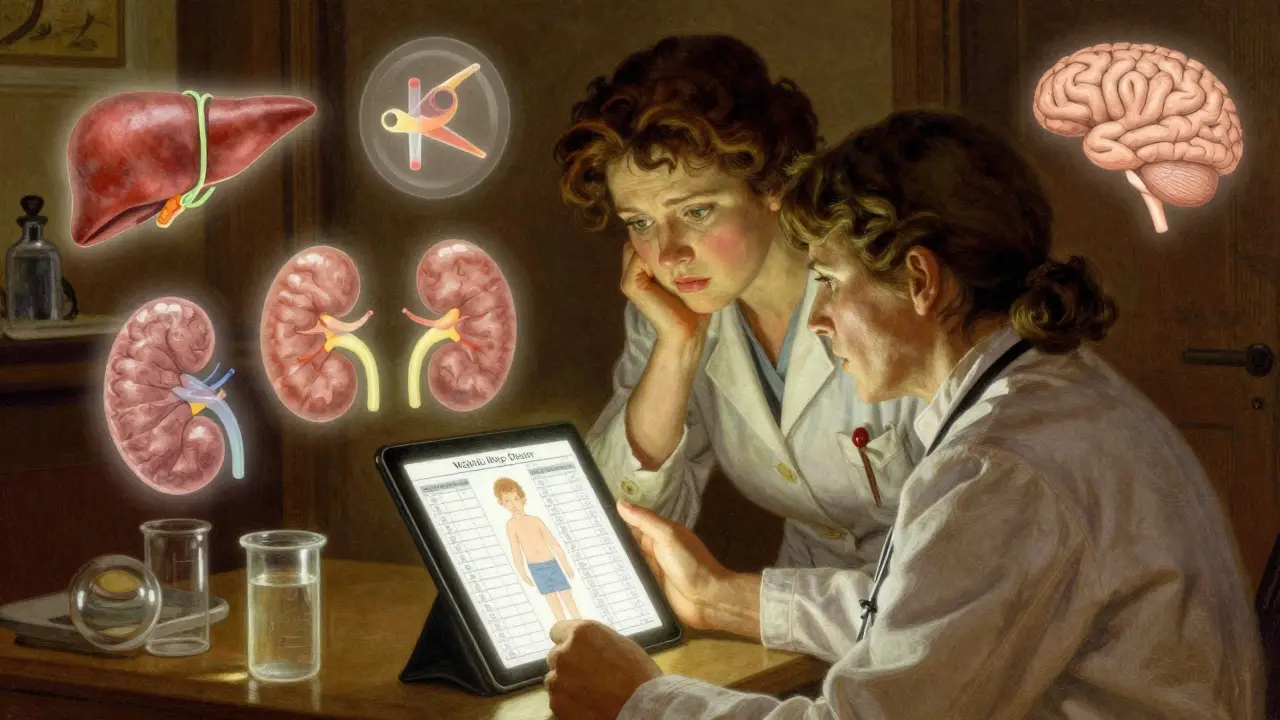
Why So Many Drugs Haven’t Been Tested on Kids
It’s shocking, but true: only about half of the drugs prescribed to children have been studied specifically in pediatric populations. That’s not because doctors are careless. It’s because the science has lagged. For decades, drug trials focused on adults. Kids were seen as “small adults,” and ethical concerns kept them out of studies. That changed in the 1990s. The FDA and NIH realized the cost-both in lives and money-was too high. The Best Pharmaceuticals for Children Act (2002) and the Pediatric Research Equity Act (2003) gave drug companies incentives to test medications on kids. Since then, over 400 drugs have received new pediatric labels. But progress is slow. Between 2002 and 2022, only half of drugs approved for adults got follow-up pediatric studies. And in neonatal ICUs? Nearly 80% of medications are used off-label-meaning they’re given without any official safety data for babies.What Parents and Doctors Should Do
The best defense against pediatric side effects is awareness and communication. Here’s what works:- Keep a medication diary: Write down when the drug was given, the dose, and any new symptoms-even if they seem minor. Drowsiness, irritability, or a rash that fades after a day might still be a signal.
- Ask about alternatives: If your child is prescribed a drug on the KIDs List, ask if there’s a safer option. For example, acetaminophen instead of aspirin, or a different antibiotic if the child has had GI issues before.
- Know the red flags: Difficulty breathing, swelling of the face or throat, rapid heartbeat (not from exercise or fever), seizures, or extreme lethargy require immediate medical attention.
- Use weight-based dosing: Never guess a dose. Always use milligrams per kilogram. A child’s weight changes fast-what worked last month might be too much now.
For mild side effects-like upset stomach or drowsiness-doctors often recommend continuing the medication for a few days. Many reactions fade as the body adjusts. But if symptoms worsen or new ones appear, stop the drug and call your provider.
The Future: Personalized Medicine for Kids
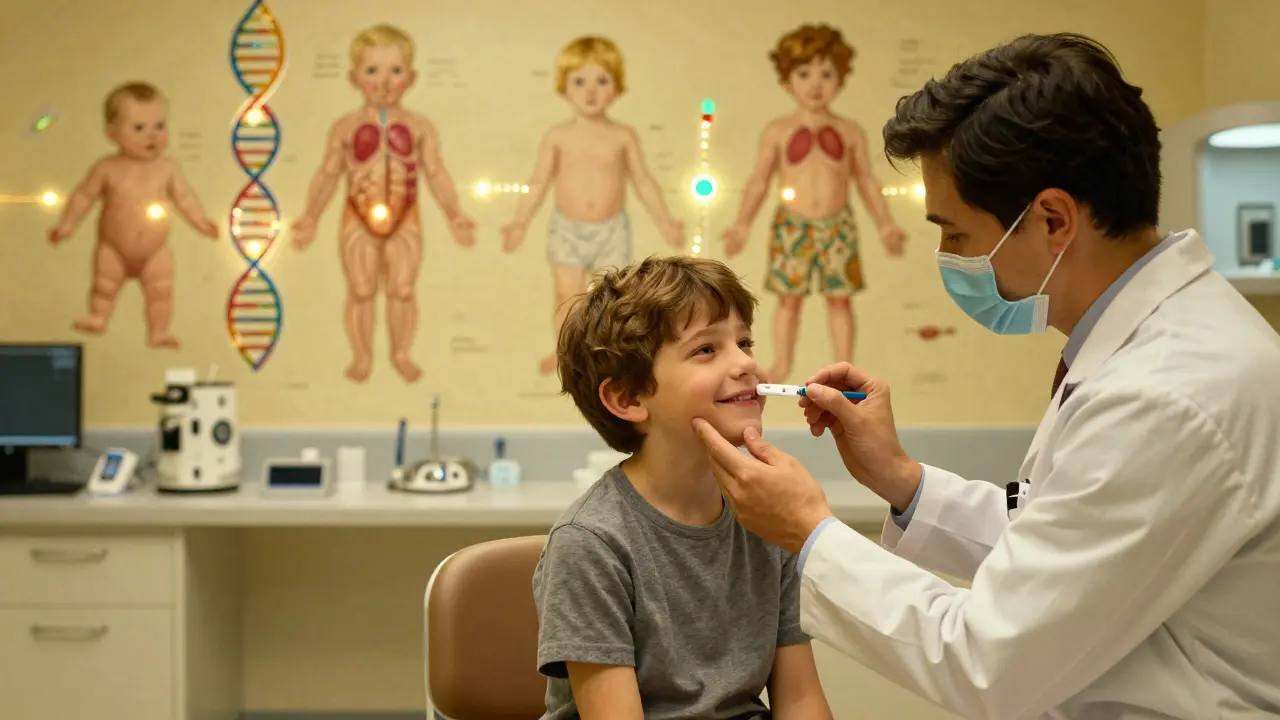
The next big leap in pediatric pharmacology isn’t just better dosing-it’s smarter dosing. Researchers are now using pharmacogenomics to predict how a child will respond to a drug based on their genes. The NIH has launched a $15 million study to create age-specific genetic guidelines for common medications. Imagine a simple cheek swab that tells you whether your child is an ultra-rapid metabolizer of codeine-or likely to have a severe reaction to a common ADHD drug. That’s not science fiction. It’s coming. In the meantime, tools like the Pediatric Drug Safety Portal (PDSportal) and KidSIDES, a free database launched in 2023, give doctors real-time access to drug safety signals across childhood stages. These tools are changing how prescriptions are written-especially in emergency rooms and pediatric clinics where time is tight and risk is high.What Needs to Change
The gap between what kids need and what’s available isn’t just a scientific problem-it’s a policy failure. Children make up 22% of the U.S. population but only 12-15% of the pharmaceutical market. Drug companies have little financial incentive to develop child-friendly formulations-think liquid versions, flavored tablets, or lower-dose packs. The American Academy of Pediatrics estimates that requiring pediatric formulations for all new drugs targeting childhood conditions would cost $200 million a year but prevent 30,000 to 50,000 hospitalizations annually. That’s a bargain. Every child who avoids a bad reaction saves families trauma, medical bills, and lost workdays. It’s time to treat pediatric drug safety like the public health priority it is-not an afterthought.Why are children more sensitive to medication side effects than adults?
Children’s bodies are still developing. Their liver and kidneys process drugs differently, their body fat and water ratios vary by age, and their enzyme systems change rapidly. For example, a newborn’s liver enzymes may only be 30-40% as active as an adult’s, while a toddler’s can be twice as active. This makes dosing unpredictable and increases the risk of overdose or underdose.
What are the most dangerous drugs for children?
The KIDs List identifies high-risk drugs including aspirin (linked to Reye’s syndrome), codeine (can cause fatal breathing problems in ultra-rapid metabolizers), loperamide (can trigger heart rhythm issues in kids under six), and benzocaine teething gels (linked to methemoglobinemia). Even common drugs like antihistamines and antibiotics have higher side effect rates in children than adults.
How common are serious side effects in children taking medication?
About 2-5% of children experience side effects from prescribed medications, but among hospitalized children, up to 18% have at least one adverse drug reaction. Half of those reactions are serious-requiring treatment, hospitalization, or posing life-threatening risks.
Why aren’t more drugs tested on children?
Historically, drug trials focused on adults due to ethical concerns and lack of financial incentive. Even today, only about half of drugs prescribed to children have been studied in pediatric populations. While laws like the Best Pharmaceuticals for Children Act have improved things, many drug companies still skip pediatric testing because it’s expensive and time-consuming.
What should parents do if their child has a side effect?
For mild side effects like nausea or drowsiness, monitor the child and keep a symptom diary. If symptoms worsen or new ones appear-like difficulty breathing, swelling, rapid heartbeat, or seizures-stop the medication and seek immediate medical help. Never adjust the dose without consulting a doctor.
Steven Mayer
December 25, 2025 AT 04:48The pharmacokinetic variability in pediatric populations is profoundly underappreciated in clinical practice. Hepatic CYP450 isoforms exhibit ontogenic shifts that render fixed-dose protocols statistically unsound. The liver’s phase I metabolism capacity, particularly CYP3A4 and CYP2D6, reaches supranormal activity by age two, creating a therapeutic window that’s both narrow and transient. This isn’t dosing-it’s probabilistic guessing with life-or-death stakes.
Pharmacogenomic heterogeneity compounds this. Ultra-rapid CYP2D6 metabolizers convert codeine to morphine at 2–3x the rate of normal metabolizers. In neonates, this isn’t just risky-it’s a death sentence waiting for a prescription.
And yet, we still rely on weight-based mg/kg calculations derived from adult pharmacodynamics. That’s like using a GPS calibrated for New York to navigate Tokyo’s alleyways.
The KIDs List is a start, but it’s reactive, not predictive. We need real-time pharmacovigilance integrated into EHRs, not after-the-fact alerts.
Until then, we’re just rearranging deck chairs on the Titanic while kids bleed out from iatrogenic toxicity.
Sidra Khan
December 27, 2025 AT 02:07Okay but why are we still using adult drugs on kids like they’re just tiny humans? 🤦♀️
Like, I get that it’s cheaper and faster, but we’re literally playing Russian roulette with their developing brains.
My cousin’s kid got prescribed Benadryl for a cold and ended up in the ER with seizures. No one warned us. No one even mentioned it could happen.
It’s not ‘rare.’ It’s negligence dressed up as ‘standard care.’
Ademola Madehin
December 27, 2025 AT 09:11Bro this is wild. I’m from Nigeria and here we give kids adult doses because the pharmacy don’t even have kids’ versions. Sometimes we just crush the pill and mix with pap. One time my sister’s baby got the codeine syrup for cough and nearly died. The nurse said ‘he’s small but he’s strong.’
Now I’m just mad. This ain’t just America problem. This is global crime.
Andy Grace
December 28, 2025 AT 23:35This is one of the most important public health discussions we’re not having. The science is clear: children are not small adults. Their physiology is dynamic, not static. The fact that we’re still prescribing off-label meds without pediatric-specific PK/PD data is indefensible.
I’ve seen ERs in rural Australia give loperamide to toddlers because it’s ‘on the shelf.’ No training. No warning labels. Just convenience.
It’s not malice-it’s ignorance masked by institutional inertia. We need mandatory pediatric pharmacology modules in every med school curriculum, not just as an elective.
Bhargav Patel
December 30, 2025 AT 16:31One cannot help but reflect upon the epistemological gap between pharmaceutical science and pediatric clinical practice. The reductionist paradigm that treats the pediatric organism as a mere scalar variant of the adult form is not only scientifically untenable but ethically perilous.
The ontogeny of drug-metabolizing enzymes, the shifting composition of body water and adipose tissue, and the dynamic expression of membrane transporters collectively constitute a biological landscape that defies static dosing algorithms.
Moreover, the historical exclusion of children from clinical trials-rooted in paternalistic bioethics-has engendered a systemic deficit in evidence-based therapeutics for the youngest among us.
While legislative instruments such as the Best Pharmaceuticals for Children Act represent necessary interventions, they remain insufficient without concurrent investment in longitudinal pharmacovigilance infrastructure and pediatric-specific formulation development.
The moral imperative is clear: to treat children as pharmacologically distinct entities is not merely prudent-it is a non-negotiable condition of medical justice.
Charles Barry
December 31, 2025 AT 15:07They’re lying to you. This isn’t about safety-it’s about control. Big Pharma doesn’t want pediatric formulations because they can’t patent them easily. Liquid forms? Flavored tablets? That’s generic territory. They want you hooked on adult pills crushed into applesauce so you keep buying the same expensive brand.
And the FDA? They’re in bed with them. The ‘KIDs List’? A PR stunt. The real drugs they ban? The ones that compete with their own products.
They don’t care if kids die. They care about profit margins. That’s why 80% of neonatal ICU meds are off-label-because it’s cheaper to let babies get sick than to develop safe versions.
Wake up. This is corporate eugenics wrapped in white coats.
Joe Jeter
January 1, 2026 AT 22:55So we’re supposed to trust a list made by Mayo Clinic? That’s the same place that told us hydroxychloroquine was useless for COVID. Turns out they were wrong. Maybe the KIDs List is just another political agenda dressed as science.
Parents have been giving kids aspirin for decades before Reye’s syndrome was ‘discovered.’ What if it was just bad luck and not the drug?
And why are we blaming doctors when moms and dads are the ones who Google ‘baby medicine’ and give half a pill because it ‘looks right’?
Stop scapegoating the system. Start parenting.
Bartholomew Henry Allen
January 2, 2026 AT 01:59Children are 22 percent of the population but only 12 percent of the market. That means the system is working as intended. If you want better pediatric drugs, vote for policies that reward innovation not regulation. Stop demanding government mandates. Let the market respond.
Why should a company invest millions to make a strawberry-flavored amoxicillin when parents will pay more for the adult version crushed in yogurt?
Stop treating children as special cases. Treat them as consumers. Let capitalism fix this.
Andrea Di Candia
January 3, 2026 AT 16:33I just want to say how deeply moved I am by this post. It’s heartbreaking to think that so many children are being put at risk simply because we haven’t prioritized their unique biology.
But I also see hope. The rise of tools like PDSportal and KidSIDES? That’s real progress. And pharmacogenomics? That’s the future. Imagine a world where every child gets a genetic profile at birth and their meds are tailored to them from day one.
We’re not there yet, but we’re moving. And every parent who asks questions, every doctor who double-checks, every researcher pushing for better data-that’s how change happens.
Keep speaking up. Keep demanding better. We owe it to every child who can’t speak for themselves.
bharath vinay
January 5, 2026 AT 01:49They’re hiding the truth. The real reason kids react badly is because of the glyphosate in their food. The FDA knows. The WHO knows. But they won’t say it because Monsanto owns them.
Montelukast isn’t dangerous-it’s the Roundup in their cereal that’s making their livers hypersensitive. Same with loperamide. It’s not the drug-it’s the GMO corn syrup in their juice boxes.
And why are they pushing genetic testing? So they can track your child’s DNA and sell it to insurers. You think this is about safety? It’s about control. They want to know your kid’s weaknesses before they even start school.
Dan Gaytan
January 6, 2026 AT 15:17This is so important. I’m a pediatric nurse and I see this every day. Parents are scared, doctors are rushed, and pharmacies don’t always have the right formulations.
But here’s the thing-we can fix this. I’ve started keeping a laminated KIDs List on my clipboard. I ask every parent: ‘Have you ever given this to a child under two?’
Small steps. But they matter. And if we all do one thing differently-like checking weight-based dosing instead of guessing-we can save lives.
Thank you for writing this. It’s not just data. It’s real kids.
❤️
Wilton Holliday
January 6, 2026 AT 20:53Hey, I’m a dad of two. My youngest had a reaction to amoxicillin-clavulanate-vomiting, rash, screaming for hours. We thought it was a virus.
Turns out, it was the drug. The pediatrician didn’t mention the 2.7x higher risk for under-twos.
But here’s what helped: I started a little notebook. Every med, every dose, every symptom. Even the ‘tiny’ stuff.
Now I bring it to every appointment. I’ve even shared it with other parents in our neighborhood group.
You don’t need a PhD to make a difference. You just need to pay attention.
And if you’re a provider? Listen. Really listen. Not just to the chart. To the parent’s voice.
Harsh Khandelwal
January 8, 2026 AT 17:22Man, this whole thing is a circus. We got kids on ADHD meds like they’re energy drinks. Doctors write prescriptions like they’re ordering coffee. ‘One venti Adderall, hold the safety data.’
And don’t get me started on the ‘natural remedies’ moms are giving instead-essential oils, CBD gummies, homeopathic nonsense. At least with real drugs, we know what’s in it. With that junk? Could be anything.
We need to stop pretending we’re being careful. We’re just winging it with kids’ lives.
Delilah Rose
January 9, 2026 AT 17:43I’ve been reading everything I can on this topic since my daughter had a severe reaction to diphenhydramine. She was two. We gave her half a teaspoon for allergies. Within an hour, she was staring blankly, unresponsive, shaking. We rushed her to the ER. They said it was a known but underreported reaction.
It took me months to find studies showing that 15-20% of kids have CNS effects from Benadryl-double the adult rate. Why wasn’t this on the bottle? Why didn’t the pharmacist say anything?
Since then, I’ve been documenting every medication we give her-dosage, time, symptoms, even the weather. I’ve started a blog. I’ve emailed every pediatrician in our state. I’ve written to the FDA. I’ve talked to every mom I meet at the park.
It’s exhausting. But if I don’t do this, who will?
And if you’re reading this and you’re a parent? Don’t assume anything. Ask for the data. Ask for alternatives. Ask again. And again. Because no one else is going to fight for your child like you can.
Spencer Garcia
January 11, 2026 AT 07:28Weight-based dosing. Always. Never guess. Use a scale. Record it. Share it with every provider.
Keep the KIDs List handy.
When in doubt, pause. Call your pediatrician. Don’t wait for symptoms to worsen.
Simple. Practical. Life-saving.
Steven Mayer
January 12, 2026 AT 17:14Spencer Garcia’s point is spot-on. But let’s not romanticize ‘simple fixes.’ The real problem is structural. The FDA’s pediatric labeling process takes 5–7 years on average. Drug companies delay submission because it’s costly and doesn’t guarantee market dominance.
What we need is mandatory post-market pediatric surveillance-like the UK’s Yellow Card system but automated with AI and linked to pharmacy databases.
Until then, we’re just putting band-aids on a hemorrhage.