

Supplement & Medication Interaction Checker
People turn to natural remedies and supplements hoping to ease side effects from medications, chronic conditions, or aging-maybe to reduce nausea from chemo, calm anxiety from antidepressants, or stop joint pain from arthritis drugs. It makes sense. If something is natural, it feels safer. But here’s the truth: natural doesn’t mean safe. Many of these products carry real, sometimes serious, risks-and most people have no idea.
What’s Actually Proven to Work?
Some natural remedies have solid evidence backing them for specific side effects. Black cohosh, for example, is one of the few herbs with enough research to be labeled "possibly effective" by the Natural Medicines Database for reducing hot flashes in menopause. But only certain brands-like Remifemin®-have been tested. Generic versions? No proof. That’s because the active ingredients vary wildly between products. One bottle might contain the right extract; another might be filled with cheap fillers or even different plants entirely.
Ginger is another example. Multiple studies show it can reduce nausea from chemotherapy, pregnancy, or motion sickness. A 2020 review in the Journal of Clinical Oncology found that 1 gram of ginger daily cut nausea by about 40% in cancer patients on chemo. It’s not magic, but it’s reliable-if you get a quality product.
For chemotherapy-induced neuropathy (tingling, burning hands and feet), some small studies suggest alpha-lipoic acid might help. But the doses used in trials are high-600 mg daily-and not all supplements deliver that amount. Many contain less than half. You’re paying for hope, not guaranteed results.
The Hidden Dangers: What No One Tells You
Herbal supplements aren’t regulated like prescription drugs. Under the Dietary Supplement Health and Education Act of 1994, companies don’t need to prove safety or effectiveness before selling. That means your turmeric capsule could have lead in it. Your echinacea tea might contain pesticides. Or worse-it might be laced with a hidden pharmaceutical, like steroids or stimulants.
Between 2004 and 2013, the Drug-Induced Liver Injury Network found that only 13% of suspected herbal-related liver injuries could be definitively tied to the herb itself. The rest? Contaminants, mislabeling, or adulteration. One study found that 20% of herbal products bought online contained unlisted drugs-including banned weight-loss agents and erectile dysfunction pills.
Even "safe" herbs can turn dangerous. Licorice root, found in 75% of Japanese herbal formulas, can cause pseudohyperaldosteronism: high blood pressure, low potassium, swelling, and even seizures. Just 3% of users develop it-but if you’re on blood pressure meds or have kidney issues, you’re at higher risk. And you won’t know until it’s too late.
Supplements That Interact With Medications (And Why It’s Deadly)
St. John’s wort is the most dangerous offender. It triggers the liver to break down other drugs faster-so your birth control pill becomes ineffective. Your antidepressant stops working. Your HIV meds lose potency. Clinical studies show it cuts blood levels of birth control by 15-24%. That’s not a small risk. That’s pregnancy territory.
Ginkgo biloba and cranberry juice? Both thin the blood. Take them with warfarin, aspirin, or even ibuprofen, and you increase your risk of internal bleeding. A 2018 case report in Annals of Internal Medicine described a 72-year-old woman who had a brain hemorrhage after combining ginkgo with daily aspirin. She didn’t tell her doctor she was taking either.
Black cohosh might be safe for hot flashes-but if you have liver disease or take statins, it could push your liver into failure. The Cleveland Clinic says the link isn’t proven, but the risk isn’t zero. And no one’s monitoring you.
Even something as simple as echinacea can be risky. If you have autoimmune diseases like lupus or MS, it can trigger flare-ups. And if you’re allergic to ragweed, daisies, or chrysanthemums? You’re likely allergic to echinacea too. Skin rashes, asthma attacks, swelling-these aren’t rare.
Who’s Most at Risk?
Older adults are the most vulnerable. As we age, our livers and kidneys slow down. That means herbs stay in the body longer, building up to toxic levels. A 70-year-old taking ashwagandha for stress might not realize they’re accumulating enough to cause dizziness, low blood pressure, or heart rhythm problems.
Women over 50 are at higher risk for liver damage from herbal products. The Japanese Ministry of Health tracked this: 1 in 25,000 people taking herbal remedies developed interstitial pneumonia. Almost all were women over 50. The culprit? Syo-saiko-to, a common Japanese formula with Scutellaria root. It’s not rare. It’s underreported.
People on multiple medications? High risk. The average American over 65 takes four prescription drugs. Add three supplements? That’s seven interactions waiting to happen. The FDA has received over 800 reports of serious side effects from ephedra alone between 1995 and 1999-including heart attacks and strokes in people under 40.
What Should You Do Instead?
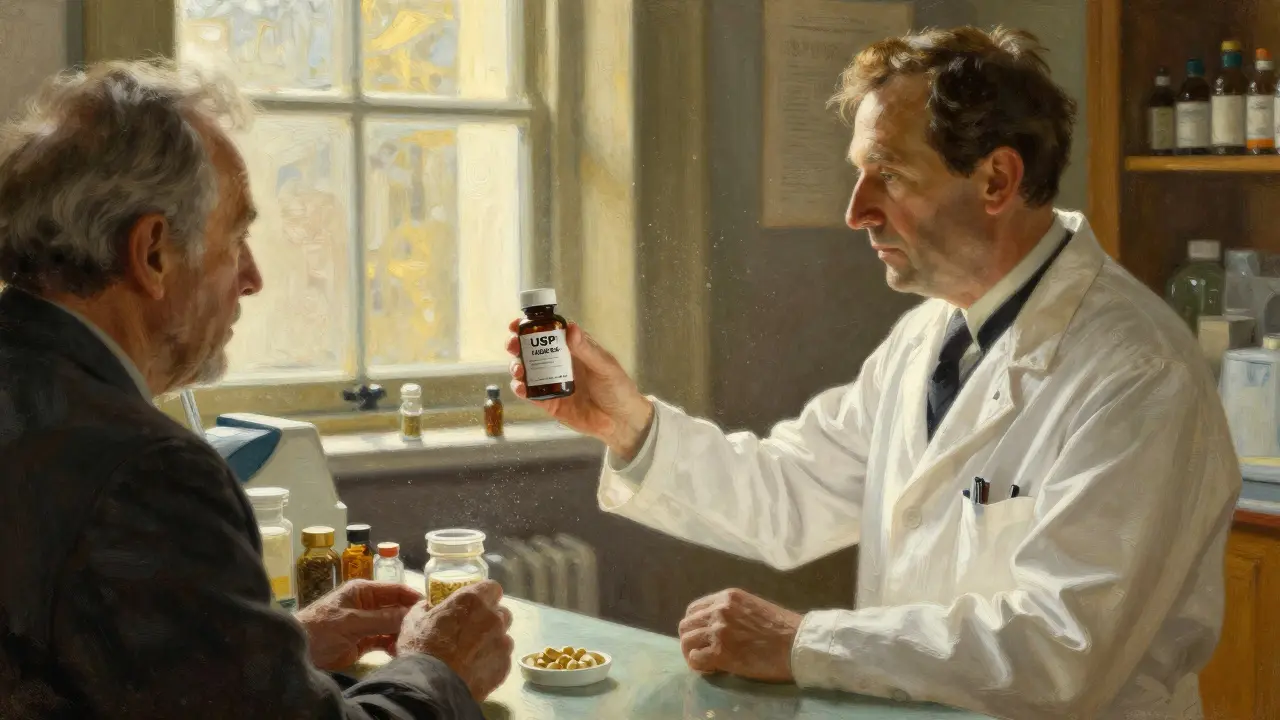
Don’t stop your meds. Don’t guess with supplements. Talk to your doctor-or better yet, your pharmacist. Pharmacists are trained to spot interactions. They know what’s in your supplements, even if you don’t. Bring your bottle. Take a photo. List everything you take, including teas, tinctures, and essential oils.
Look for third-party tested brands. Organizations like USP, NSF International, and ConsumerLab test supplements for purity and potency. Their seals mean the product actually contains what’s on the label. It’s not foolproof, but it’s the best you’ve got.
Start low, go slow. If you try ginger for nausea, begin with 250 mg once a day. Watch for changes. If you feel worse, stop. Don’t assume it’s "just detoxing." That’s not a medical term. That’s marketing.
Report bad reactions. If you get a rash, dizziness, or strange fatigue after starting a supplement, tell your doctor and file a report with the FDA’s Safety Reporting Portal. Every report helps build the evidence. Right now, we’re flying blind because most people don’t report.

Why This Keeps Happening
The global herbal supplement market hit $34.7 billion in 2022 and is growing fast. Companies sell hope. They use words like "pure," "natural," and "ancient wisdom"-but rarely mention side effects. Ads show smiling seniors hiking, not people in hospital beds with liver failure.
The European Medicines Agency requires herbal products to prove safety and traditional use before sale. The U.S. doesn’t. That’s why you can buy ephedra-free weight-loss pills that still contain hidden stimulants. That’s why you can buy "detox" teas with senna, a powerful laxative that causes colon damage with long-term use.
Science is catching up. DNA barcoding now helps detect fake herbs. Pharmacovigilance systems are being built to track herbal side effects globally. But until regulations change, you’re the last line of defense.
Bottom Line: Knowledge Is Your Only Protection
Natural remedies aren’t the enemy. But treating them like harmless tea is dangerous. Some help. Many don’t. All can hurt. The evidence is clear: if you’re taking supplements to manage side effects, you need facts-not marketing. Know what’s in it. Know how it interacts. Know your body. And never assume safety because something comes from a plant.
When in doubt, skip it. Talk to a professional. Your health isn’t worth the gamble.
Philip Leth
January 4, 2026 AT 01:35I took turmeric for my knee pain for six months. Thought it was magic until I started getting dizzy and my liver enzymes went through the roof. Turned out the bottle had lead in it. No joke. Got it off Amazon. Lesson learned: if it’s not USP-tested, it’s a gamble.
Joy F
January 4, 2026 AT 08:18Let’s be real-this whole ‘natural is safe’ paradigm is a capitalist fairy tale engineered to exploit the vulnerable. The FDA’s regulatory capture is staggering. Companies exploit the DSHEA loophole like it’s a tax write-off for corporate malfeasance. We’ve normalized biochemical roulette under the guise of wellness culture. And the media? They amplify placebo-driven narratives while sidelining pharmacovigilance. It’s not ignorance-it’s systemic negligence dressed in lavender-scented packaging.
Ian Detrick
January 4, 2026 AT 12:51It’s not about demonizing herbs-it’s about treating them like medicine. If you wouldn’t take a pill without knowing the dosage, why take a capsule with zero labeling? Ginger works. Black cohosh can help. But you need to know the source, the dose, and your own health profile. It’s not witchcraft. It’s science with roots.
Angela Goree
January 5, 2026 AT 02:00What are we, a nation of cowards? We let Big Pharma push pills, then turn to some ‘ancient remedy’ from a guy on Instagram because we’re too lazy to read the label. And now we’re surprised when people end up in the ER? This isn’t ‘natural’-it’s negligence. We need real oversight, not more ‘trust me bro’ supplements.
Kerry Howarth
January 5, 2026 AT 08:35Bring your supplements to your pharmacist. Seriously. They’ll tell you what’s safe, what’s not, and what’s just sugar and sawdust. No judgment. Just facts.
Tiffany Channell
January 5, 2026 AT 10:27St. John’s wort and birth control? That’s not a side effect-that’s a betrayal. People think they’re being ‘holistic’ while silently sabotaging their own health. And then they blame the doctor when they get pregnant. Wake up. This isn’t self-care. It’s self-sabotage wrapped in a yoga mat.
Angela Fisher
January 5, 2026 AT 15:21They don’t want you to know this but every single supplement you buy is secretly tracked by the government and the pharmaceutical industry. They let the bad ones stay on shelves so they can sell you the ‘safe’ versions later for 10x the price. That’s why they fight regulation-because if you knew the truth, you’d stop buying everything. Even the ‘USP-tested’ ones. They’re all part of the same system. I’ve seen the documents. They’re hiding the real toxins. The lead? The mercury? The synthetic steroids? All intentional. They want you dependent. They want you sick. And they’re making billions off your fear.
Shanahan Crowell
January 6, 2026 AT 13:32My grandma took ashwagandha for anxiety-ended up with a heart flutter. She didn’t tell anyone. Took three months to connect it. Don’t be her. Talk to someone who knows what’s in your body. It’s not weak to ask. It’s smart.
Wren Hamley
January 8, 2026 AT 03:00Here’s the kicker: the same people selling you ‘pure’ echinacea are probably the ones who grew it in a field sprayed with glyphosate, harvested it with dirty gloves, and shipped it through three countries before it hit your shelf. Meanwhile, the FDA gets maybe 1% of adverse event reports. The rest? Ghosts. We’re playing Russian roulette with our endocrine system and calling it ‘wellness.’ The real ancient wisdom? Know your source. Know your dose. Know your damn body.