

Thousands of people are taping their mouths shut at night, convinced it will fix their snoring, improve sleep, and even make them look younger. TikTok is full of before-and-after clips showing people waking up refreshed, claiming mouth taping turned their sleep around. But here’s the problem: mouth taping isn’t a proven treatment. It’s a risky trend built on shaky science and dangerous assumptions.
What Mouth Taping Actually Does
Mouth taping involves placing a small strip of medical tape-usually 3M Micropore or similar hypoallergenic paper tape-horizontally across the lips before bed. The goal is simple: force you to breathe through your nose by physically preventing your mouth from opening. Proponents say this reduces snoring, improves oxygen levels, and prevents dry mouth. Some even claim it helps with allergies, teeth grinding, and facial structure changes over time. The idea isn’t entirely new. Dentists and sleep specialists have long known that nasal breathing is healthier than mouth breathing during sleep. Nasal breathing filters air, humidifies it, and produces nitric oxide, which helps with oxygen absorption. Mouth breathing, on the other hand, dries out the throat, increases inflammation, and can worsen snoring and sleep apnea. But here’s the catch: forcing your mouth shut doesn’t fix the root cause of why you’re breathing through your mouth in the first place.The Evidence: What Studies Actually Show
A 2020 systematic review in PLOS One analyzed 10 studies involving 213 people who tried mouth taping. The results? Mixed at best. Only two of those studies showed a statistically meaningful drop in the Apnea-Hypopnea Index (AHI)-the standard measure for sleep apnea severity. In those cases, the improvement was mostly seen in people with mild, positional sleep apnea (meaning it only happened when lying on their back). One NIH-funded study with 20 participants found that mouth taping cut snoring and AHI by about half-but 75% of those participants had positional apnea. That means the improvement wasn’t because of the tape. It was because they stopped sleeping on their backs. Remove the position factor, and the tape’s effect disappears. Worse, a 2023 study of 127 people with mild sleep apnea found that while 68% snored less with mouth tape, 22% experienced dangerous drops in blood oxygen levels (SpO2 below 88%). That’s not better sleep-that’s a medical red flag. Compare that to proven treatments. CPAP machines, the gold standard for sleep apnea, work 85-90% of the time when used correctly. Mandibular advancement devices (MADs) reduce AHI by 40-60% in mild to moderate cases. Mouth taping? It’s inconsistent, poorly studied, and sometimes harmful.The Hidden Dangers
The biggest risk isn’t skin irritation or discomfort. It’s undiagnosed sleep apnea. About 80% of people with moderate to severe obstructive sleep apnea don’t know they have it. If you’re one of them, taping your mouth shut could be life-threatening. Your airway is already collapsing during sleep. If you can’t breathe through your nose-because of a deviated septum, allergies, or swollen tissues-taping forces you into a state of oxygen deprivation. You might wake up gasping, panicked, or not at all. Dr. Brian Rotenberg, a sleep surgeon and co-author of the PLOS One review, put it bluntly: “Taping the mouth shut during sleep is dangerous, especially among those who may not be aware they have sleep apnea. These individuals are unknowingly making their symptoms worse.” A 2023 survey by the American Sleep Apnea Association found that 12% of people who tried mouth taping had at least one episode where they woke up unable to breathe. On Reddit’s r/SleepApnea forum, 36 out of 147 respondents reported waking up gasping. Skin irritation, anxiety, and panic attacks were also common complaints. The American Academy of Sleep Medicine, the American Academy of Dental Sleep Medicine, and the Cleveland Clinic all warn against the practice. The FDA hasn’t approved any mouth tape for treating sleep apnea. In fact, the Federal Trade Commission sent warning letters to three companies in 2022 for making false health claims about their products.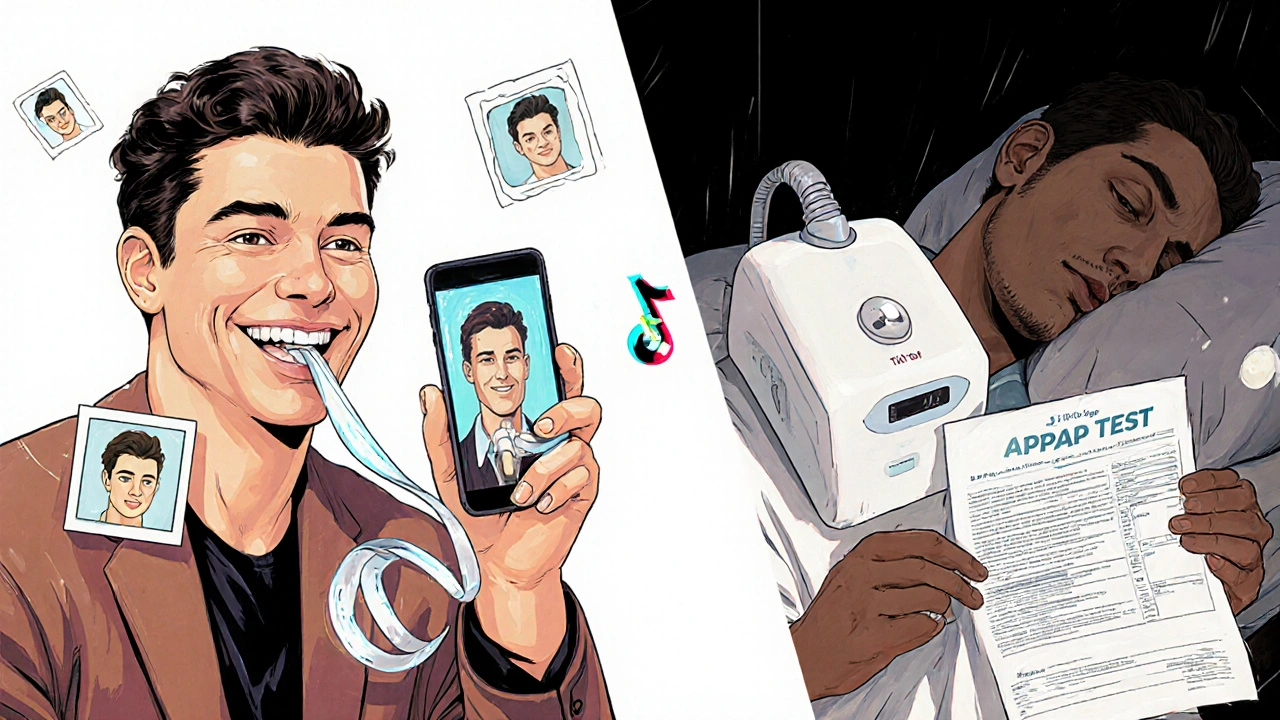
Who Might Benefit-and Who Should Avoid It
There’s a narrow group of people who might safely try mouth taping: those who breathe through their mouth at night due to habit, not obstruction, and who have no signs of sleep apnea. If you snore lightly, wake up with a dry mouth, and have no daytime fatigue, no witnessed breathing pauses, and no high blood pressure or obesity, you might be a candidate. But even then, you should first confirm you can breathe easily through your nose. How? Try this: pinch your nose shut and breathe through your mouth for 30 seconds. Now, open your nose and breathe through it. If you can’t breathe comfortably through your nose, you shouldn’t tape your mouth. Simple as that. If you have any of these, don’t tape your mouth:- Diagnosed or suspected sleep apnea
- Nasal congestion, allergies, or sinus issues
- Chronic asthma or COPD
- Obesity or high blood pressure
- Waking up gasping or choking
- Daytime fatigue, brain fog, or morning headaches
What to Do Instead
If you’re struggling with snoring or poor sleep, there are safer, proven options. Start with nasal breathing support. Saline rinses, nasal strips (like Breathe Right), or nasal dilators can open your airway without blocking your mouth. Provent Sleep Therapy’s new nasal device, cleared by the FDA in September 2023, creates gentle resistance to keep your airway open-without taping. For persistent snoring or suspected sleep apnea, get tested. A home sleep test costs under $200 and can be done in your own bed. If you have apnea, CPAP or an oral appliance from a board-certified sleep dentist will work far better than tape. Even lifestyle changes help. Losing 5-10% of body weight can cut apnea severity in half. Sleeping on your side reduces snoring for most people. Avoid alcohol and sedatives before bed-they relax your throat muscles and make breathing worse.
Why This Trend Took Off
Mouth taping went viral because it’s simple, cheap, and feels like a quick fix. A roll of medical tape costs $5-$15. A CPAP machine costs $500-$3,000. A dental device costs $1,000-$2,500. Tape seems like magic. Social media amplified it. TikTok had over 1.2 million videos using #mouthtaping in 2022. Most didn’t mention risks. Influencers showed glowing results but never disclosed if they had sleep apnea-or if they’d even been tested. The market exploded. Companies like Somnifix now sell “sleep strips” for $19.99 a pack. But they’re not medical devices. They’re adhesive strips with no clinical backing. The truth? This isn’t medicine. It’s wellness theater.The Bottom Line
Mouth taping isn’t a cure. It’s a gamble with your breathing. For a small number of people without sleep disorders, it might reduce snoring. But for anyone with even mild sleep apnea, it could be dangerous. If you’re considering it, ask yourself: Have I been tested for sleep apnea? Can I breathe easily through my nose? Do I wake up tired, gasping, or with a dry mouth every day? If you answered yes to any of those, skip the tape. Talk to a doctor. Get tested. Use a proven solution. Sleep shouldn’t be a DIY experiment. Your breathing is too important to risk on a viral trend.Is mouth taping safe for everyone?
No. Mouth taping is not safe for people with undiagnosed sleep apnea, nasal obstruction, asthma, COPD, or anyone who wakes up gasping. It can cause dangerous drops in blood oxygen levels and increase the risk of suffocation. Even people without diagnosed conditions should test nasal breathing first-taping only works if you can breathe easily through your nose.
Does mouth taping help with sleep apnea?
It might reduce snoring in a small subset of people with mild, positional sleep apnea-but it doesn’t treat the underlying airway collapse. Studies show inconsistent results, and in some cases, it worsens oxygen levels. CPAP and oral appliances are proven, FDA-cleared treatments with success rates above 80%. Mouth taping is not a substitute.
What tape should I use if I try it?
If you choose to try it despite the risks, use only medical-grade, hypoallergenic paper tape like 3M Micropore. Avoid duct tape, athletic tape, or any tape with strong adhesives. Apply a small strip horizontally across the lips-not full width-so you can still breathe if needed. Never use it on children, pregnant people, or anyone with respiratory conditions.
Why do people say it works if the science says otherwise?
Many people who report success have mild snoring without sleep apnea. Their improvement may come from better sleep posture, reduced alcohol intake, or placebo effect. Social media filters out failure-only the “success stories” get posted. Meanwhile, people who wake up gasping or anxious rarely post about it. The real data shows more harm than benefit.
Can mouth taping cause long-term damage?
Yes. Repeated episodes of low oxygen during sleep can raise blood pressure, increase inflammation, and strain the heart. Chronic mouth breathing (even with tape) can worsen jaw alignment and dental issues. If you rely on mouth taping instead of getting tested for sleep apnea, you’re delaying treatment for a condition linked to stroke, heart disease, and diabetes.
Are there better alternatives to mouth taping?
Yes. Use nasal strips or saline rinses to open your airway. Sleep on your side. Lose weight if you’re overweight. Avoid alcohol before bed. For persistent snoring or apnea, get a home sleep test. If diagnosed, CPAP or a custom oral appliance from a sleep dentist will work far better than tape. FDA-cleared devices like Provent are designed to support breathing without blocking your mouth.
steffi walsh
November 17, 2025 AT 22:50omg i tried this for a week and my snoring stopped 😭 i feel like a new person. why are people so scared of simple things? maybe we need to stop over-medicalizing everything and just try stuff that feels right.
Conor McNamara
November 18, 2025 AT 07:29they dont want you to know this but the FDA banned mouth taping in 2021... they just dont tell you. the sleep industry makes billions off cpap machines. theyre scared of a $5 tape. i read the plos one study-2 out of 10? thats still a win. why arent they testing the tape with real patients? theyre hiding something.
Leilani O'Neill
November 19, 2025 AT 04:43How quaint. You people treat sleep like a TikTok hack. Did you even read the NIH study? 22% dropped below 88% SpO2. That’s not ‘maybe it works’-that’s a clinical emergency. If you’re too lazy to get a proper sleep study, don’t tape your face shut and call it self-care. You’re not a wellness influencer. You’re a walking hypoxia case waiting to happen.
Riohlo (Or Rio) Marie
November 20, 2025 AT 13:33Let’s be real-this isn’t about sleep. It’s about control. The modern human has forgotten how to breathe. We’re all hyperventilating through our mouths like panicked squirrels. Mouth taping isn’t dangerous-it’s a return to ancestral biology. The fact that you need a 3000-dollar machine to breathe at night? That’s the real tragedy. The system wants you dependent. I taped my lips for 90 days. My jawline changed. My skin cleared. I stopped dreaming about drowning. You’re not seeing the full picture because you’re too busy reading journal abstracts to feel your own body.
Iska Ede
November 22, 2025 AT 04:27So let me get this straight-you’re telling me the same people who sell you ‘detox foot patches’ and ‘crystal-infused water’ are now selling you tape to stick on your lips? And you believe them? Honey, if your solution to snoring is duct tape, maybe your real problem is your life choices.
Gabriella Jayne Bosticco
November 23, 2025 AT 05:26My dad used to snore like a chainsaw. We tried everything-pillows, elevating the bed, even a humidifier. He finally got tested and had mild apnea. Got a CPAP. First night, he cried because he could breathe. He’s been asleep for 8 hours straight for 5 years now. No tape. No hype. Just science. Don’t risk your life for a viral trend.
Bailey Sheppard
November 24, 2025 AT 06:03I tried mouth taping for 3 nights. First night, I woke up panicking because I couldn’t breathe through my nose (turns out I have a deviated septum). Second night, I got a rash. Third night, I just gave up. I went to the doctor, got a nasal strip, and now I sleep like a baby. No tape. No drama. Just listening to your body.
Girish Pai
November 25, 2025 AT 11:24India has been practicing nasal breathing for 5000 years through pranayama. We didn’t need tape. We didn’t need machines. We had yogic science. Now Westerners think they discovered breathwork because a TikTok influencer posted a video? Pathetic. Go learn Nadi Shodhana before you tape your mouth shut. Your body already knows how to breathe-you just forgot.
Kristi Joy
November 27, 2025 AT 03:03If you’re reading this and thinking about trying mouth tape-pause. Take a deep breath. Ask yourself: Do I wake up tired? Do I have morning headaches? Do I feel foggy all day? If yes, please, please see a sleep specialist. You don’t need to suffer. You don’t need to gamble. There’s help. And you deserve it.
Hal Nicholas
November 27, 2025 AT 21:23Someone’s gonna die from this. Mark my words. And then the media will run a story about ‘the TikTok sleep trend that killed a 28-year-old.’ And the comment section will be full of people saying ‘but it worked for me!’ while the coroner’s report says ‘acute hypoxia due to airway obstruction.’ We’re one viral video away from a public health disaster.
Louie Amour
November 28, 2025 AT 10:31You think you’re being ‘natural’ by taping your mouth? You’re just another sheep following influencer dogma. The real problem? You’re too lazy to fix your lifestyle. You’re obese. You drink wine before bed. You sleep on your back. But instead of changing anything real-you slap on a strip of tape like it’s a magic charm. Pathetic. Get real. Get help. Or keep pretending.
Kristina Williams
November 30, 2025 AT 09:21they said the same thing about masks during covid. now they’re saying it about tape. who controls the sleep industry? who profits from cpap? why are there no long-term studies on tape? they don’t want you to know. the truth is hidden. i taped my mouth for 6 months. i’m not sick anymore. they can’t prove i’m wrong.
Shilpi Tiwari
December 1, 2025 AT 12:20From a respiratory physiology standpoint, nasal breathing enhances nitric oxide production, which improves vasodilation and oxygen uptake. Mouth taping may act as a behavioral cue to reinforce nasal breathing patterns-especially in individuals with habitual mouth breathing. However, the absence of airway patency assessment renders this intervention potentially hazardous in obstructive phenotypes. The literature supports adjunctive use only under polysomnographic monitoring. Unmonitored application constitutes a Class II risk.