

Diarrhea Severity Assessment Tool
This tool helps you understand the severity of your medication-induced diarrhea based on key symptoms. Early assessment is crucial for effective treatment and preventing complications.
Assess Your Symptoms
Diarrhea from medication isn’t just an inconvenience-it can derail your treatment, land you in the hospital, or even become life-threatening. If you’re on chemotherapy, antibiotics, or immunotherapy, you’re at risk. About half of chemotherapy patients and up to 30% of those on antibiotics develop diarrhea that’s directly caused by their drugs. The good news? With the right steps, you can stop it before it gets serious.
What Exactly Is Medication-Induced Diarrhea?
Medication-induced diarrhea (MID) happens when a drug irritates your gut, speeds up digestion, or kills off good bacteria. It’s not the same as a stomach bug. This type of diarrhea shows up because of the medicine itself-not because you ate something bad. The most common culprits are:
- Chemotherapy drugs like irinotecan and 5-fluorouracil-up to 80% of patients get it, and 1 in 4 develop severe cases.
- Antibiotics-especially broad-spectrum ones like clindamycin or ciprofloxacin. These wipe out good gut bacteria, letting harmful ones like Clostridioides difficile take over.
- Immunotherapy-drugs like pembrolizumab can trigger inflammation in the colon, leading to watery stools and cramping.
The severity is graded from 1 to 4. Grade 1 is just a few extra stools a day. Grade 3 means seven or more stools, incontinence, or needing hospital care. Grade 4 is dangerous-could mean organ failure. Most people don’t realize how fast this can escalate.
Why Timing Matters More Than You Think
Waiting to treat diarrhea is the biggest mistake patients make. Studies show that if you wait more than 24 hours to start loperamide after your first loose stool, your chance of developing severe diarrhea jumps by more than three times. That’s not a guess-it’s from a 2021 ASCO patient registry analysis of thousands of cases.
Doctors don’t just say “take something” for no reason. Loperamide works best when it hits your system early. It slows down your gut so your body has time to absorb water again. Start with 4 mg right away. Then take 2 mg every 4 hours after each loose stool. Don’t go over 16 mg a day unless you’re on irinotecan-then you can go up to 24 mg. But only under medical supervision.
Many patients think, “I’ll wait and see if it gets worse.” But by then, it’s often too late. The goal isn’t to stop every single loose stool-it’s to prevent progression. If you’re on chemo, your care team should give you a written plan before treatment even starts. If they haven’t, ask for one.
When Loperamide Isn’t Enough
For mild cases, loperamide works in 60-75% of people. But if your diarrhea keeps going after 24 hours, or hits grade 3 (seven or more stools, or you’re hospitalized), you need something stronger: octreotide.
Octreotide is a shot. It’s not a first-line drug, but it’s the gold standard when loperamide fails. It works by reducing fluid secretion in the intestines. In grade 3 or 4 diarrhea, it stops symptoms in 60-95% of cases. The key? Start it within four hours of noticing worsening symptoms. Delaying by even a few hours can increase hospitalization risk by 35%.
It’s injected under the skin-usually in the belly or thigh. Some people find the injections painful, especially if they’re done cold or too fast. Keep the vial at room temperature before use. Use a small needle (23-25 gauge). Rotate injection sites. Many patients keep pre-filled syringes ready at home so they don’t have to fumble during a flare-up.
There’s no magic pill here. If you’re on chemo and your doctor hasn’t discussed octreotide, ask: “What’s the plan if loperamide doesn’t work?”
What to Avoid: The Dangerous Mistakes
Not all diarrhea treatments are safe. Some can make things worse-sometimes fatally.
- Don’t use loperamide if you have a fever, bloody stools, or suspect C. diff. Antimotility drugs like loperamide can trap toxins in your colon and cause toxic megacolon-a rare but deadly condition. The IDSA says the risk goes up 4.2 times if you use it when C. diff is possible.
- Don’t take bismuth subsalicylate (Pepto-Bismol) if you’re allergic to aspirin or have kidney problems. It’s fine for mild traveler’s diarrhea, but not for chemo or antibiotic-related cases.
- Don’t use probiotics blindly. Only two strains have solid proof: Lactobacillus rhamnosus GG and Saccharomyces boulardii. Other probiotics? No benefit. And don’t take them if you’re immunocompromised-there’s a small risk of infection.
- Don’t stop your chemo or antibiotics without talking to your doctor. Sometimes, the diarrhea is a sign the treatment is working. But if it’s too severe, they may need to adjust the dose or delay the next cycle.
Rule of thumb: If you have a fever over 38.5°C, blood in your stool, or diarrhea lasting more than 48 hours after starting antibiotics-get a stool test. Don’t guess. Test first.

Diet and Hydration: The Quiet Heroes
Medication-induced diarrhea drains your body of fluids and salts. Dehydration can hit fast-especially in older adults or people with other health issues.
Drink oral rehydration solutions (ORS). Not Gatorade. Not coconut water. ORS has the exact mix your body needs: 75 mmol/L sodium, 75 mmol/L glucose, and 20 mmol/L potassium. You can buy packets (like Pedialyte or WHO formula) at any pharmacy. Mix one packet with 200 mL of clean water. Sip slowly-don’t chug.
Food matters too. Avoid:
- Milk and dairy (lactose intolerance kicks in fast after gut irritation)
- Fatty or fried foods (they speed up digestion)
- Spicy foods, caffeine, and alcohol
Stick to bland, low-fiber foods: white rice, bananas, applesauce, toast, boiled potatoes. The BRAT diet isn’t magic, but it’s gentle on your gut.
Some patients swear by rice water or boiled carrots. There’s no strong science behind them, but if they help you feel better without side effects, they’re harmless.
What’s New in 2025?
Medicine hasn’t stood still. In 2023, the FDA approved onercept, a new drug that helps repair the gut lining. In trials, it cut severe diarrhea by 63% in chemo patients. It’s still limited to major cancer centers, but it’s a big step.
Also in 2024, ASCO updated its guidelines to recommend neomycin prophylaxis for high-risk patients on irinotecan. If you’re getting irinotecan and have a history of diarrhea, your doctor might now start you on neomycin two days before treatment. It reduces diarrhea rates from 65% down to 32%.
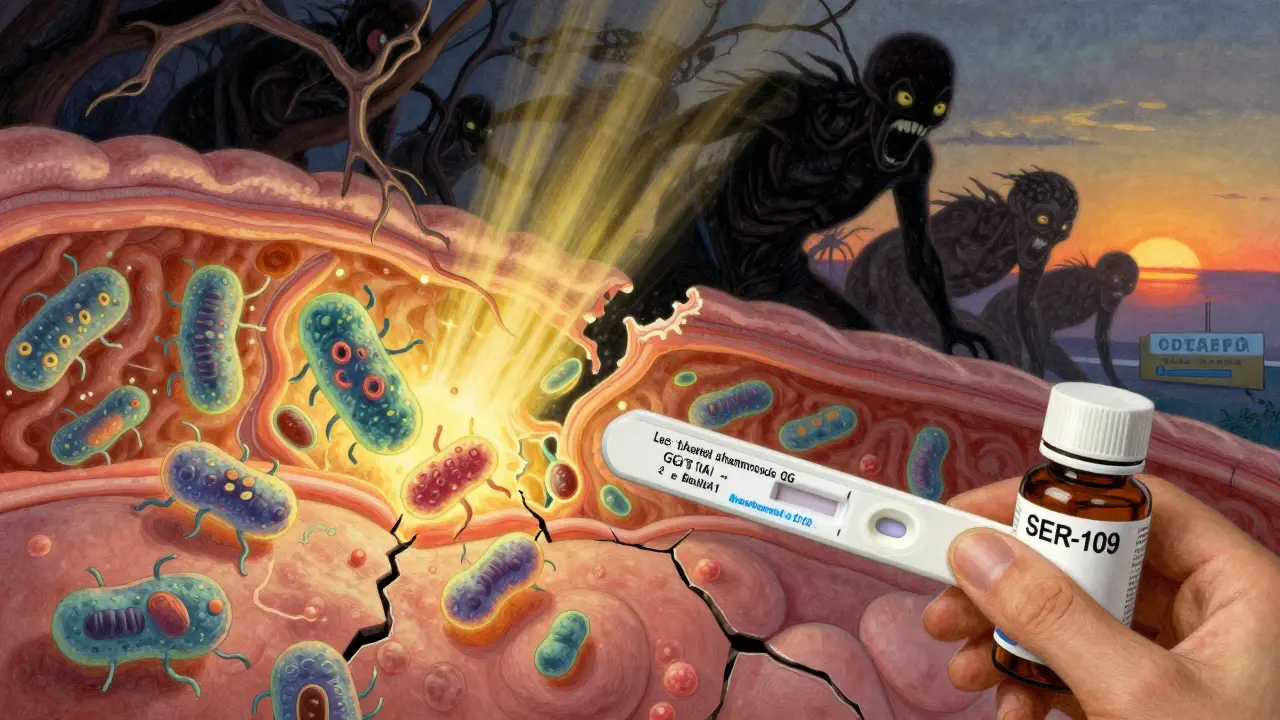
And the future? Microbiome therapy is coming. SER-109, a pill made of purified good bacteria, is already approved for recurrent C. diff. It cuts recurrence from 40% to 12%. Clinical trials are now testing similar therapies for chemo-induced diarrhea.
There’s also genetic testing. If you have a UGT1A1 gene variant, your body breaks down irinotecan slower. That means higher risk of diarrhea. Testing for this is becoming more common. If you’re about to start irinotecan, ask: “Can I get tested for UGT1A1?”
Real Patient Tips That Work
Patients aren’t just passive recipients of care. Many have figured out what works.
- Pre-mix your octreotide. Keep pre-filled syringes in the fridge. Label them with the date and dose. No more fumbling during a crisis.
- Keep a diarrhea log. Write down time, frequency, consistency, and what you ate. This helps your doctor spot patterns.
- Use a bedside electrolyte drink. Keep ORS by your bed. If you wake up with diarrhea at 3 a.m., you can hydrate without getting up.
- Don’t be ashamed to ask for help. One patient said, “I waited three days because I didn’t want to bother my nurse. By then, I was in the ER. Don’t make my mistake.”
According to a 2021 study, patients who used a visual diarrhea management toolkit from the Oncology Nursing Society reduced errors by 45%. These tools include charts, checklists, and injection guides. Ask your clinic if they have one.
When to Call Your Doctor
You don’t need to wait until you’re desperate. Call your care team if:
- Diarrhea lasts more than 24 hours
- You have four or more loose stools in 24 hours
- You feel dizzy, weak, or have dry mouth
- You have a fever over 38.5°C
- You see blood or mucus in your stool
- You’re on antibiotics and it’s been more than 48 hours
These aren’t “maybe” signs. They’re red flags. Your care team needs to act fast.
Final Takeaway: Be Ready, Not Reactive
Medication-induced diarrhea doesn’t have to control your life. The tools to stop it exist. But you need to act early, know your limits, and communicate with your team.
Before your next chemo or antibiotic cycle, ask:
- “What’s my diarrhea plan?”
- “What’s the next step if loperamide doesn’t work?”
- “Can I get a stool test kit at home?”
- “Do I need to be tested for UGT1A1?”
Most people think diarrhea is just part of treatment. It’s not. It’s a signal. And with the right plan, you can turn it from a crisis into a manageable side effect.
Can I use over-the-counter diarrhea medicine like Imodium for medication-induced diarrhea?
Yes-but only under the right conditions. Loperamide (Imodium) is the first-line treatment for mild to moderate cases caused by chemotherapy or non-infectious triggers. Start with 4 mg right after your first loose stool, then 2 mg after each subsequent loose stool, up to 16 mg daily (or 24 mg if on irinotecan). But if you have a fever, bloody stools, or suspect C. diff infection, DO NOT use it. It can trap toxins and cause toxic megacolon. Always check with your doctor before using it if you’re on antibiotics or immunotherapy.
How do I know if my diarrhea is from medication or an infection?
Look for red flags: fever over 38.5°C, blood or mucus in stool, abdominal swelling, or diarrhea lasting more than 48 hours after starting antibiotics. These suggest infection-especially C. diff. Your doctor will order a stool test to check for toxins or bacteria. Never start antidiarrheals like loperamide until infection is ruled out. If you’re on antibiotics and get diarrhea, assume it could be C. diff until proven otherwise.
Is octreotide safe to use at home?
Yes, with proper training. Octreotide is given as a subcutaneous injection and is commonly used at home for severe chemotherapy-induced diarrhea. Nurses typically train patients or caregivers on how to prepare and inject it. Keep the vial refrigerated until use, let it warm to room temperature for 15 minutes before injecting, and rotate injection sites. Pain at the injection site is common but usually mild. If you’re unsure, ask for a home health nurse visit or a video demonstration from your clinic.
Do probiotics help prevent medication-induced diarrhea?
Only two strains have proven benefit: Lactobacillus rhamnosus GG and Saccharomyces boulardii. These can reduce antibiotic-associated diarrhea by about half. Other probiotics-like those in yogurt or generic supplements-have no strong evidence. Also, avoid probiotics if you’re severely immunocompromised. They’re not risk-free. Always check with your oncologist or doctor before starting any probiotic.
What should I eat when I have medication-induced diarrhea?
Stick to low-fiber, bland foods: white rice, bananas, applesauce, toast, boiled potatoes, and plain chicken. Avoid dairy, fatty foods, spicy items, caffeine, and alcohol. Drink oral rehydration solutions (ORS) with the right balance of sodium, glucose, and potassium-these are better than sports drinks. Eat small meals often. Don’t force food if you’re not hungry, but keep hydrating. If you’re losing weight or feeling weak, talk to a dietitian. Nutrition support can make a big difference.
How long does medication-induced diarrhea usually last?
It depends on the cause. For antibiotics, diarrhea often clears within a few days after stopping the drug. For chemotherapy, it can last as long as the treatment cycle-sometimes 1-2 weeks after the last dose. In some cases, especially with immunotherapy, it can become chronic. If diarrhea lasts more than 10 days, you need further evaluation. Don’t assume it will go away on its own. Persistent symptoms need medical review.
Next Steps: What to Do Today
If you’re on a medication that causes diarrhea:
- Ask your doctor for a written diarrhea management plan before your next dose.
- Get a supply of loperamide and oral rehydration packets.
- Learn how to use octreotide if you’re high-risk (e.g., on irinotecan).
- Keep a daily log of stool frequency and symptoms.
- Know your red flags-and when to call your care team.
Medication-induced diarrhea isn’t something you have to suffer through. With the right knowledge and tools, you can stay in control-and keep your treatment on track.
Aysha Siera
January 17, 2026 AT 16:05Tyler Myers
January 18, 2026 AT 07:39Zoe Brooks
January 19, 2026 AT 10:59Kristin Dailey
January 20, 2026 AT 20:49Wendy Claughton
January 20, 2026 AT 22:29Robert Davis
January 22, 2026 AT 04:50Nishant Sonuley
January 23, 2026 AT 14:05Chuck Dickson
January 25, 2026 AT 00:48Robert Cassidy
January 25, 2026 AT 09:54Dayanara Villafuerte
January 26, 2026 AT 05:49