

Every year, millions of Canadians throw away unused or expired medications-some because they forgot they had them, others because they didn’t know when they expired. If you’ve ever opened a medicine cabinet and found a bottle of pills with a faded label or a box of antibiotics from 2020, you’re not alone. But here’s the thing: medication expiration dates aren’t just suggestions. Taking expired medicine can be risky, and keeping it around increases the chance of accidental misuse-especially in homes with kids or older adults.
Why Expiration Dates Matter
Expiration dates on medications aren’t made up by drug companies to push sales. The FDA requires manufacturers to test drugs for potency and safety up to their labeled expiration date. After that, the chemical makeup can break down. Some medications lose effectiveness-like antibiotics that no longer kill bacteria, or epinephrine auto-injectors that fail during an allergic reaction. Others can become harmful. Liquid insulin, for example, can grow bacteria if stored too long. Even aspirin can turn into vinegar-like compounds that irritate your stomach. In Calgary, where winters are harsh and homes often have fluctuating temperatures near windows or above radiators, medicine storage conditions make expiration even more critical. A study in the Canadian Journal of Hospital Pharmacy found that 41% of household medicine cabinets had at least one expired item, and 18% contained medications stored in places that degraded them faster-like bathrooms with steam or garages with freezing temps.Start With a Full Cabinet Audit
Before you start tracking, you need to know what you’ve got. Grab a clean tray, gloves if you have them, and set aside an hour. Take everything out: prescription bottles, OTC painkillers, vitamins, cough syrup, even that old allergy pill your doctor gave you five years ago. Look at every label. Check for:- The expiration date (usually printed as MM/YYYY or DD/MM/YYYY)
- The manufacturer’s lot number (helpful if there’s a recall)
- Physical signs of degradation: pills that are cracked, discolored, or smell strange; liquids that are cloudy or separated; creams that have changed texture
Use a Simple Tracking System
You don’t need fancy tech to stay on top of this. A basic system works better than nothing-and it’s free. Option 1: Sticky Notes and a Marker Grab a pack of bright yellow sticky notes. When you fill a new prescription, write the expiration date on a note and stick it directly on the bottle. Use a waterproof marker so it doesn’t smudge. Put all your meds in one cabinet, grouped by type: pain relief, allergy, heart, etc. This way, when you open the cabinet, the dates jump out at you. Option 2: A Paper Logbook Keep a small notebook near your meds. List each medication, the date you got it, the expiration date, and how many pills or mL are left. Update it every time you refill or use a dose. It takes 30 seconds per entry, and it’s the most reliable system if you’re not tech-savvy. Option 3: Phone Alerts Use your phone’s calendar app. Create recurring events titled “Check: Amoxicillin” or “Expiry: Metformin.” Set the alert for 30 days before the date. When it pops up, check the bottle. If it’s still good, snooze it for another month. If it’s expired, schedule a drop-off at the pharmacy.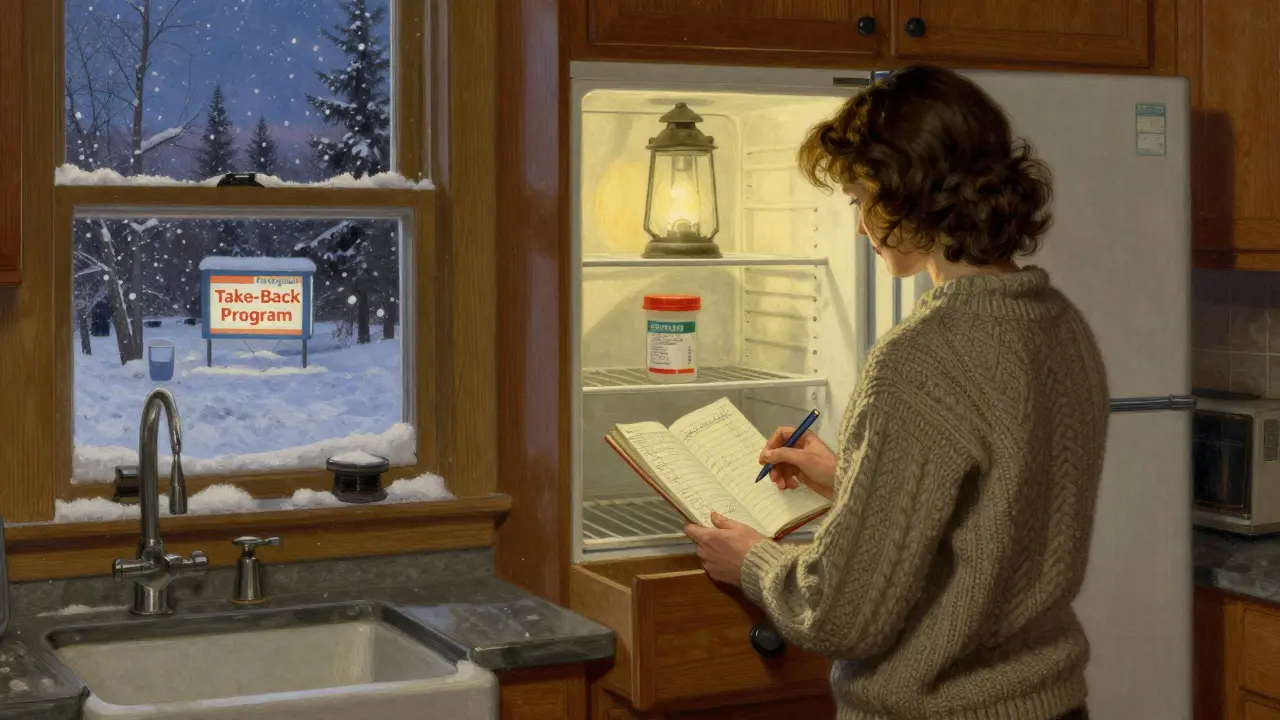
Store Medications Right
Where you keep your meds affects how long they last. The bathroom isn’t ideal-humidity ruins tablets and capsules. A kitchen cabinet above the fridge? Too hot. The best spot is a cool, dry place away from sunlight. A locked drawer in your bedroom or a high shelf in a closet works well. For temperature-sensitive meds like insulin, eye drops, or some biologics, follow the label. Some need refrigeration. If yours do, keep them in a sealed container on the middle shelf of your fridge-not the door, where temps swing. Label that container clearly: “MEDS ONLY. DO NOT TOUCH.”What to Do When You Find an Expired Medication
Don’t panic. If you find something expired, here’s what to do:- Don’t take it. Even if it looks fine, you can’t be sure it’s safe.
- Don’t throw it in the trash or flush it. It can leach into water systems or be found by pets or kids.
- Take it to a pharmacy that offers take-back. In Calgary, call your local Shoppers, Rexall, or independent pharmacy and ask if they accept expired meds. Most do.
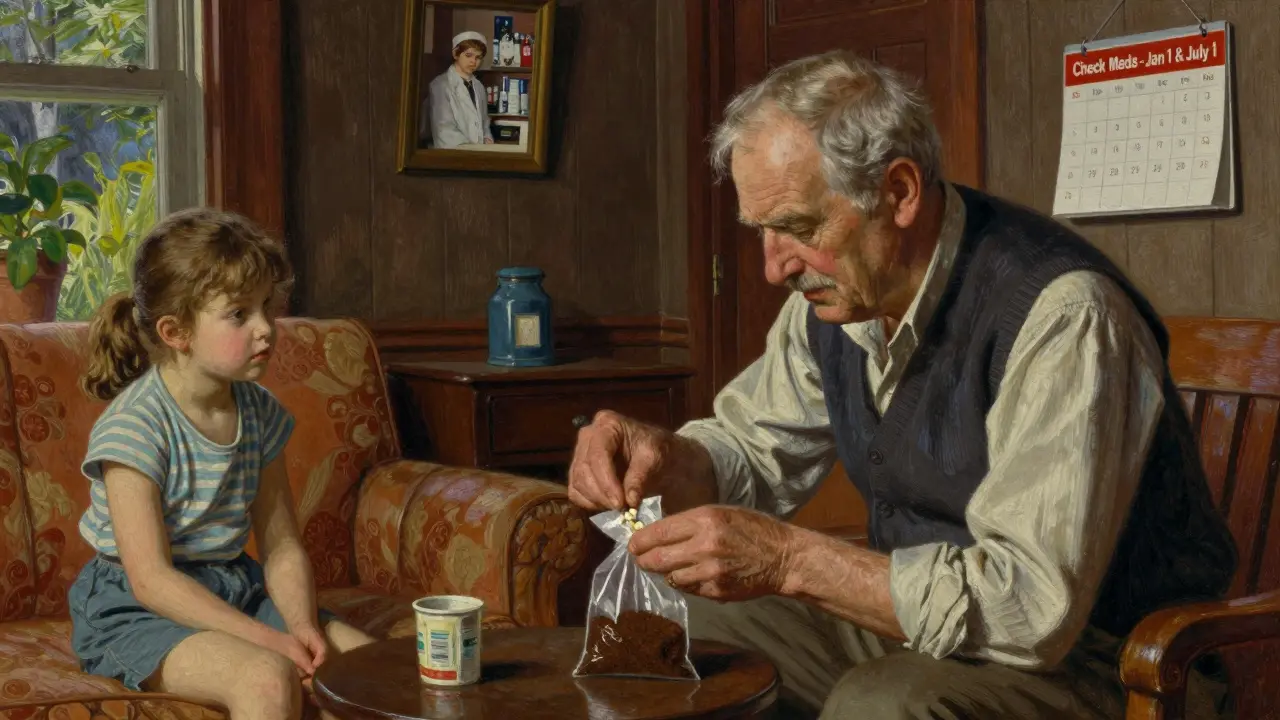
- If no take-back is available, mix pills with coffee grounds or cat litter in a sealed bag before tossing in the trash. This makes them unappealing and harder to misuse.
Special Cases: Kids, Seniors, and Emergency Kits
If you have children, store all meds out of reach-even if they’re not expired. Use a lockbox or a high cabinet with a childproof latch. Kids don’t understand “expired.” To them, colorful pills are candy. For seniors, especially those managing multiple prescriptions, consider a pill organizer with alarms. Many come with built-in date tracking. If they’re on a fixed income, ask their pharmacist about free medication review services. Many Calgary pharmacies offer them. Emergency kits (like those for travel or natural disasters) often get forgotten. Check them every six months. Replace anything expired. Keep a list of what’s inside taped to the box. Include dosages and instructions-this helps first responders if something goes wrong.When to Call Your Pharmacist
You don’t have to guess whether a medication is still safe. If you’re unsure about an old prescription, call your pharmacy. Pharmacists can look up the original fill date and tell you if it’s still good. They can also help you dispose of it safely. Some meds, like nitroglycerin for heart conditions or epinephrine, have very short shelf lives after opening. If you’re not sure, ask. Better safe than sorry.Final Thought: Make It a Habit
Set a reminder on your phone: “Check meds” every January 1st and July 1st. Treat it like changing your smoke detector batteries. It takes 20 minutes twice a year. But that small habit can prevent a trip to the ER, a wasted dose, or worse-a child accidentally swallowing an old pill. Medications save lives. But only if they’re used correctly-and only if they’re still good. Keeping track isn’t about being perfect. It’s about being careful. And in a world full of distractions, that’s one of the most important things you can do for your health.Can I still use medicine after the expiration date?
Some medications may still be safe and effective shortly after their expiration date, especially if stored properly. But this isn’t guaranteed. Pills like antibiotics, insulin, or epinephrine can lose potency or become unsafe. The FDA advises against using any medication past its labeled date unless directed by a pharmacist or doctor in an emergency. When in doubt, don’t take it.
Where should I store my medications at home?
Store medications in a cool, dry place away from sunlight and moisture. A locked drawer in your bedroom or a high closet shelf is ideal. Avoid bathrooms (too humid), kitchens (too hot), or cars (extreme temperatures). If your medication requires refrigeration, keep it sealed in a labeled container on the middle shelf of your fridge-not the door.
How do I safely dispose of expired meds?
The safest way is to drop them off at a participating pharmacy. In Calgary, most Shoppers Drug Mart, Rexall, and independent pharmacies offer free take-back programs. If that’s not available, mix pills with coffee grounds or cat litter in a sealed plastic bag before throwing them in the trash. Never flush them unless the label specifically says to.
Do vitamins and supplements expire?
Yes. While they don’t become toxic, vitamins and supplements lose potency over time. Gummies can get sticky, capsules can crack, and powders can clump. Most have a 2-3 year shelf life. If they smell odd, look discolored, or don’t dissolve properly, toss them. Don’t risk taking ineffective doses.
How often should I check my medicine cabinet?
Check twice a year-once in January and once in July. This matches the timing of most prescription refills and seasonal health changes. Make it part of your routine, like changing smoke detector batteries. It only takes 20 minutes but can prevent accidents, wasted money, and health risks.
Can expired medicine be harmful?
Yes. While most expired pills just lose strength, some can become dangerous. Tetracycline antibiotics can damage kidneys. Liquid insulin can grow bacteria. Epinephrine auto-injectors may fail to work during an allergic reaction. Even aspirin can break down into acetic acid, which can irritate your stomach. Never assume expired meds are harmless.
What if I accidentally take an expired pill?
If you take one expired pill by accident, don’t panic. Most single doses won’t cause harm, especially if it’s something like ibuprofen or a vitamin. But if it’s a critical medication-like heart, diabetes, or seizure medicine-call your pharmacist or poison control at 1-800-567-8911. Watch for unusual symptoms: dizziness, nausea, rash, or lack of expected effect. Better to be safe than sorry.
Kayleigh Campbell
December 16, 2025 AT 19:33Dave Alponvyr
December 17, 2025 AT 06:59Cassandra Collins
December 17, 2025 AT 19:16Joanna Ebizie
December 19, 2025 AT 00:47Arun ana
December 19, 2025 AT 17:21Elizabeth Bauman
December 19, 2025 AT 20:50Dylan Smith
December 20, 2025 AT 06:05Mike Smith
December 20, 2025 AT 14:16Ron Williams
December 22, 2025 AT 01:15Kitty Price
December 23, 2025 AT 11:00Aditya Kumar
December 23, 2025 AT 13:29Colleen Bigelow
December 24, 2025 AT 23:13Billy Poling
December 25, 2025 AT 23:52Randolph Rickman
December 26, 2025 AT 09:37Kim Hines
December 27, 2025 AT 16:39