
Every year, more than 100,000 people in the U.S. die from drug overdoses-and most of those happen at home. If someone you love uses drugs, whether legally prescribed or not, knowing how to spot an overdose could save their life. You don’t need to be a doctor. You don’t need special training. You just need to know what to look for-and what to do next.
What an Overdose Actually Looks Like
People often confuse being high with having an overdose. That’s dangerous. Someone who’s high might be sleepy, giggly, or uncoordinated-but they’ll still respond if you shake them or shout their name. Someone overdosing won’t. Not even a little. For opioid overdoses (like heroin, fentanyl, oxycodone, or even prescription painkillers), there are three clear signs that don’t lie:- Unresponsive: Yell their name. Shake their shoulder. Rub your knuckles hard on their sternum. If they don’t move, blink, or make any sound, that’s a red flag.
- Slow or stopped breathing: Watch their chest. Are they taking fewer than one breath every five seconds? Or worse-no breathing at all? This is the most life-threatening sign.
- Blue or gray lips and fingernails: This isn’t just about skin tone. On lighter skin, it looks blue or purple. On darker skin, it looks grayish or ashen. If their lips or fingertips look wrong, it’s not normal.
- Body temperature over 104°F (40°C)-hot to the touch
- Seizures or violent shaking
- Chest pain, pounding heartbeat, or passing out
Why Family Members Are the First Line of Defense
Most overdoses happen in private homes-not hospitals or ERs. That means the person who finds them first is usually a parent, sibling, partner, or child. And in those first few minutes, your actions make all the difference. Studies show that if someone gets naloxone (Narcan) within four minutes of stopping breathing, there’s a 98% chance they survive. But naloxone only works if you know what you’re doing-and you don’t wait for an ambulance to arrive. The CDC found that families who received hands-on training were 89% more likely to remember what to do three months later. Those who only watched a video or read a pamphlet? Only 42% retained the skills. That’s the gap between life and death.How to Teach It-Without Scaring Everyone
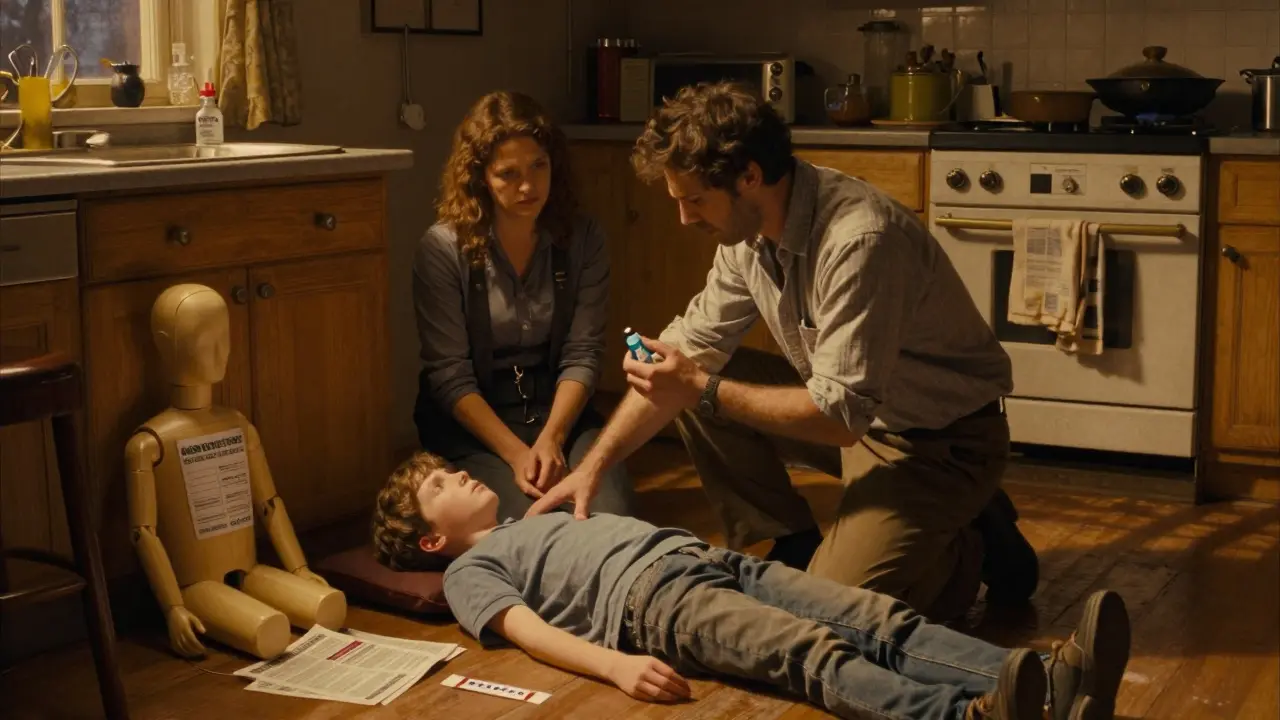
Teaching this isn’t about fear. It’s about preparedness. Start by normalizing the conversation. Say something like: “I love you, and I want to make sure I know what to do if something goes wrong. This isn’t about judging you-it’s about keeping you safe.” Use real tools. Get a training naloxone kit (they’re $35 and don’t contain any medicine). Practice on a mannequin. Show them how to:- Call 911 immediately
- Give two rescue breaths if they’re not breathing
- Place the naloxone spray in one nostril and press the plunger
- Wait two to three minutes-if they don’t wake up, give a second dose
- Stay with them until help arrives
Make It Real: Use Scenarios
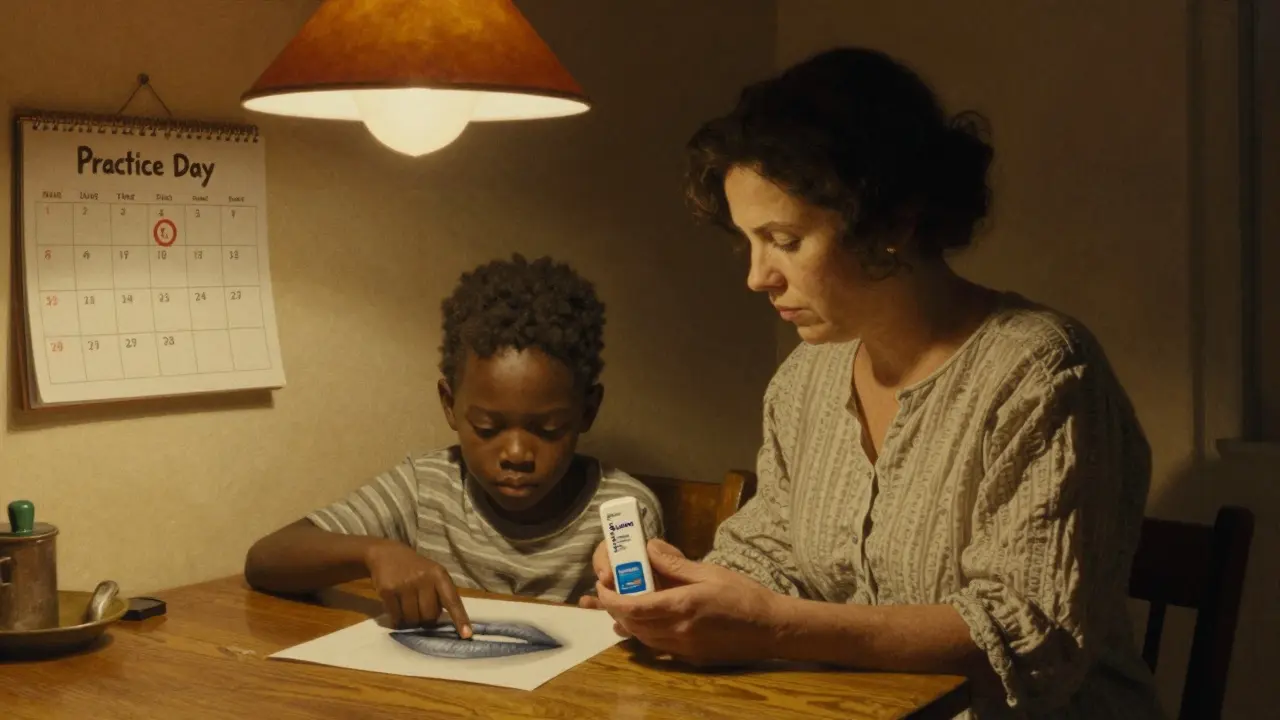
Role-play. Pretend you’re at the kitchen table. One person lies down, closes their eyes, and pretends to be overdosing. The other person has to check for the three signs. Then switch roles. Use skin tone guides. Many people don’t know how cyanosis looks on darker skin. Print out images from the California Department of Public Health’s resources. Show the difference between normal and dangerous coloring. This cuts misidentification errors by more than half. Include fentanyl. Explain that even if they think they’re using heroin or oxycodone, it could be laced with fentanyl. Test strips are now available for free at many harm reduction centers. Teach them how to use one-just a tiny bit of the drug on the strip, wait 90 seconds, and see if it turns blue.Where to Get Free Training and Supplies
You don’t have to pay for this. Every state has free resources:- SAMHSA’s National Helpline: 1-800-662-HELP (4357)-they’ll mail you training kits and guides.
- Local pharmacies: In 31 states, you can walk into a pharmacy and get naloxone without a prescription.
- Overdose Lifeline: Their free mobile app has step-by-step videos and a location finder for free naloxone near you.
- Community centers: Many offer free 45-minute family training sessions with certified instructors.
What to Do After Training
Don’t just do it once. Revisit this every six months. Keep the naloxone kit in the same place-like the bathroom cabinet or kitchen drawer. Not tucked away in a box. Talk about it again. Ask: “Do you remember what to do if I stop breathing?” Make it part of your family’s safety plan-like fire drills or CPR. And if you feel guilty or scared about doing this? You’re not alone. Nearly one-third of families felt like they’d be “jinxing” their loved one by preparing for an overdose. But after training, 92% said they felt stronger-not cursed.What Happens After You Save a Life
If you use naloxone and they wake up, they might be angry, confused, or even aggressive. That’s normal. The drug is being pulled out of their system fast. Don’t argue. Don’t lecture. Just keep them calm, keep them breathing, and wait for EMS. They need medical care even after naloxone. Naloxone wears off in 30 to 90 minutes. If the drug is still in their system, they can overdose again. That’s why EMS is non-negotiable. And after? Talk about next steps. Treatment. Support. Recovery. But not right then. First, make sure they’re safe. Then, talk.You Don’t Have to Be Perfect. Just Prepared.
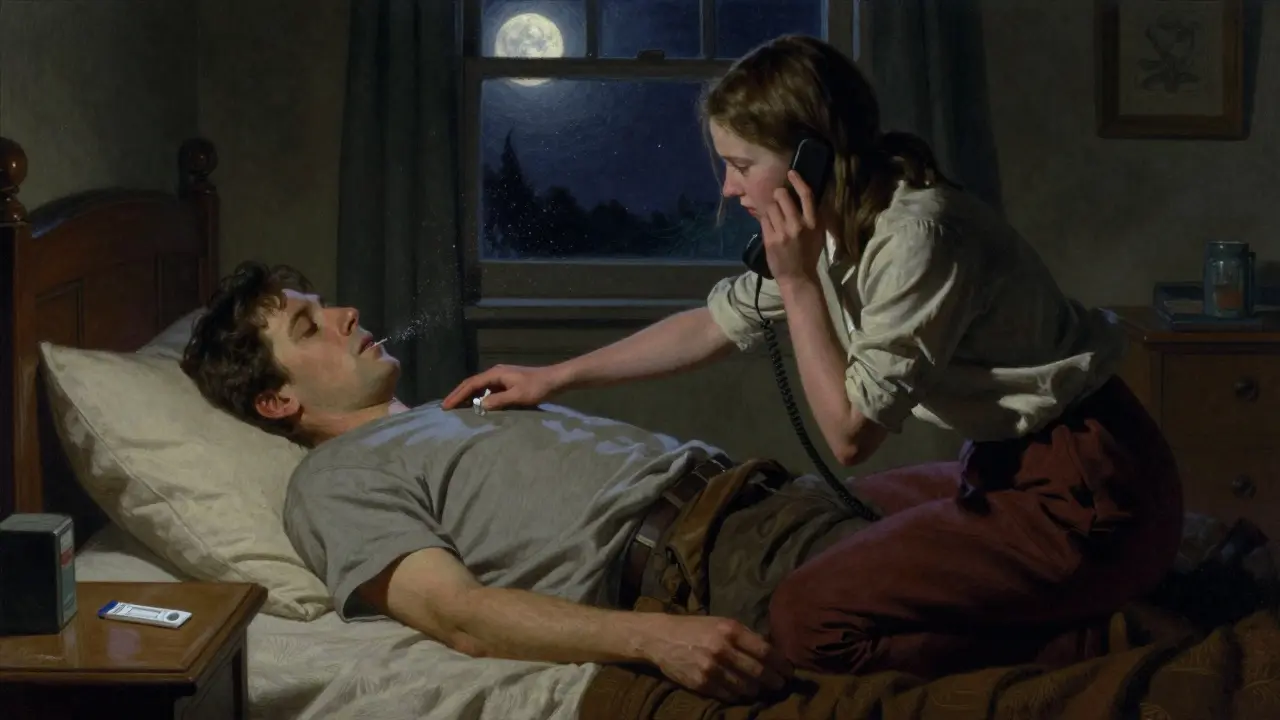
You don’t need to memorize every symptom. You don’t need to be brave. You just need to act. If you see someone who doesn’t respond, isn’t breathing, or looks gray-blue-call 911. Give naloxone. Give breaths. Stay with them. This isn’t about fixing someone’s addiction. It’s about giving them a chance to get help. And sometimes, that’s all you need to do.One woman in Georgia trained her whole family after her brother overdosed. Six months later, she used it on her son. He woke up. He’s alive today. She didn’t do anything heroic. She just knew what to do.
Can I get naloxone without a prescription?
Yes, in 31 states you can walk into a pharmacy and get naloxone (Narcan) without a prescription. In the other 19 states, you may need to complete a short training session first. Most pharmacies now keep it behind the counter-just ask the pharmacist. Some community centers and health departments give it out for free.
What if I’m not sure it’s an overdose?
If someone is unresponsive, not breathing normally, or looks gray/blue, treat it like an overdose. Naloxone is safe-even if they didn’t use opioids. It won’t hurt them if they didn’t take opioids. But if they did, it could save their life. Better to act and be wrong than wait and be sorry.
How long does naloxone last, and do I need more than one dose?
Naloxone works for 30 to 90 minutes. Many opioids, especially fentanyl, last longer. If the person doesn’t wake up after 2-3 minutes, give a second dose. Always call 911-even after naloxone. They still need medical care.
Can I overdose someone by giving too much naloxone?
No. Naloxone only works if opioids are in the system. If someone didn’t take opioids, naloxone does nothing. It’s not addictive. It doesn’t cause side effects in people without opioids. Giving extra doses is safe and often necessary, especially with fentanyl.
What if the person wakes up angry after naloxone?
It’s common. Naloxone pulls opioids out of the brain fast, which can cause sudden withdrawal-sweating, shaking, nausea, anger. Don’t argue. Don’t scold. Just keep them calm, keep them breathing, and wait for EMS. Once they’re stable, you can talk about treatment. But safety comes first.
Is this training only for opioids?
The core training focuses on opioids because they cause the most deaths and naloxone works on them. But you should also learn the signs of stimulant overdoses (like cocaine or meth)-seizures, extreme heat, chest pain. Call 911 immediately for those. There’s no antidote, but early help saves lives.
Can kids learn this too?
Yes. Children as young as 10 can learn to recognize the signs and call 911. Many schools and community programs teach basic overdose response to teens. If your child lives in a home where someone uses drugs, knowing how to act could save a life.
Olivia Goolsby
December 27, 2025 AT 09:18So let me get this right-you’re telling me that if my brother takes a pill, and he doesn’t respond, I should just spray something up his nose and call it a day? No background check? No government oversight? No PROOF that this isn’t just a Big Pharma ploy to sell more Narcan and keep people addicted so they keep buying it? I’ve seen the footage-people who get Narcan wake up screaming, then immediately go buy more drugs. This isn’t saving lives-it’s enabling a cycle that’s destroying families, and you’re celebrating it like it’s a TED Talk. And don’t even get me started on the ‘free test strips’-who’s paying for those? The same people who fund the cartels?!
Alex Lopez
December 29, 2025 AT 03:17While I appreciate the earnestness of this guide, I must respectfully note that the clinical accuracy is commendable, yet the tone borders on the performative. One cannot, in good conscience, reduce a complex public health crisis to a checklist of three signs and a nasal spray. The real tragedy lies not in the lack of naloxone access, but in the systemic abandonment of mental health infrastructure. That said-yes, this is better than nothing. 🙏
Gerald Tardif
December 30, 2025 AT 10:30I’ve been through this. Not once, but twice. First with my cousin, then with my nephew. You don’t need to be a hero. You just need to be there. I practiced with that training kit until I could do it blindfolded. When my nephew went down, I didn’t think-I just moved. Two breaths. One spray. Waited. He coughed. Opened his eyes. Looked at me like I’d just pulled him out of a dream. That’s not luck. That’s preparation. And yeah-it’s messy. It’s ugly. But it’s worth it.
Monika Naumann
January 1, 2026 AT 04:14This is a Western decadence. In India, we do not celebrate drug use. We do not hand out antidotes like candy. We teach discipline. We teach responsibility. We teach our children that the body is a temple, not a playground for chemical escapism. If your family member chooses to destroy themselves, why should society be forced to clean up their mess? This is not compassion. It is moral surrender.
Elizabeth Ganak
January 1, 2026 AT 14:45I’m from India too, but I’ve seen this up close. My cousin’s boyfriend OD’d last year. We didn’t know what to do. No one taught us. I wish we’d had this guide. It’s not about judging people-it’s about loving them enough to learn how to help. Even if they’re not ready to change, we can still be ready to save them.
Nicola George
January 3, 2026 AT 12:48Wow. So we’re just supposed to hand out Narcan like it’s a free sample at Costco? And call it ‘love’? Cute. Meanwhile, the real issue-poverty, trauma, lack of treatment centers-is being ignored so we can feel like heroes by spraying someone’s nose and calling it a day. I’ll take the ‘chill observer’ title, thanks. This feels less like saving lives and more like emotional cosplay.
Raushan Richardson
January 4, 2026 AT 18:19YES. THIS. I did this with my family last month. We practiced in the living room like a fire drill. My mom cried. My dad said, ‘This is depressing.’ But we did it anyway. And now? We talk about it. We check in. We keep the kit by the coffee maker. It’s not morbid. It’s love with a plan. You don’t have to be brave-you just have to be willing to learn. And if you’re reading this? Start today. Your person might not be ready to change… but you can be ready to save them.
Robyn Hays
January 4, 2026 AT 23:15I love how this breaks down the difference between being high and overdosing. I never realized how much the color change matters-especially on darker skin. I showed my sister the CDC images, and she said, ‘I thought he was just tired.’ That’s the problem. We’re taught to look for dramatic signs, but the quiet ones are the deadliest. Also-did you know that fentanyl test strips can be ordered anonymously through mail? No ID needed. I’ll link the site below. Just… please, someone teach their kids this before it’s too late.
Liz Tanner
January 5, 2026 AT 13:30Minor correction: the CDC does not state that families who received hands-on training were ‘89% more likely’ to retain skills. That figure is from a 2021 JAMA study on community-based overdose response programs. The CDC cites a 73% retention rate for trained families versus 42% for passive learners. Precision matters-especially when lives are on the line. Also, thank you for including stimulant overdose signs. Too many guides ignore them.
Babe Addict
January 6, 2026 AT 09:19Let’s be real-this is all just harm reduction theater. You’re not preventing addiction; you’re just making it safer. That’s not progress-that’s capitulation. And let’s not pretend naloxone is some magic bullet. It’s a Band-Aid on a hemorrhage. If you want to fix this, stop enabling. Stop handing out free kits. Stop normalizing opioid use. Teach kids to say no. Teach parents to set boundaries. Not spray their noses and call it a day. That’s not care. That’s codependency dressed up as compassion.
Satyakki Bhattacharjee
January 7, 2026 AT 19:20People die because they are weak. Not because the world is cruel. If you cannot control your desires, you deserve what comes. Why should I pay for your mistake? Why should my taxes fund your rescue? This is not science. This is sentimentality. Let nature take its course. The strong survive. The weak… vanish. That is the way of the world.
Kishor Raibole
January 9, 2026 AT 09:29One cannot help but observe the profound existential dissonance embedded within this discourse: the paradox of attempting to preserve life through the very mechanism that accelerates its dissolution. Is it not ironic that we distribute the antidote to the poison, yet refuse to interrogate the societal rot that produces the poison in the first place? The family, once the bedrock of moral cohesion, has been reduced to a first-aid station for the self-annihilating. Where, then, is the dignity? Where is the discipline? We have turned grief into a curriculum-and called it love.
John Barron
January 10, 2026 AT 13:29Okay, but have you considered the *neurochemical cascade* post-naloxone? The sudden κ-opioid receptor antagonism triggers a massive noradrenergic surge, which can induce sympathetic storming, hypertension, arrhythmias, and even myocardial infarction in vulnerable individuals-especially those with preexisting cardiac conditions. And let’s not forget the *rebound overdose* phenomenon-where the half-life of fentanyl exceeds that of naloxone, leading to re-sedation 60–120 minutes post-administration. So yeah, you might save them… then watch them slip back under. And don’t even get me started on the psychosocial trauma of withdrawal-induced aggression. This isn’t a fix. It’s a temporary reprieve wrapped in a rainbow sticker. 💔💉
Liz MENDOZA
January 12, 2026 AT 01:26I’m a nurse. I’ve held people while they died. I’ve also held people while they woke up after Narcan. The difference isn’t in the medicine. It’s in the person who stayed. Who didn’t run. Who didn’t say, ‘I told you so.’ You don’t need to be perfect. You just need to be there. And if you’re reading this and you’re scared? I get it. I was too. But love isn’t about control. It’s about showing up-even when it hurts. So go get the kit. Practice with your family. Say the words. You’re not jinxing anyone. You’re giving them a chance. And sometimes… that’s everything.