

Diabetes doesn’t just mean high blood sugar. Left unmanaged, it quietly damages your kidneys, nerves, and eyes-often without warning until it’s too late. But here’s the truth: diabetic complications aren’t inevitable. They’re preventable. Not with magic pills or extreme diets, but with consistent, simple actions most people already know how to do. The difference between someone who avoids these problems and someone who doesn’t comes down to one thing: daily habits that add up over time.
Why Kidney Damage Happens-and How to Stop It
Your kidneys filter waste from your blood. When blood sugar stays high for years, those tiny filters get clogged and leak. That’s diabetic nephropathy. It starts silently. No pain. No symptoms. By the time you feel tired or swollen, damage is often advanced. The fix isn’t just lowering your A1C. Yes, keeping it under 7% helps-but blood pressure matters just as much. If your blood pressure is above 140/90, you’re putting extra strain on your kidneys. The CDC and NIDDK agree: controlling blood pressure is one of the most powerful ways to protect your kidneys. Newer diabetes medications have changed the game. SGLT2 inhibitors (like empagliflozin) and GLP-1 agonists (like semaglutide) don’t just lower blood sugar. They reduce kidney disease progression by 30-40% in clinical trials. These aren’t just sugar pills-they’re kidney protectors. Talk to your doctor if you’re not on one. If you’re already on insulin or metformin, ask if adding one makes sense for you. Get tested. Every year, ask for two simple blood and urine tests: eGFR (to check kidney function) and UACR (to check for protein leakage). If either is abnormal, early treatment can slow or even reverse damage.Neuropathy: The Silent Nerve Killer
Diabetic neuropathy feels like burning, tingling, or numbness in your feet. But the real danger isn’t the pain-it’s the numbness. If you can’t feel a blister, a cut, or a splinter, it can turn into an ulcer. And if that ulcer doesn’t heal? Amputation becomes a real risk. Fifteen percent of people with diabetes will develop a foot ulcer in their lifetime. Most of them are preventable. Start with your feet. Every single day, check them. Look between your toes. Feel for warmth, swelling, redness. Use a mirror if you can’t see the bottom. Wash and dry them well. Moisturize to prevent cracks-but never between the toes. That’s where fungus thrives. Wear shoes indoors and out. Even at home. Barefoot walking on tile or carpet might feel fine, but a tiny rock or hot surface can burn you without you knowing. Get fitted for diabetic shoes if your feet have changed shape. Your insurance might cover them. See a podiatrist at least once a year. If you notice a sore that doesn’t heal in a few days, don’t wait. Call your doctor the same day. Delaying by even a week can cost you your foot.Eye Damage: What You Can’t See Can Blind You
Diabetic retinopathy happens when high blood sugar weakens the tiny blood vessels in your retina. They leak. They swell. They grow abnormally. Vision blurs. Dark spots appear. Eventually, you lose sight. The scary part? You won’t notice it until it’s serious. That’s why annual dilated eye exams are non-negotiable. Not every six months. Not only when you have trouble reading. Every year. Even if your vision feels perfect. Studies show that catching retinopathy early and treating it can reduce the risk of blindness by 95%. That’s not a guess. That’s from the American Diabetes Association. The exam takes 20 minutes. Your pupils are dilated with drops. You see lights and shapes. It’s not painful. It’s life-changing. Control your ABCs: A1C, blood pressure, cholesterol. Smoking doubles your risk of eye damage. If you smoke, quitting is the single best thing you can do for your eyes-right after getting that annual exam.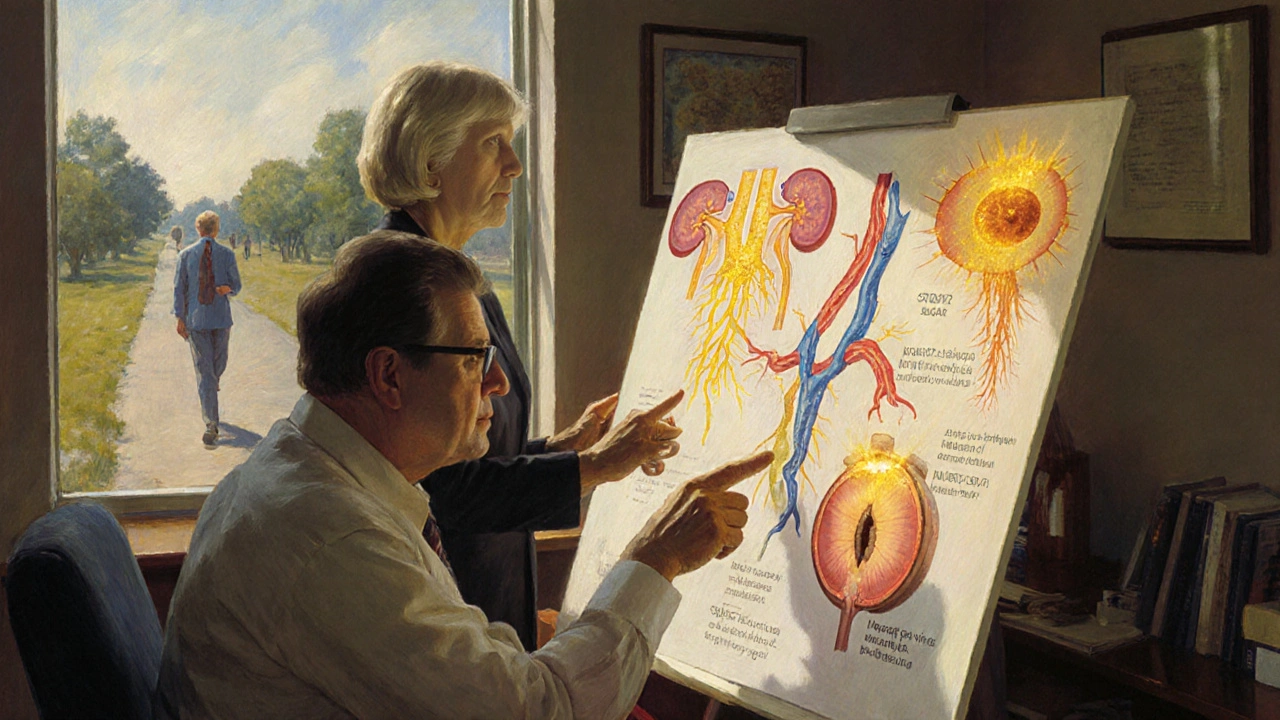
The ABCs of Prevention: More Than Just A1C
The CDC calls it the ABCs. It’s simple, but most people only focus on A.- A is for A1C: Aim for under 7%, but your target might be 6.5% or 8%. Talk to your doctor. Don’t chase a number-chase health.
- B is for Blood Pressure: Keep it under 140/90. If you have kidney disease, your doctor might aim lower.
- C is for Cholesterol: LDL (bad cholesterol) should be under 100. If you have heart disease, aim under 70.
Lifestyle: The Foundation No Pill Can Replace
Medications help. But they don’t replace what you do every day. Move. At least 150 minutes a week. That’s 30 minutes, five days a week. Walk. Bike. Swim. Dance. Doesn’t matter. Just move. Studies show even small increases in activity improve insulin sensitivity and lower blood pressure. Eat differently. Not a diet. A pattern. Focus on whole foods: vegetables, lean proteins, beans, nuts, whole grains. Cut back on sugary drinks, white bread, and processed snacks. You don’t need to be perfect. Just better than yesterday. Lose 5-10% of your body weight. That’s not a lot. If you weigh 200 pounds, losing 10-20 pounds can dramatically improve your blood sugar, blood pressure, and cholesterol. It’s not about looking different. It’s about your organs working better. Sleep. Stress. These aren’t distractions. Poor sleep raises blood sugar. Chronic stress triggers inflammation. Both make complications worse. Aim for 7-8 hours. Find a way to unwind-walking, breathing, music, talking to a friend.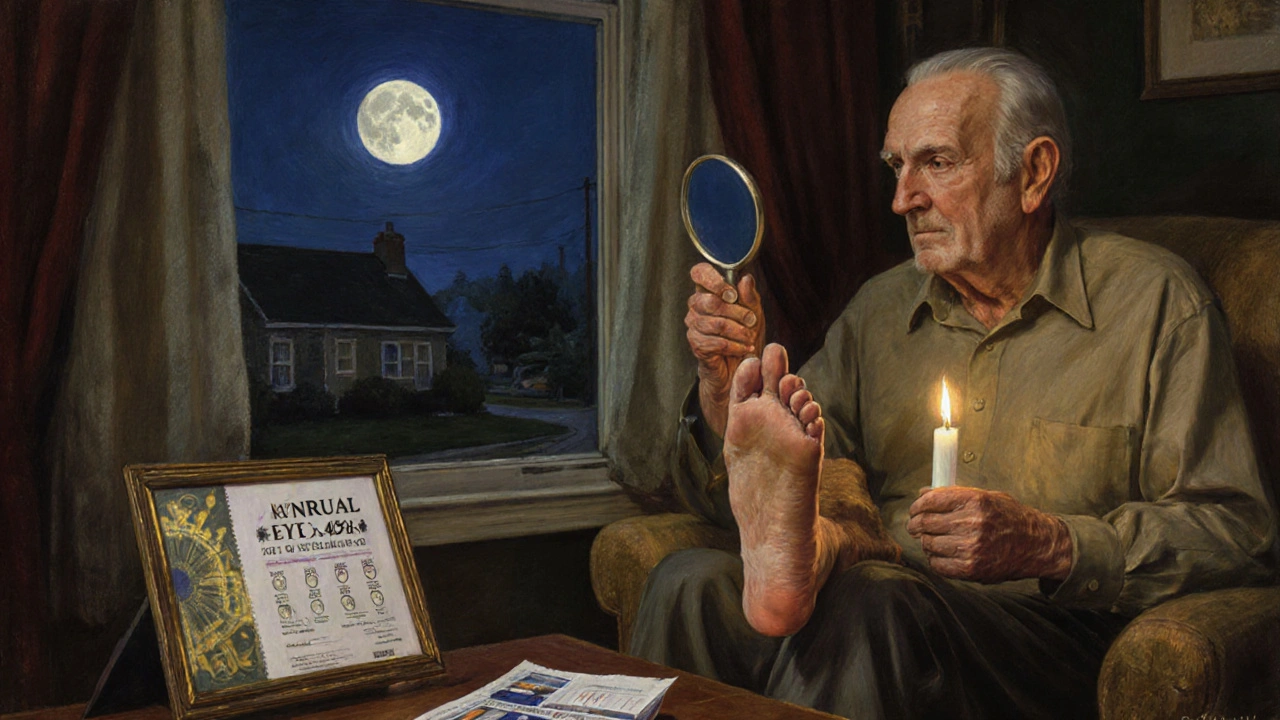
What’s Changed in the Last 10 Years
Ten years ago, the advice was simple: lower your sugar. Today, we know that’s not enough. New medications like SGLT2 inhibitors and GLP-1 agonists don’t just treat diabetes-they protect your heart, kidneys, and blood vessels. They’re not for everyone, but they’ve become a standard part of care for many people with type 2 diabetes. We also know more about non-traditional complications. Fatty liver disease, for example, is now common in people with diabetes. It’s not caused by alcohol. It’s caused by insulin resistance. And the fix? The same as for everything else: weight loss, movement, and whole foods. The biggest win? Over the last 20 years, rates of heart attacks and strokes in people with diabetes have dropped by more than half. That’s not luck. That’s people taking action-checking their numbers, showing up for appointments, sticking with their meds, walking every day.What If You’ve Already Got Damage?
It’s not too late. Even if you have early kidney disease, neuropathy, or retinopathy, you can still stop it from getting worse. Tighter control of your ABCs, starting the right meds, quitting smoking, and daily foot checks can turn the tide. The goal isn’t perfection. It’s progress. One better day at a time.What You Need to Do This Week
- Call your doctor and ask for your latest A1C, blood pressure, and cholesterol numbers.
- Schedule your annual eye exam-even if you see fine.
- Start checking your feet every night. Use a mirror if you need to.
- Walk for 30 minutes, five days this week. No excuses.
- Write down one change you’ll make this month: cut out soda? Start walking? Take your meds at the same time every day?
Can diabetic complications be reversed?
Early-stage kidney damage, nerve damage, and eye changes can sometimes improve with strict blood sugar, blood pressure, and cholesterol control. In some cases, weight loss and new medications have led to measurable improvements in kidney function and nerve sensation. But once damage is advanced-like severe vision loss or foot ulcers-it’s usually permanent. That’s why early action matters.
Do I need to see a specialist if I have diabetes?
Yes. You should see an endocrinologist or primary care provider regularly, but you also need annual visits with an eye doctor (ophthalmologist or optometrist) and a podiatrist. If your kidney function drops or your A1C stays high despite meds, a nephrologist or diabetes educator can help adjust your plan. Specialists don’t mean you’re failing-they mean you’re being proactive.
Are newer diabetes drugs worth the cost?
SGLT2 inhibitors and GLP-1 agonists can be expensive, but many insurance plans cover them now, especially if you have heart or kidney disease. Even if you pay out of pocket, consider the long-term cost: avoiding dialysis, amputations, or vision loss saves far more than the monthly price tag. Talk to your doctor about financial assistance programs-they exist.
Can I prevent complications if I have type 1 diabetes?
Absolutely. While type 1 diabetes is autoimmune, the damage to kidneys, nerves, and eyes still comes from high blood sugar over time. The same rules apply: keep A1C low, control blood pressure, check your feet, get eye exams, and don’t smoke. Continuous glucose monitors and insulin pumps make tight control easier than ever.
How often should I test my blood sugar?
It depends. If you’re on insulin, you might need to test 2-4 times a day. If you’re on pills or GLP-1 meds, your doctor might suggest testing a few times a week. But A1C tests every 3-6 months are the real measure of long-term control. Don’t fixate on daily numbers-focus on the trend over weeks and months.
Is it too late to start if I’ve had diabetes for 15 years?
No. It’s never too late. Studies show that even people who’ve had diabetes for decades can reduce their risk of future complications by improving their ABCs. The damage from the past can’t be undone, but the damage ahead can be stopped. Every day you take better care of yourself adds years to your life-and quality to those years.
Cynthia Springer
November 26, 2025 AT 12:22I never realized how much blood pressure matters for kidney health. My doc only ever talked about sugar. I’m going to ask for my UACR test next visit.
Also, the part about SGLT2 inhibitors? I had no idea they did more than lower glucose. Mind blown.
Thanks for this.
Also, anyone else feel like doctors treat diabetes like it’s just a pill problem? It’s so much more.
And yes, I checked my feet today. Barefoot on hardwood? Not anymore.
Marissa Coratti
November 26, 2025 AT 19:18While I appreciate the practical advice offered here, I must emphasize that the foundational principle underlying all diabetic complication prevention is systemic metabolic regulation through disciplined, evidence-based lifestyle architecture - not merely reactive behavioral checklists. The human body, as a dynamic homeostatic system, responds not to sporadic effort but to sustained, rhythmic physiological alignment. The A1C metric, while useful, is a lagging indicator; true prevention emerges from circadian-aligned nutrition, non-negotiable sleep hygiene, and stress modulation that reduces cortisol-driven gluconeogenesis. The medications referenced are adjunctive - not curative - and their efficacy is maximized only within the context of a bio-optimized daily framework. I urge every reader to view this not as a list of tasks, but as a lifelong recalibration of biological rhythm.
Asia Roveda
November 28, 2025 AT 06:00Oh wow. Another ‘just walk more and check your feet’ article. Real groundbreaking stuff.
Meanwhile, Big Pharma is selling SGLT2 inhibitors for $800 a month while your insurance denies the test to see if you even need them.
And yeah, ‘eat better’ - great advice when you live in a food desert with no grocery store for 20 miles.
Stop pretending this is about willpower. It’s about access. And nobody’s talking about that.
Also, your ‘annual eye exam’? Try getting an appointment in rural Alabama. It’s a joke.
Micaela Yarman
November 29, 2025 AT 11:32As someone raised in a culture where elder care is sacred, I’ve seen what happens when diabetes is ignored. My grandmother lost her sight, then her foot, then her will to live - all because she thought ‘it’s just sugar.’
But here’s what I learned: the real healing comes from community. Not just doctors, but family checking in, cooking together, walking after dinner. No pill replaces that. No app reminds you to check your feet like your sister does, every night, without fail.
This isn’t just medicine. It’s love in action.
Ezequiel adrian
November 30, 2025 AT 07:12Bro this is fire 🔥
Just started walking 30 min a day and my A1C dropped 1.2 in 3 months
Also stopped drinking soda and my feet don’t burn anymore
Also my mom said I look less tired
Y’all need to do this
Also I got diabetic shoes from insurance lol
Worth it
Amanda Wong
November 30, 2025 AT 10:39Let’s be clear: this article is dangerously oversimplified. You mention ‘newer medications’ as if they’re magic bullets, yet you omit their association with increased risk of genital infections, DKA in type 2 patients, and the fact that GLP-1 agonists are often prescribed off-label without proper monitoring. You also fail to mention that 60% of people with diabetes are undiagnosed - so your ‘annual eye exam’ advice is useless if they don’t even know they have the disease. And ‘walk 30 minutes’? That’s meaningless without context - what if you have neuropathy and can’t walk? What if you’re obese and have joint pain? This isn’t advice. It’s victim-blaming dressed up as empowerment.
Stephen Adeyanju
December 1, 2025 AT 16:16Man I been checking my feet every night like you said
And I swear I saw a little cut between my toes yesterday
Didn’t think much of it
But then today my sock was kinda wet
And now I’m scared
Should I go to the ER or just wait a day
My doctor’s office is closed
Help
james thomas
December 1, 2025 AT 18:50Look I get it you want us to walk and eat salad but let’s be real here
They don’t want us to get better
They want us to be on meds forever
That’s why they don’t tell you about the ketogenic diet or intermittent fasting
And why they push insulin like it’s water
And why your eye doctor is always booked for 6 months
It’s not about health it’s about profit
And your ‘annual exam’? That’s just a money grab
Ask yourself - who benefits?
Not you
Deborah Williams
December 2, 2025 AT 13:51How ironic that we’re told to ‘take control’ of our bodies while our healthcare system makes it nearly impossible to afford the tools to do so.
It’s like being told to run a marathon… while being handed a broken shoe and told to ‘just try harder.’
Maybe the real problem isn’t that we’re lazy.
Maybe it’s that we’re expected to fix a systemic failure with personal discipline.
And yet - we still show up.
Still check our feet.
Still call our doctors.
Still try.
That’s not weakness.
That’s quiet, relentless courage.
Kaushik Das
December 3, 2025 AT 13:44Love this post! In India, we call diabetes ‘Madhu Meham’ - sweet disease - and everyone thinks it’s just about cutting sugar. But it’s so much deeper. My uncle had neuropathy so bad he couldn’t feel his feet. We started cooking with millets, walking after dinner, and he’s now off insulin. Not because of pills - because of rhythm. Also, no one talks about how stress from family pressure makes blood sugar spike. We need more conversations like this - not just medical, but cultural.
mohit passi
December 4, 2025 AT 23:52Foot checks = daily meditation 🙏
Walking = my therapy 🚶♂️
UACR test = my insurance checkup 💉
GLP-1? Worth every penny if it saves my kidneys 🤝
And yeah - I cried the first time I saw my A1C drop
Not because I’m perfect
But because I finally stopped fighting myself
One step. One day. One foot. One breath.
That’s all it takes.
Aaron Whong
December 5, 2025 AT 01:25From a systems biology perspective, the paradigm shift in diabetic complication prophylaxis necessitates a reconceptualization of metabolic homeostasis as a nonlinear, multi-agent dynamical system governed by feedback loops across endocrine, vascular, and neural subsystems. The conventional reductionist model - A1C, BP, LDL - is epistemologically inadequate. We must now account for gut microbiome modulation, mitochondrial biogenesis, and epigenetic regulation of renal podocyte integrity. SGLT2 inhibitors exert pleiotropic effects via ketone body induction and natriuresis-induced RAAS suppression - mechanisms that transcend glycemic control. The true frontier lies in personalized metabolic phenotyping - not population-based checklists.