

You take your blood pressure pill every morning. You’ve been popping a fish oil capsule for your joints. Maybe you’ve started turmeric for inflammation or melatonin for sleep. But have you ever asked if these supplements are safe with your meds? If you haven’t, you’re not alone - and you might be risking more than you think.
Why This Isn’t Just a ‘Natural’ Problem
People assume ‘natural’ means safe. It doesn’t. The FDA has documented hundreds of cases where supplements like St. John’s wort, ginkgo, or even vitamin E messed with prescription drugs - sometimes with life-threatening results. In 2022, over 23,000 people in the U.S. ended up in the emergency room because of bad interactions between supplements and medications. That’s a 42% jump since 2010. And it’s not just rare cases. About 75% of American adults take at least one supplement. Most of them don’t tell their doctor.How Supplements Actually Interfere with Your Medications
It’s not magic. It’s chemistry. Supplements can change how your body handles drugs in three main ways:- Slowing down metabolism: Some supplements block enzymes (like CYP3A4) that break down drugs. That means the drug builds up in your system, turning a normal dose into a toxic one. St. John’s wort is the worst offender here - it can slash the effectiveness of birth control, antidepressants, and even transplant drugs like cyclosporine by up to 50%.
- Speeding up metabolism: Other supplements force your body to flush out drugs faster. St. John’s wort does this too - which is why transplant patients on cyclosporine have been known to reject their new organs after starting this ‘natural’ remedy.
- Adding effects: If you’re on warfarin (a blood thinner) and take vitamin E at 400 IU or more, you’re doubling your bleeding risk. Ginkgo biloba does the same thing. One study found it made major bleeding 2.3 times more likely when mixed with warfarin.
Even minerals can fight over absorption. Iron, calcium, magnesium, and zinc all compete for the same gut space. Take them together with your thyroid med or antibiotics, and you might as well be throwing half your dose in the toilet.
The High-Risk Supplements You Need to Watch
Not all supplements are created equal. Some are basically time bombs when mixed with meds. Here are the big ones:- St. John’s wort: This one’s dangerous with over 57 medications. It’s linked to failed birth control, serotonin syndrome (a potentially fatal brain condition), and transplant rejection. Even Dr. Robert Schnoll from UPenn calls it “arguably the most dangerous commonly available supplement.”
- Ginkgo biloba: Safe for most people. Deadly when mixed with blood thinners like Eliquis, Xarelto, or warfarin. One Reddit user reported a 7-day hospital stay after combining ginkgo with Eliquis.
- Vitamin E (400 IU+): Increases INR levels by 15-20% in people on warfarin. That’s enough to cause internal bleeding.
- Garlic, ginger, and fish oil: These aren’t just heart-healthy - they thin your blood. Surgeons ask you to stop them 7-10 days before surgery. Skip this, and you could bleed out on the table.
- Goldenseal: Blocks liver enzymes that process dozens of drugs, including some antibiotics and heart meds.
On the flip side, some supplements like milk thistle and American ginseng have almost no documented interactions. But don’t assume safety just because it’s low-risk. Always check.
What to Do Before You Take Anything
You don’t need to stop supplements. You just need to be smarter.- Make a full list. Write down every pill, capsule, powder, and tincture you take - including vitamins, herbs, and CBD. Don’t forget the ones you only take once a week.
- Bring it to your appointment. The ‘brown bag method’ works. Take your bag of meds and supplements to your doctor or pharmacist. A Johns Hopkins study showed this cuts medication errors by 37%.
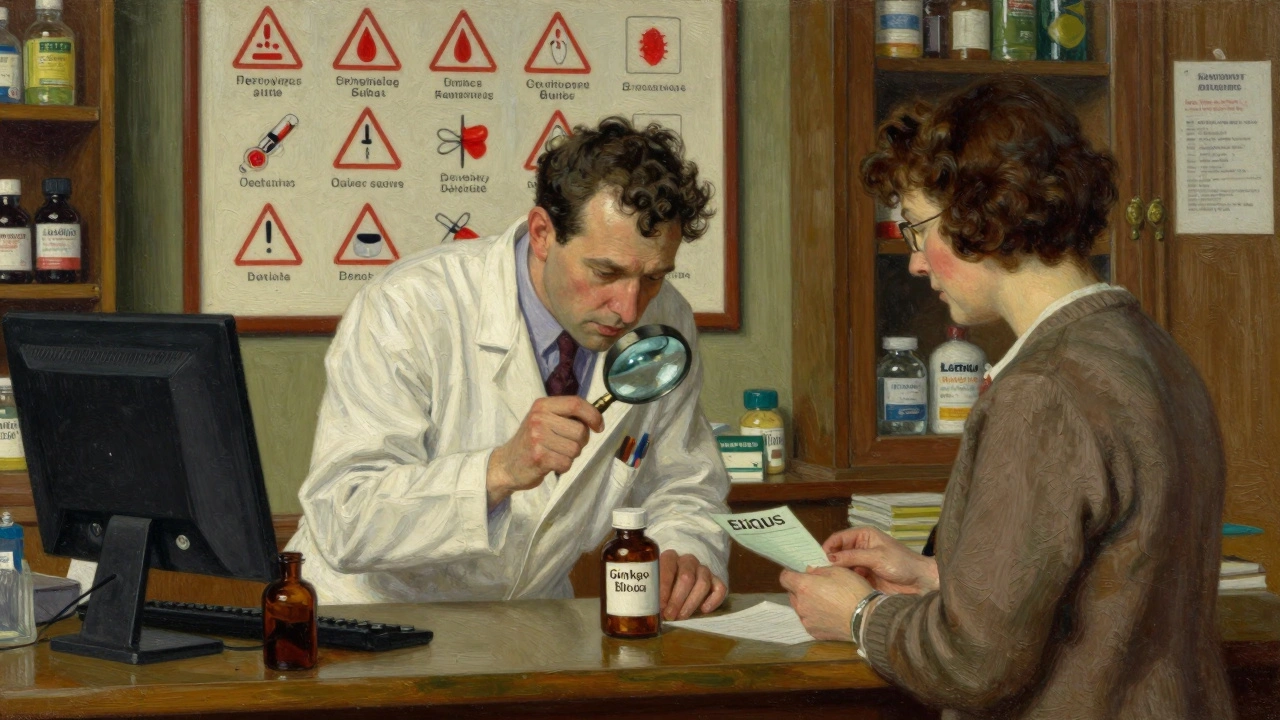
- Ask your pharmacist. They’re trained for this. Walgreens and CVS have mandatory screening programs. In 2021, they caught dangerous interactions in 18% of consultations.
- Check the label. Look for warnings like “May interact with blood thinners” or “Avoid with antidepressants.” If it’s not there, that doesn’t mean it’s safe - just that the manufacturer isn’t required to say.
- Wait two weeks before surgery. If you’re having any procedure, even a colonoscopy, tell your provider about every supplement. They’ll tell you what to stop.
Who’s at the Highest Risk?
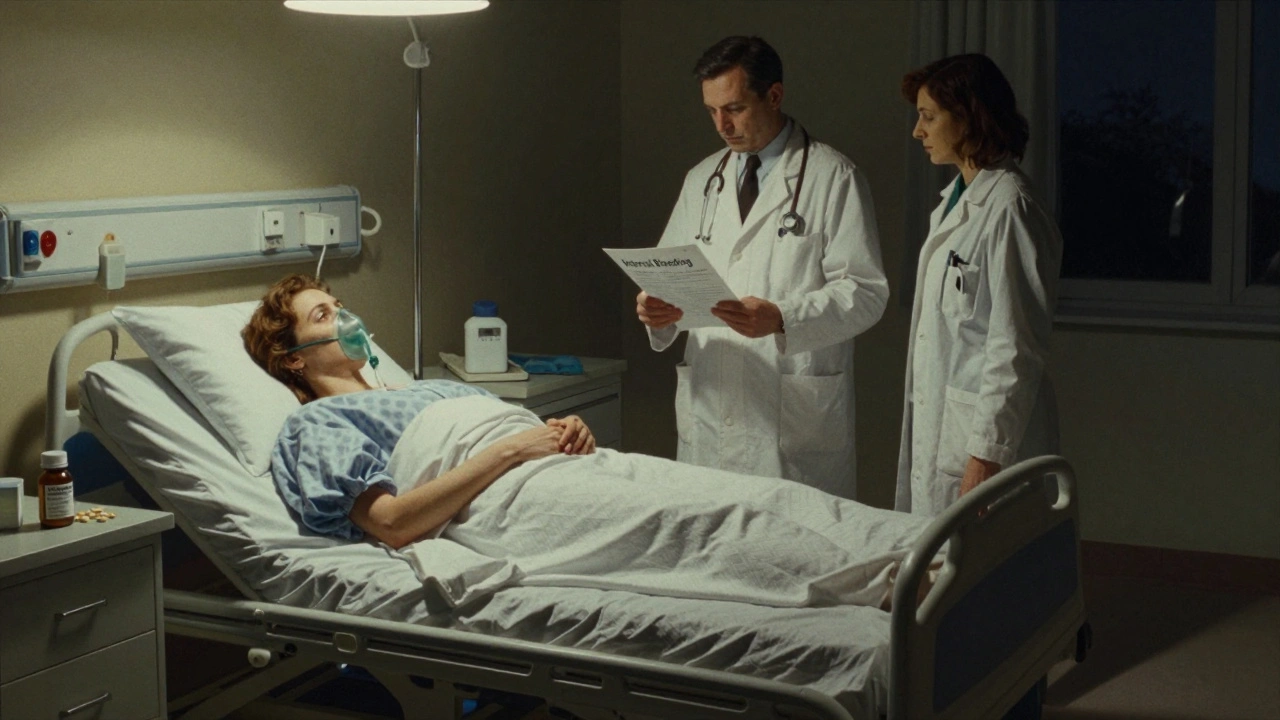
People over 50. They’re the most likely to be on multiple prescriptions - and the most likely to be popping supplements for arthritis, memory, or energy. But here’s the scary part: only 32% of them talk to their doctor about what they’re taking. That’s not ignorance - it’s assumption. They think, “It’s just a vitamin.”Women on birth control are another high-risk group. St. John’s wort cuts hormone levels so badly that unintended pregnancies have been documented. And if you’re on antidepressants, mixing them with supplements like 5-HTP or L-tryptophan can trigger serotonin syndrome - a condition that can kill you in hours.
What’s Changing - And What’s Coming
The system is waking up. The FDA launched a new app in late 2024 that lets you scan a supplement label and instantly see interaction risks. Epic’s electronic health records now flag supplement-drug conflicts in 15% of U.S. hospitals. The American Medical Association now requires doctors to ask about supplements during every medication review.But until these systems are everywhere, the responsibility is still on you. No one else is going to check your bag of pills. No pharmacist will know you’re taking turmeric unless you tell them. Your doctor won’t guess.
Real Talk: What Happens When You Don’t Ask
A woman in Ohio took St. John’s wort for depression and kept her birth control. She got pregnant - and didn’t realize why until her OB-GYN asked about supplements. A man in Texas took ginkgo for memory and warfarin for atrial fibrillation. He ended up in the ER with internal bleeding. A 68-year-old in Alberta started fish oil and stopped his blood pressure med cold turkey because he “felt better.” His heart nearly gave out.These aren’t outliers. They’re common. And they’re preventable.
You don’t have to give up your supplements. But you do have to treat them like real medicine. Because that’s what they are - pharmacologically active substances that interact with your body, and with your drugs.
Don’t assume. Don’t guess. Don’t wait for a crisis. Ask your pharmacist today. Bring your brown bag. Read the label. And remember: just because something comes from a plant doesn’t mean it’s harmless.
Can I just check online interaction tools?
Online tools like Drugs.com or MedlinePlus can help, but they’re not foolproof. They rely on reported cases and may miss newer or rare interactions. Always confirm with a pharmacist or doctor - especially if you’re on blood thinners, antidepressants, or transplant meds. These tools are a starting point, not a final answer.
Are organic or ‘prescription-grade’ supplements safer?
No. The terms ‘organic,’ ‘pharmaceutical-grade,’ or ‘clinical-strength’ have no legal meaning in the supplement world. The FDA doesn’t approve supplements for safety or effectiveness before they’re sold. A $50 bottle of ‘premium’ St. John’s wort is just as dangerous as a $10 one if it contains the same active ingredient. What matters is the compound, not the marketing.
What if my doctor says it’s fine?
Doctors aren’t always trained in supplement interactions. A 2023 survey found that 61% of primary care physicians feel unprepared to advise on supplements. If your doctor says it’s safe, ask: ‘Is there evidence this won’t interfere with my specific meds?’ If they hesitate, get a second opinion from a pharmacist.
Can I take supplements at a different time of day to avoid interactions?
It sometimes helps - but not always. For example, calcium and iron compete for absorption, so spacing them out by 2-4 hours can improve uptake. But with St. John’s wort, timing doesn’t matter. It changes how your liver processes drugs for days after you take it. If a supplement is flagged as high-risk, don’t try to outsmart it with timing. Stop it entirely.
I’ve been taking this supplement for years with no problems. Should I still worry?
Yes. Interactions don’t always show up right away. Your body changes. Your meds change. Your liver enzymes change. A supplement that was fine last year might become dangerous after you start a new blood pressure drug or after you turn 60. Don’t rely on past experience. Recheck every time your prescription list changes.
Inna Borovik
December 5, 2025 AT 19:27St. John’s wort is the silent killer no one talks about. I worked ER for 12 years. Saw three patients in six months with serotonin syndrome from mixing it with SSRIs. All thought it was ‘just herbal.’ One died. The FDA’s app? Too little too late. People need to stop treating supplements like tea.
And don’t get me started on ginkgo + Eliquis. That combo is a walking hemorrhage waiting to happen. No one checks labels. No one asks. Just pop pills like candy.
Rashmi Gupta
December 7, 2025 AT 04:49Interesting how the article frames this as a Western problem. In India, we’ve been using turmeric, ashwagandha, and neem with allopathic meds for decades. No ER visits. No drama. Maybe the issue isn’t supplements-it’s the overmedication culture.
Also, why is St. John’s wort demonized but not antidepressants? Hypocrisy much?
Andrew Frazier
December 7, 2025 AT 07:35LOL so now we’re supposed to trust some pharmacist at CVS over our own common sense? You people are so gullible. Supplements are natural. Drugs are corporate poison. The FDA is owned by Big Pharma. They’re scared you’ll realize you don’t need their $500/month pills.
My grandpa took garlic and aspirin for 40 years. Still mows his lawn at 89. You’re all weak.
Also, ‘blood thinners’? More like ‘blood thickener blockers’ for the corporate agenda.
Gwyneth Agnes
December 8, 2025 AT 21:15Stop taking things you don’t understand.
That’s it.
Done.
Katie O'Connell
December 10, 2025 AT 08:00It is, indeed, a profoundly concerning epistemological failure in public health literacy that the majority of individuals conflate botanical origin with pharmacological innocuousness. The CYP450 enzyme system does not discriminate between ‘natural’ and ‘synthetic’-it responds solely to molecular structure.
Furthermore, the absence of regulatory oversight for dietary supplements constitutes a de facto laissez-faire experiment on the American populace. The 42% increase in ER visits since 2010 is not merely a statistic-it is a systemic indictment.
One must ask: if a substance alters hepatic metabolism, alters platelet aggregation, or competes for intestinal transporters, by what moral or scientific standard is it not classified as a drug?
Brooke Evers
December 11, 2025 AT 21:20I just want to say how important this post is. I used to take fish oil and melatonin every night and never thought twice about it. Then my mom had a stroke last year and her cardiologist asked her about supplements-she hadn’t told anyone in 5 years. Turns out the fish oil was making her blood too thin, and her blood thinner dose was off because of it.
I started bringing my brown bag to every appointment after that. It felt weird at first, but my pharmacist actually thanked me. Said most people don’t even know what’s in their own cabinets.
And honestly? If you’re taking anything besides a daily multivitamin, just talk to someone. Even if it feels dumb. Even if you think ‘it’s just a pill.’ It’s not. It’s medicine. And medicine deserves respect.
You’re not being paranoid. You’re being smart.
Saketh Sai Rachapudi
December 13, 2025 AT 10:52USA is full of cowards who cant handle their own body. In India we take ashwagandha with blood pressure meds, turmeric with diabetes pills, nothing happens. You people are weak. You take 10 pills and then panic because a little turmeric might do something.
Also who cares if ginkgo interacts? Your body is weak. Train it. Dont rely on pills. You are all addicted to pharma.
And why is FDA even involved? They are puppets of big pharma. Dont trust them.
Nigel ntini
December 14, 2025 AT 08:23This is such a vital conversation. I’ve been a pharmacist for 18 years and I still see people daily who don’t realize their ‘natural’ sleep aid is interfering with their heart medication.
One thing I always say: if you wouldn’t give it to your kid without asking a doctor, don’t take it without asking a professional.
And yes, even if you’ve taken it for 10 years. Your body changes. Your meds change. Your liver changes. What was safe yesterday might be dangerous tomorrow.
Bring the bag. Ask the question. Save your life. It’s not dramatic. It’s just common sense.
Thank you for writing this.
pallavi khushwani
December 14, 2025 AT 15:32It’s funny how we treat plants like enemies when they’ve been healing us for millennia. Maybe the real problem isn’t the supplements-it’s that we’ve forgotten how to listen to our bodies and rely on machines and labels instead.
I take ashwagandha with my thyroid med. I’ve been doing it for 7 years. No issues. But I also pay attention. I notice my energy, my sleep, my mood. I don’t just pop pills and forget.
Maybe we need less fear and more awareness. Not all interactions are deadly. Some are just… quiet. And if you’re tuned in, you’ll feel them before the ER does.
Dan Cole
December 15, 2025 AT 16:16Let’s be brutally honest: this isn’t about supplements. It’s about control. The medical-industrial complex needs you dependent. If you knew that turmeric reduced inflammation better than NSAIDs, or that magnesium regulated blood pressure without side effects, why would you keep buying $200/month pills?
They don’t want you to know. That’s why the FDA ‘documents’ interactions but doesn’t regulate potency, purity, or labeling. Because if they did, the whole house of cards collapses.
St. John’s wort isn’t dangerous. The system is. They’re scared you’ll realize you don’t need them.
And yes, I’ve taken it with sertraline for 4 years. No serotonin syndrome. Just a damn better life.
Question authority. Not your herbs.
Jackie Petersen
December 17, 2025 AT 06:01Of course the FDA says this. They’re owned by Pfizer. You think they want you to know that vitamin D cures depression better than Prozac? Or that fish oil beats statins? They’d rather you die quietly on a pill than admit their drugs are overpriced placebos.
And don’t even get me started on ‘pharmacists.’ They’re just corporate sales reps in white coats. They get bonuses for pushing brand-name meds. You think they care if you live or die?
Trust your gut. Not the system.
Geraldine Trainer-Cooper
December 18, 2025 AT 18:10Why are we so scared of plants? We eat them every day. Why is a capsule any different?
I take garlic, ginger, and fish oil. I take lisinopril. No bleeding. No ER. I don’t need a PhD to know what works.
Maybe the problem isn’t the supplement. Maybe it’s the fear.
Just stop.
Kenny Pakade
December 20, 2025 AT 02:39So what? You take a pill and it kills you? Big deal. That’s why we have lawsuits. And insurance. And funeral plans. You want to live forever? Don’t take anything. Don’t breathe air. Don’t drink water. Everything is toxic. Even oxygen.
Stop being a hypochondriac. You’re not special. Your body handles way more toxins than you think.
And if you’re gonna panic over ginkgo, maybe you shouldn’t be taking anything at all. Go live in a cave.
olive ashley
December 20, 2025 AT 16:36Let me guess-you’re the type who takes 12 supplements and thinks you’re ‘biohacking.’
Newsflash: your body isn’t a lab. It’s a system that evolved over millions of years. You don’t need 7 different vitamins to ‘optimize’ your mitochondria.
Most of you are just chasing trends. You read a blog. You buy a bottle. You feel better for a week. You think it’s magic. It’s placebo. Or coincidence.
And now you’re scared to death of your own supplements because some guy on Reddit says St. John’s wort killed someone?
Stop. Breathe. Eat real food. Sleep. Move. That’s the only ‘supplement’ you need.
And if you’re still taking melatonin? You’re not fixing sleep. You’re masking burnout.