
Every year, Americans fill over 4 billion prescriptions. More than 87% of those are for generic drugs. But here’s the question most people never ask: Why does your insurance cover one generic version of a drug but not another? It’s not random. It’s not arbitrary. It’s a cold, calculated system - and if you’ve ever been denied coverage for a generic, you’ve felt the weight of it.
It Starts with the P&T Committee
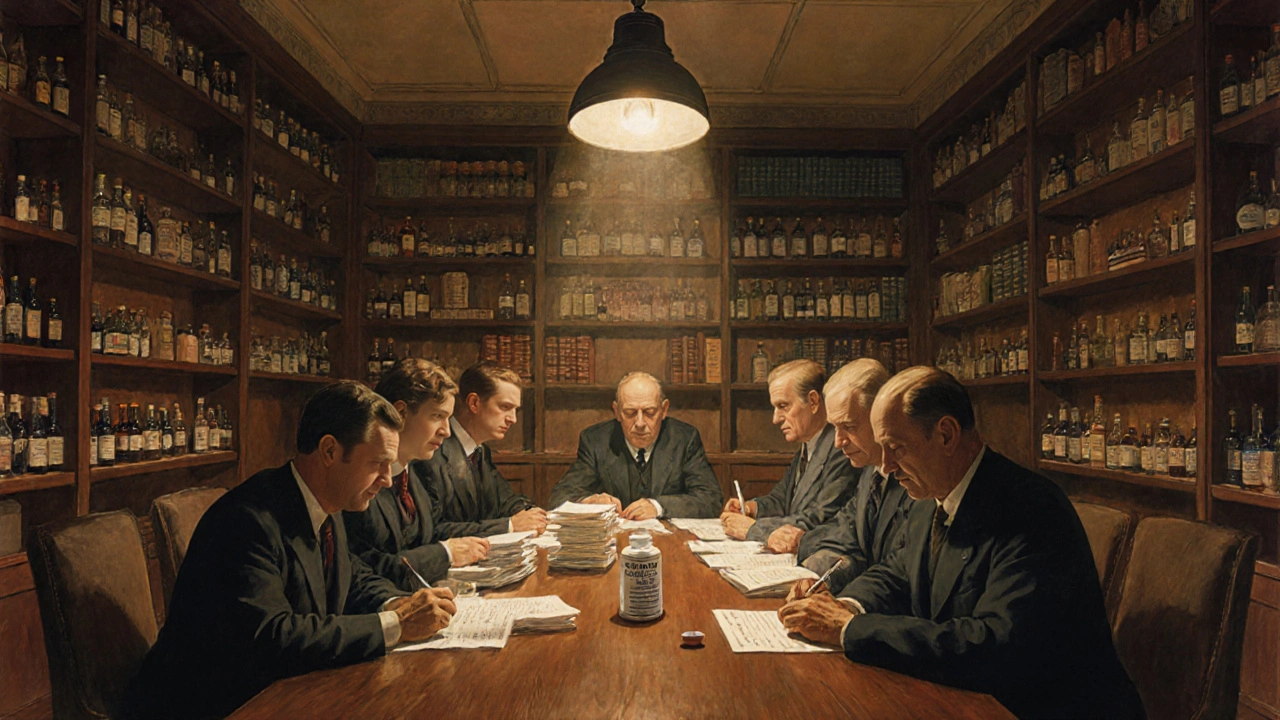
Behind every insurance formulary is a quiet group of experts called the Pharmacy & Therapeutics (P&T) committee. These aren’t marketing teams or accountants. They’re pharmacists, doctors, and health economists who meet monthly - sometimes weekly - to decide which drugs make the cut. Their job? Find the safest, most effective drugs that also cost the least. The process isn’t secret, but it’s rarely transparent. Most insurers don’t publish their full decision logs. What we do know: every drug must first be approved by the FDA. That’s the baseline. After that, the P&T committee looks at three things: clinical effectiveness, safety, and cost. A generic drug doesn’t need to be the cheapest to get covered. It needs to be the best value. Two generics might treat high blood pressure equally well. But if one costs $5 a month and the other costs $12, the $5 one wins. Every time.Tiers Don’t Lie
Insurance plans don’t just say “yes” or “no.” They use tiers - a ranking system that tells you how much you pay at the pharmacy. - Tier 1: Preferred generics. Usually $0-$15 for a 30-day supply. This is where 92% of Medicare Part D plans put their generics. These are the drugs insurers want you to use. - Tier 2: Non-preferred generics or low-cost brand-name drugs. Might cost $40. - Tier 3+: Specialty drugs, brand-name meds, or complex generics. Could cost $100 or more. The structure is simple: lower tier = lower cost to you. Insurers push you toward Tier 1 because it saves them money - and they pass some of those savings to you in lower premiums. Blue Shield of California, Humana, and UnitedHealthcare all use this model. So does Medicare. The only real difference? Some plans have five tiers. Others have three. But Tier 1 is always the same: low-cost generics.Why Not All Generics Are Created Equal
Here’s the twist: two generics with the same active ingredient can still be treated differently. The FDA says they’re therapeutically equivalent. But insurers don’t just look at the label. They look at real-world data. Did patients on Generic A have fewer side effects than Generic B? Did Generic C have more refill issues? Did a particular manufacturer have supply problems? In 2023, the FDA reported 372 active drug shortages. Nearly 78% of them were generics. If a generic from Manufacturer X keeps running out, insurers will drop it - even if it’s cheap. They need reliability. A $3 drug that’s out of stock every other month isn’t a bargain. It’s a headache. That’s why big manufacturers like Teva, Sandoz, and Mylan dominate formularies. They have the scale, the track record, and the supply chains to deliver consistently.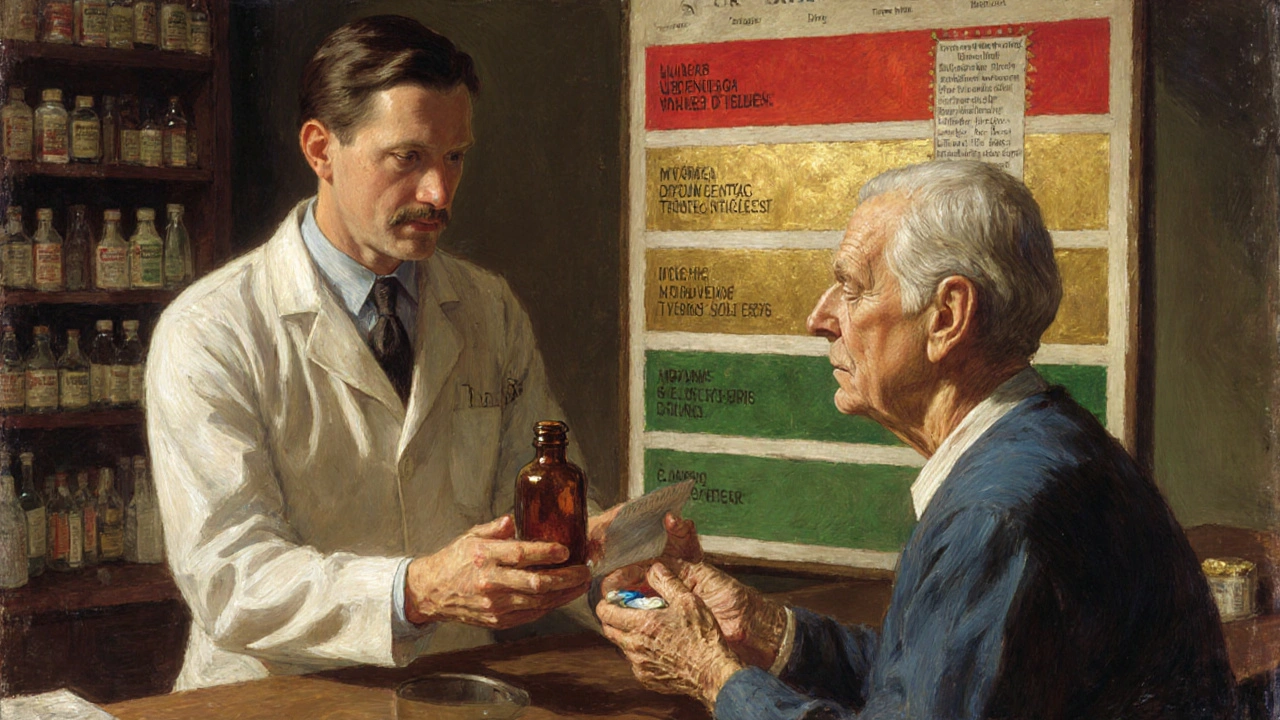
Therapeutic Substitution: When Your Doctor Doesn’t Get a Say
You might think your doctor picks your medication. Not always. In 78% of commercial insurance plans, pharmacists are allowed to swap your prescribed generic for another generic - even if your doctor didn’t authorize it. This is called therapeutic substitution. It’s legal. It’s common. And it’s confusing. A patient prescribed a generic version of lisinopril might get a different generic at the pharmacy. Same active ingredient. Different filler. Sometimes, that changes how the drug works for them. A 2023 Drug Topics survey found 31% of patients reported side effects after a switch they didn’t have with the original drug. Some states, like Washington, require insurers to notify patients before substitution. Others don’t. That’s why you might get a different pill shape, color, or size - and no warning.What If Your Generic Isn’t Covered?
If your drug isn’t on the formulary, you’re not out of luck. You can file an exception request. The process is straightforward: your doctor writes a letter explaining why the covered generic won’t work for you. Maybe you had a bad reaction. Maybe it didn’t control your condition. Maybe you’ve been on the brand name for years and switching caused issues. Insurers have to respond within three business days. If it’s urgent - like a life-threatening condition - they must respond in one day. If they don’t reply? The request is automatically approved. The Patient Advocate Foundation found that 78% of patients who appealed a denial eventually got coverage. But here’s the catch: it takes time. And doctors spend an average of 13.3 hours a week just filling out prior authorizations and appeals. That’s time they could be seeing patients.
The Bigger Picture: Why This System Exists
From 2007 to 2019, Medicare Part D saved $1.67 trillion by using generics. In 2019 alone, that number was $141 billion. That’s not just good for insurers. It’s good for you. Without this system, many people couldn’t afford their meds. A brand-name statin might cost $200 a month. The generic? $5. That’s the difference between taking your medicine and skipping it. But the system isn’t perfect. As Dr. Aaron Kesselheim from Harvard pointed out in JAMA Internal Medicine, focusing too hard on cost can block newer generics that offer real benefits for certain patients. A generic that’s slightly more expensive might have fewer side effects for seniors or people with kidney disease. But if the data isn’t clear, insurers won’t budge. And now, with the Inflation Reduction Act capping Medicare Part D out-of-pocket costs at $2,000 in 2025, insurers are shifting strategy. Instead of blocking expensive drugs, they’re pushing even harder for high-volume generics. Why? Because they know patients won’t pay more than $2,000 - so they need to control the cost of the drugs that make up the bulk of prescriptions.What You Can Do
- Ask your pharmacist: “Is there a preferred generic on my plan?” They know the formulary better than you do. - Check your plan’s formulary: Most insurers have a searchable list online. Look under “Tier 1” for the cheapest options. - Don’t assume your doctor’s prescription will be covered: Call your insurer before filling it. - Appeal if needed: If a generic doesn’t work for you, your doctor can fight for coverage. Most appeals succeed. - Know your rights: In many states, you must be notified if your generic is switched. Ask for a copy of your plan’s substitution policy. The system isn’t designed to punish you. It’s designed to keep drugs affordable. But it’s not always fair. And it’s not always clear. The more you understand how it works, the less likely you are to get caught off guard.Why does my insurance cover one generic but not another with the same active ingredient?
Even though two generics have the same active ingredient, insurers choose based on cost, reliability, and real-world performance. One might be cheaper, have fewer supply issues, or have better patient outcomes in studies. The FDA says they’re equivalent, but insurers look at more than just the label.
Can my pharmacist switch my generic without telling me?
In most states, yes - unless your doctor wrote "dispense as written" on the prescription. About 78% of commercial plans allow pharmacists to substitute one generic for another. You might get a different pill color, size, or brand - and not know it until you see the receipt.
What’s the difference between a preferred and non-preferred generic?
Preferred generics are the cheapest and most reliable options on your plan’s formulary. You pay the least for them - often $0 to $15. Non-preferred generics are still covered, but cost more - usually $40 or more. Insurers prefer the cheaper ones to save money and encourage you to use them.
Why are some generics not covered at all?
If a generic isn’t on the formulary, it’s usually because the insurer hasn’t reviewed it, it’s too new, or it’s from a manufacturer with supply problems. Some generics are also excluded if there’s a cheaper, equally effective option already covered. It’s not about quality - it’s about cost and availability.
How do I get a non-covered generic approved?
Your doctor files an exception request with your insurer, explaining why the covered generics won’t work for you - maybe due to side effects, ineffectiveness, or medical history. The insurer must respond within three business days. If they don’t, your request is automatically approved. About 78% of these appeals succeed.
Will the Inflation Reduction Act change how insurers cover generics?
Yes. With the $2,000 annual cap on out-of-pocket drug costs starting in 2025, insurers are shifting focus. Instead of blocking expensive drugs, they’re pushing even harder for high-volume generics. Why? Because they know patients won’t pay more than $2,000 - so they need to control the cost of the drugs that make up the bulk of prescriptions. Expect more generics to be added to Tier 1, and fewer exceptions for brand-name drugs.
Dave Feland
November 16, 2025 AT 13:04Let’s be real: this whole system is a shell game orchestrated by Big Pharma and their puppet insurers. The FDA’s ‘therapeutic equivalence’ is a myth-bioequivalence studies are conducted on healthy volunteers, not the elderly with comorbidities. You think your generic is interchangeable? Try switching from Teva to Mylan after 15 years on lisinopril. Your kidneys don’t care about the label. They care about the fillers, the dyes, the binders-ingredients never tested for long-term neurotoxicity. This isn’t healthcare. It’s pharmacological roulette with your life on the line.
Ashley Unknown
November 16, 2025 AT 20:34Okay but have you ever noticed how the exact same generic pill looks different every time you refill? I mean, one month it’s a little blue oval, next month it’s a white capsule with a weird stripe? And no one tells you? Not even the pharmacist? I once Googled the imprint code and found out it was manufactured in a facility that had 14 FDA warning letters in 2022. I swear, they’re just swapping pills like trading cards. I think they’re testing us. Like, which one of us will break first? I’m not crazy. I just read the fine print. And now I keep all my old pill bottles in a shoebox labeled ‘Evidence.’
Georgia Green
November 17, 2025 AT 18:10Just wanted to add-my dad switched to a different generic for his blood pressure and started having dizziness. He didn’t say anything until he passed out in the kitchen. Turned out the new version had a different inactive ingredient that interacted with his statin. His doctor had no idea it was switched. Call your pharmacy. Ask what generic they’re dispensing. Write it down. You’d be shocked how many don’t even know themselves. It’s not your fault. It’s the system.
Christina Abellar
November 19, 2025 AT 09:43Thanks for explaining this so clearly. I didn’t realize pharmacists could swap generics without telling me. I’ll check my formulary next time.
Eva Vega
November 21, 2025 AT 02:56The P&T committee’s decision matrix is a classic example of value-based pharmacoeconomics. When evaluating therapeutic substitution, the marginal cost-effectiveness ratio is prioritized over patient-reported outcomes due to administrative constraints imposed by third-party payers. The result is a suboptimal alignment between clinical guidelines and real-world adherence patterns, particularly in polypharmacy cohorts.
Matt Wells
November 22, 2025 AT 10:08It is, without question, a disturbing revelation that insurers prioritize cost over clinical nuance. The notion that two chemically identical compounds are interchangeable is a fallacy propagated by regulatory capture. The human body is not a laboratory rat. Bioavailability varies. Patient tolerance varies. To reduce complex pharmacological profiles to a single line item on a spreadsheet is not only unscientific-it is ethically indefensible.
Margo Utomo
November 23, 2025 AT 18:08Y’all are losing your minds over pill colors 😭 But seriously-this is why we need better patient education. I’m a pharmacist. I’ve seen people panic because their pill turned from green to yellow. They think it’s a different drug. Nope. Just a different manufacturer. But yeah, the lack of communication? Totally messed up. 🤦♀️📚 Ask your doc to write ‘Dispense as Written’ on the script. It’s your right. And yes, the $5 generic saves lives. Don’t let the drama blind you to the bigger win.
George Gaitara
November 24, 2025 AT 11:12So let me get this straight: you’re telling me the government lets corporations decide what medicine I get, and I have to beg for the one my doctor prescribed? And if I don’t like it, I have to wait 3 days for them to maybe say yes? Meanwhile, my doctor is burning out filling out forms instead of treating me? This isn’t healthcare. This is feudalism with insurance logos. I’m not surprised. The whole system is rigged. Why are we still pretending this is about health?
Deepali Singh
November 26, 2025 AT 04:42Statistical outlier alert: the 78% appeal success rate is misleading. It conflates administrative approvals with clinical justification. Most approvals are granted due to procedural non-compliance by insurers, not because the clinical argument was valid. The real failure is in the data infrastructure-no centralized pharmacovigilance system tracks post-substitution adverse events across generics. This is systemic negligence masked as efficiency.
Sylvia Clarke
November 28, 2025 AT 01:37Oh, so the system is ‘designed to keep drugs affordable’? Cute. Like a prison is ‘designed to keep people safe.’ The truth is, this is cost-shifting dressed up as compassion. You think Medicare saved $1.67 trillion? That’s $1.67 trillion taken out of patients’ lives in the form of side effects, non-adherence, and confusion. And now with the $2,000 cap? Insurers are just going to flood formularies with the cheapest generics they can find-no matter the side effect profile-because they know you can’t pay more. It’s not a win. It’s a trap wrapped in a ribbon.
Jennifer Howard
November 28, 2025 AT 04:36This is why we need mandatory drug labeling that includes ALL inactive ingredients, cross-referenced with known allergens and contraindications, published in triplicate on every pharmacy counter, signed by the CEO of the manufacturer, and notarized by the Surgeon General. People are dying because they don’t know if their generic contains lactose or FD&C Yellow No. 5. This is not acceptable. This is criminal negligence. I have written to my congressperson. Twice. And they ignored me. I am not done.
Abdul Mubeen
November 30, 2025 AT 03:28The entire premise is flawed. The FDA's equivalence standard is based on bioavailability in healthy young adults. Yet 87% of generic prescriptions are filled by elderly patients with renal impairment, hepatic dysfunction, and polypharmacy. To claim therapeutic equivalence under such conditions is not merely inaccurate-it is a form of institutionalized ageism. The system does not serve the vulnerable. It exploits them under the guise of fiscal responsibility.
mike tallent
November 30, 2025 AT 16:17Biggest tip: always ask your pharmacist, ‘Is this the preferred generic on my plan?’ They know the formulary better than your doctor sometimes. And if you’re on a chronic med, keep a note in your phone: pill color, shape, imprint. That way you’ll know if they swap it. I’ve saved myself from 3 bad switches just by paying attention. 🙌💊
Joyce Genon
December 1, 2025 AT 07:15Oh wow, so the system is ‘designed to keep drugs affordable’? That’s rich. Let’s not pretend this isn’t about profit. The real reason they don’t cover certain generics? Because the manufacturer didn’t pay the right kickback to the P&T committee. You think Teva and Sandoz dominate because they’re better? No. They have lobbyists. They sponsor conferences. They fund ‘independent’ studies. The FDA doesn’t even test for patient-reported outcomes. They test for blood concentration curves. That’s it. This isn’t medicine. It’s corporate espionage disguised as science. And you’re all just happy to be handed your $5 pill like good little sheep.
John Wayne
December 1, 2025 AT 16:21Everyone’s acting like this is new. It’s not. It’s been this way since the 1980s. The ‘value’ in value-based care is just a euphemism for ‘cheapest possible.’ The only thing that’s changed is the volume of generics. And now, with the IRA cap, they’ll just push more low-cost generics-even if they cause more hospitalizations. The math is simple: if you can’t pay more than $2k, then the insurer will make sure you use the drug that costs them $0.02 per pill. They don’t care if it makes you dizzy. They care about their margins.
Margo Utomo
December 1, 2025 AT 16:59Actually, @mike tallent-you’re 100% right. I’ve had patients cry because they thought their meds were changed. They didn’t know it was just a different manufacturer. I always say: ‘If you’re worried, ask for the bottle. Look at the imprint code. Google it. You’ve got a right to know.’ And if your doc says ‘dispense as written’? That’s your armor. 💪🩺