

What Is a Hip Labral Tear?
A hip labral tear happens when the ring of cartilage (the labrum) that surrounds the hip socket gets damaged. This cartilage acts like a seal, keeping the ball of the femur snug in the socket. When it tears, it can cause deep groin pain, clicking, locking, or a sense of instability-especially during movement. Athletes are at higher risk because their hips take repeated stress from twisting, pivoting, and sudden stops. Sports like soccer, basketball, hockey, ballet, and long-distance running are common culprits.
The most frequent cause isn’t trauma-it’s femoroacetabular impingement (FAI). This is when extra bone grows on the hip ball or socket, causing the bones to rub against each other over time. That friction slowly wears down the labrum. Studies show FAI is behind more than 70% of labral tears in athletes under 40. Without fixing the underlying bone shape, even a repaired labrum has a high chance of tearing again.
Who Gets Hip Labral Tears?
It’s not just elite athletes. But if you’re a competitive athlete between 18 and 35, your risk jumps significantly. A 2009 review found that 22% to 55% of athletic hip pain cases involve labral damage. Basketball players make up the largest group (22%), followed by soccer (18%), hockey (15%), and runners (12%). Dancers and gymnasts also see high rates because of extreme hip flexion and rotation.
Women are more likely to develop labral tears due to naturally wider pelvises and looser ligaments, which can lead to hip dysplasia-a condition where the socket is too shallow. About 60-70% of athletes with hip dysplasia who get a labral tear will re-tear it if the dysplasia isn’t corrected during surgery. Age matters too. Athletes over 35 have a 15-20% lower chance of returning to their previous performance level after surgery, even with a successful procedure.
How Is It Diagnosed?
Diagnosing a hip labral tear isn’t simple. Many doctors mistake it for a groin strain or hip bursitis. That’s why the right imaging is critical. The process starts with X-rays. These check for bone abnormalities like FAI, hip dysplasia, or early arthritis. But X-rays won’t show the labrum itself.
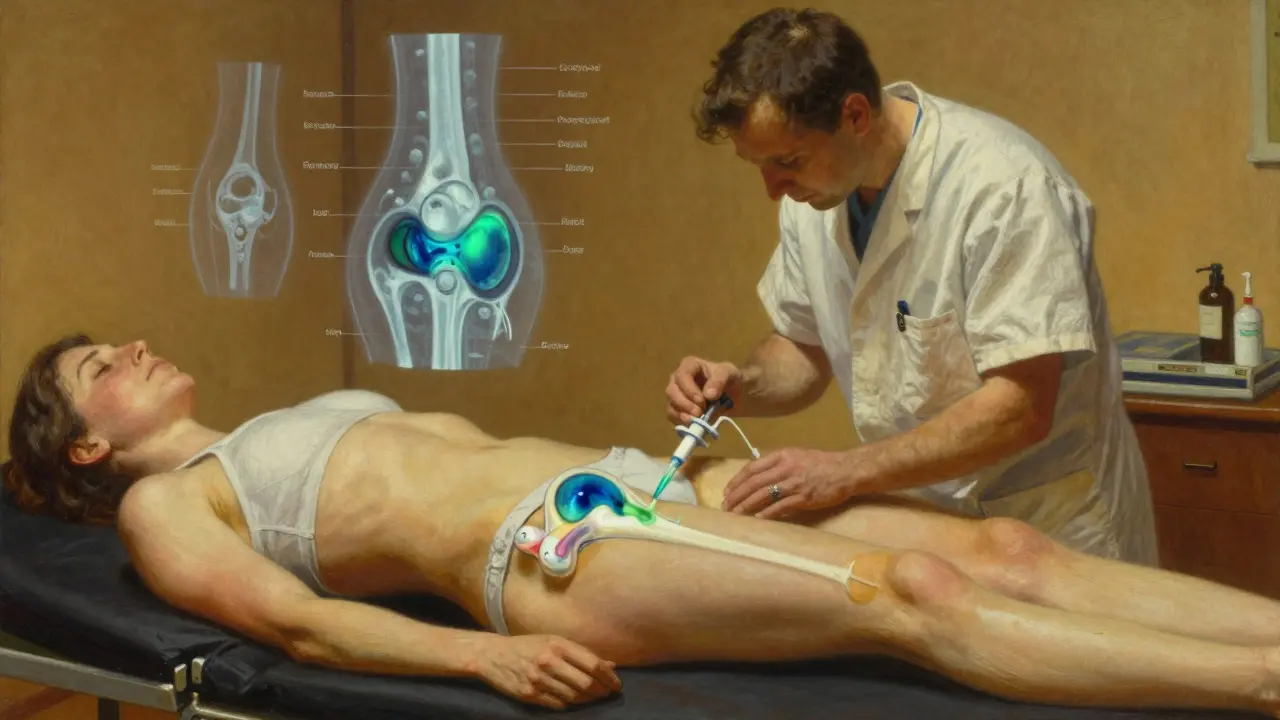
Standard MRI scans miss up to 30% of labral tears. They’re good for ruling out other problems, but not reliable for confirming a tear. That’s where magnetic resonance arthrography (MRA) comes in. MRA injects contrast dye into the hip joint before the scan, making the labrum stand out clearly. It’s 90-95% accurate at detecting tears-far better than regular MRI. The International Hip Documentation Society recommends MRA as the gold standard for pre-surgical planning.
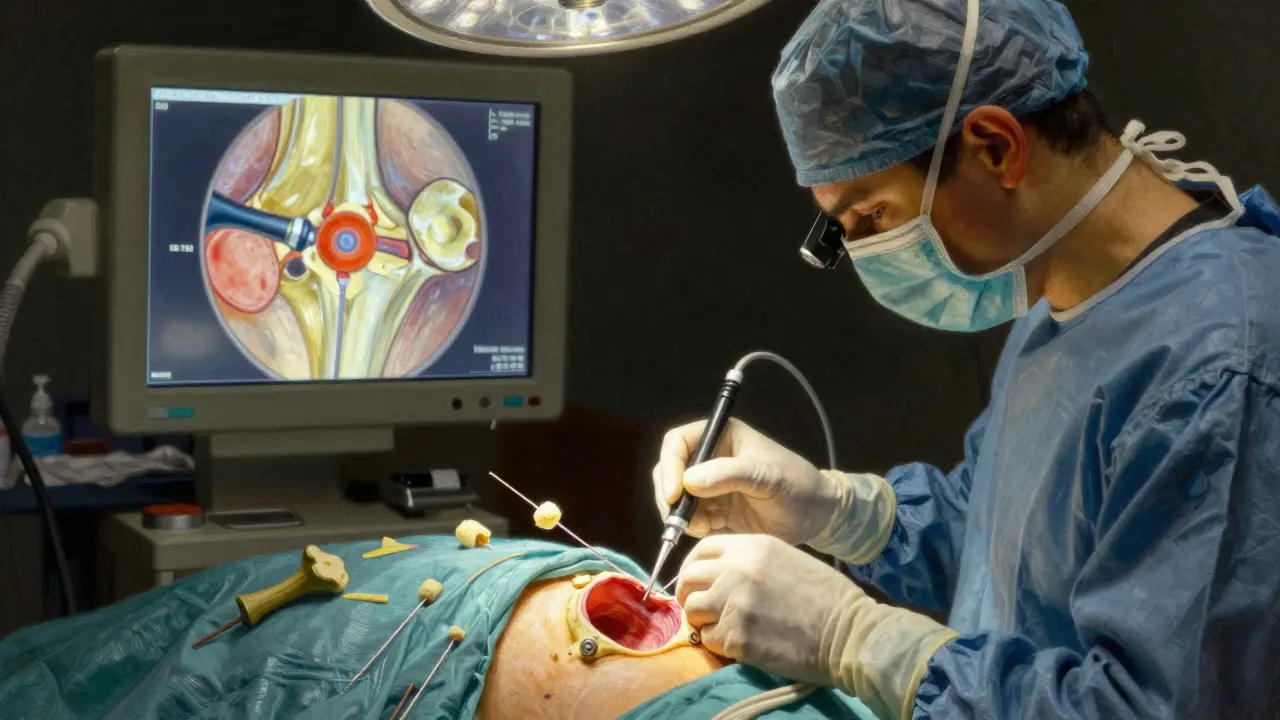
But even MRA can’t show everything. The real confirmation comes during hip arthroscopy. During this minimally invasive surgery, a tiny camera is inserted into the joint. Surgeons can see the tear directly, assess its size and location, and check for other issues like loose cartilage or synovitis. Arthroscopy has a 98% diagnostic accuracy. If you’re an athlete with persistent hip pain and normal X-rays, MRA is the next step-don’t skip it.
Can You Avoid Surgery?
Yes, sometimes. Conservative treatment works for about 30-65% of athletes, depending on the source. The first step is rest. Stop the sport that’s causing pain for 4-6 weeks. Use NSAIDs like ibuprofen or naproxen to manage inflammation. Avoid deep squats, lunges, or any movement that triggers clicking or pain.
Physical therapy is controversial. Some studies say only 30-40% of athletes recover fully with PT alone. But clinics like True Sports Physical Therapy report 65% success with structured rehab programs. The key is working with a therapist who understands athletic hips. Focus on strengthening the glutes, core, and hip stabilizers-not just stretching. Poor control of the pelvis is often the root cause of the problem.
Corticosteroid injections can help. They reduce inflammation and pain for 3-6 months in 70-80% of cases. But they’re not a cure. They’re a tool to buy time-either to try more therapy or to plan surgery without constant pain. One expert at Boston Children’s Hospital uses ultrasound-guided injections combined with PT to avoid surgery in 75% of cases with mild tears and no structural issues.
But if pain lasts more than 3-6 months despite these steps, surgery is usually the next move. Delaying too long increases the risk of cartilage damage and early arthritis. Untreated labral tears raise the chance of hip osteoarthritis by 4.5 times over 10 years.
What Happens During Hip Arthroscopy?
Hip arthroscopy is a day surgery. Two or three small incisions are made around the hip. A camera and tiny instruments go in to repair the tear. There are two main approaches: debridement and repair.
Debridement means trimming away the torn, frayed part of the labrum. It’s faster and has a shorter recovery-3 to 4 months back to sport. But it doesn’t fix the root problem. If there’s underlying FAI or dysplasia, the tear will likely come back.
Repair means sewing the labrum back to the bone using bioabsorbable anchors. These anchors dissolve over time, leaving no metal behind. The FDA approved a new bioabsorbable anchor system in June 2023 with 89% success at 2 years. Repair takes longer-5 to 6 months to return to sport-but it preserves the labrum’s sealing function, which protects the joint long-term.
Surgeons often fix FAI at the same time. They shave off the extra bone on the femur (femoroplasty) or deepen the socket (acetabuloplasty). The American Academy of Orthopaedic Surgeons warns that doing only a labral repair without correcting bone shape leads to 40% higher revision rates.
Recovery and Return to Sport
Recovery isn’t just about waiting. It’s a phased process. Phase 1 (weeks 1-6) focuses on protecting the repair. You’ll use crutches and avoid hip flexion beyond 90 degrees. Phase 2 (weeks 7-12) adds strength training-especially glutes and quads. Phase 3 (weeks 13-20) introduces sport-specific drills: cutting, pivoting, jumping. Phase 4 (weeks 21-26) is full return.
Before you get back on the field, you need to meet two key benchmarks: 90% strength symmetry in your quads compared to the healthy leg, and pain-free hip internal rotation to at least 30 degrees. Skipping these checkpoints leads to re-injury.
Professional athletes like NHL player Ryan Nugent-Hopkins returned to play after 5.5 months. But amateur athletes often take longer-especially if they don’t have access to specialized rehab. Those treated at dedicated sports medicine centers report 92% satisfaction. At general orthopedic clinics, satisfaction drops to 75%.
Complications and Long-Term Outlook
Most people do well. But complications happen. About 15-20% of patients still have some pain after surgery. 5-10% develop heterotopic ossification-bone forming where it shouldn’t. Nerve injury is rare, at 1-2%, but can cause numbness or tingling. Revision surgery is needed in 8-12% of cases within 5 years.
Long-term, the goal is to prevent arthritis. The labrum helps distribute pressure in the joint. Removing it (debridement) increases stress on the cartilage. Repairing it preserves joint health. Athletes who get proper repair and bone correction have a much better chance of staying active into their 40s and 50s.
Regenerative treatments like PRP injections are emerging. A 2022 trial showed 55% of patients avoided surgery after PRP. But it’s not a magic fix. It works best for small, stable tears with no major bone deformities.
What Should Athletes Do Next?
If you’re an athlete with persistent hip pain:
- Stop the aggravating activity for 2-4 weeks.
- See a sports medicine specialist-not just any orthopedist.
- Get X-rays to check for FAI or dysplasia.
- If X-rays are normal but pain continues, demand an MRA. Don’t settle for a regular MRI.
- If the tear is confirmed, ask if bone abnormalities need correction.
- Try 3-6 months of conservative care before surgery.
- If surgery is needed, choose a surgeon with high volume in hip arthroscopy. The learning curve is steep-surgeons need 50-100 cases to be truly proficient.
Don’t ignore hip pain hoping it’ll go away. Early, correct intervention means more years on the field-and fewer replacements later.
Can a hip labral tear heal on its own without surgery?
Sometimes, but rarely. Small tears with no underlying bone issues may improve with rest, physical therapy, and activity modification. However, most labral tears in athletes don’t fully heal because the labrum has poor blood supply. Without fixing the root cause-like femoroacetabular impingement or hip dysplasia-the tear will likely persist or worsen. About 30-65% of athletes avoid surgery with conservative care, but success depends heavily on the tear’s size, location, and whether bone abnormalities are present.
Is MRA better than MRI for diagnosing a hip labral tear?
Yes, significantly. Standard MRI detects only 35-60% of labral tears. MRA, which involves injecting contrast dye into the hip joint before imaging, boosts accuracy to 90-95%. The dye highlights soft tissue structures, making even small or partial tears visible. The International Hip Documentation Society recommends MRA as the standard imaging test before surgery because it changes treatment plans in up to 30% of cases compared to regular MRI.
How long does it take to return to sports after hip arthroscopy?
It depends on the procedure. If only a debridement was done, most athletes return in 3-4 months. If the labrum was repaired with anchors, recovery takes 5-6 months. This includes a strict rehab plan: first protecting the repair, then building strength, then sport-specific drills. Rushing back increases the risk of re-tear. Key milestones before returning include 90% quadriceps strength symmetry and pain-free hip internal rotation to at least 30 degrees.
Does hip dysplasia affect the success of labral repair?
Absolutely. Hip dysplasia means the socket is too shallow, putting extra stress on the labrum. If dysplasia isn’t corrected during surgery, the re-tear rate jumps to 60-70%. Surgeons must address both the tear and the bone structure-often by deepening the socket (acetabuloplasty). Isolated labral repair in dysplastic hips fails in two out of three cases within two years. The American Academy of Orthopaedic Surgeons advises against repairing the labrum without correcting underlying bone deformities.
Are there alternatives to surgery for hip labral tears?
Yes, but they’re not always permanent. Conservative options include rest, NSAIDs, physical therapy, and corticosteroid injections. PRP (platelet-rich plasma) injections show promise, with one trial showing 55% of patients avoided surgery at 12 months. However, these treatments manage symptoms-they don’t fix structural problems like FAI or dysplasia. For athletes who want to return to high-impact sports, surgery is usually the only way to restore long-term joint function and prevent arthritis.