
GLP-1 Nausea Meal Calculator
Your Meal Plan Calculator
How It Works
Based on the article: Small meals (300-400 calories) spaced 2.5-3 hours apart reduce nausea by up to 50%. Studies show 80% of users see improvement by week 8 when following proper portion control.
Why this matters
GLP-1 drugs slow stomach emptying. Large meals increase pressure on a slowed digestive system, triggering nausea. By limiting portions and spacing meals, you give your stomach time to process food without discomfort.
Sample Result
Calories per meal: 350-400 kcal
Meals per day: 5-6
Recommended timing: 2.5-3 hours apart
Your Personalized Meal Plan
Daily Calories
Calories per day
Per Meal
Calories per meal
Meal Spacing
Hours between meals
Tips for Success
Start slow: Begin with 300 calories per meal, then gradually increase to 400 if comfortable.
Choose wisely: Lean proteins, simple carbs, and vegetables work best. Avoid high-fat foods.
Hydration matters: Drink fluids 30-60 minutes before or after meals, not during.
If you’re taking a GLP-1 medication like Ozempic, Wegovy, or Mounjaro and feeling nauseous, you’re not alone. Around 40% of people on these drugs experience nausea, especially in the first few weeks. For many, it’s mild and fades. For others, it’s bad enough to make them quit. The good news? You don’t have to suffer through it. Most cases of GLP-1 nausea can be managed - and often avoided - with simple, science-backed strategies.
Why GLP-1 Medications Cause Nausea
GLP-1 drugs work by mimicking a natural hormone that slows down how fast your stomach empties. That’s actually helpful for blood sugar control and weight loss. But when your stomach takes longer to process food, it can feel full, bloated, or queasy. This isn’t just a side effect - it’s the main way these drugs work. The slower your stomach empties, the more likely you are to feel nauseous, especially if you eat too much or too quickly. Nausea usually hits hardest in the first 4 to 5 weeks. By week 8, about 80% of people see it fade. But if you rush the dose increases, or eat the wrong foods, it can stick around much longer. One user on Drugs.com reported nausea lasting 11 weeks after jumping from 1.7 mg to 2.4 mg of Wegovy in just four weeks. That’s way too fast.Small Meals Are Your Best Friend
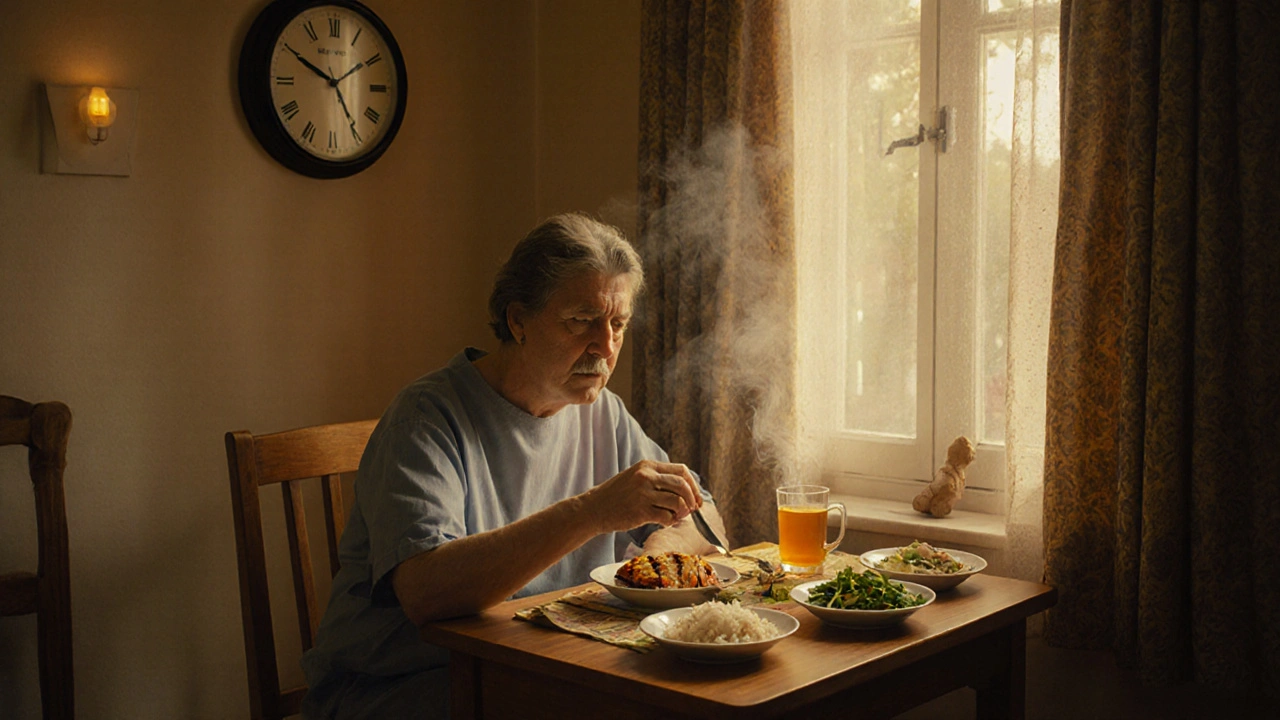
Forget three big meals a day. When you’re on a GLP-1 drug, your stomach can’t handle large portions. Instead, aim for five or six smaller meals spaced 2.5 to 3 hours apart. Each meal should be around 300 to 400 calories - about the size of your palm, not your fist. Studies show that reducing portion sizes by 25-30% cuts nausea in half for most people. Avoid high-fat foods like fried chicken, creamy pasta, or cheese-heavy dishes. Fat slows digestion even more, making nausea worse. Stick to lean proteins (chicken, fish, tofu), simple carbs (toast, rice, crackers), and vegetables. A 45-year-old patient in a MacArthur MC case study dropped from 5-6 nausea episodes a day to just 1-2 weekly by switching to small, consistent meals and avoiding fluids during eating. She didn’t change her medication - just her plate.Drink Between Meals, Not With Them
Drinking water or coffee with your food might seem normal, but it’s a mistake on GLP-1s. Liquids fill up your stomach quickly, and when your stomach is already slow, that extra volume triggers nausea. Instead, drink fluids 30 to 60 minutes before or after meals. Try this: Sip 8 oz of water 45 minutes before breakfast. Eat your small meal. Wait another 45 minutes, then have another glass. Repeat through the day. This keeps you hydrated without bloating your stomach. Many patients report immediate relief once they make this switch.Slow Titration Is Non-Negotiable
Doctors often start patients on the lowest dose and increase it every 2-4 weeks. But that’s not enough. Experts like Dr. Robert F. Kushner and Dr. Jennifer Shine Dyer say staying on each dose for 4-6 weeks - not 2-4 - makes a huge difference. Rentia Clinic extended titration periods by 50-100% and cut nausea-related discontinuations from 12% to under 4%. That’s a massive win. If your doctor wants to bump you up every two weeks, ask if you can wait longer. Give your body time to adjust. You’re not falling behind - you’re setting yourself up for long-term success.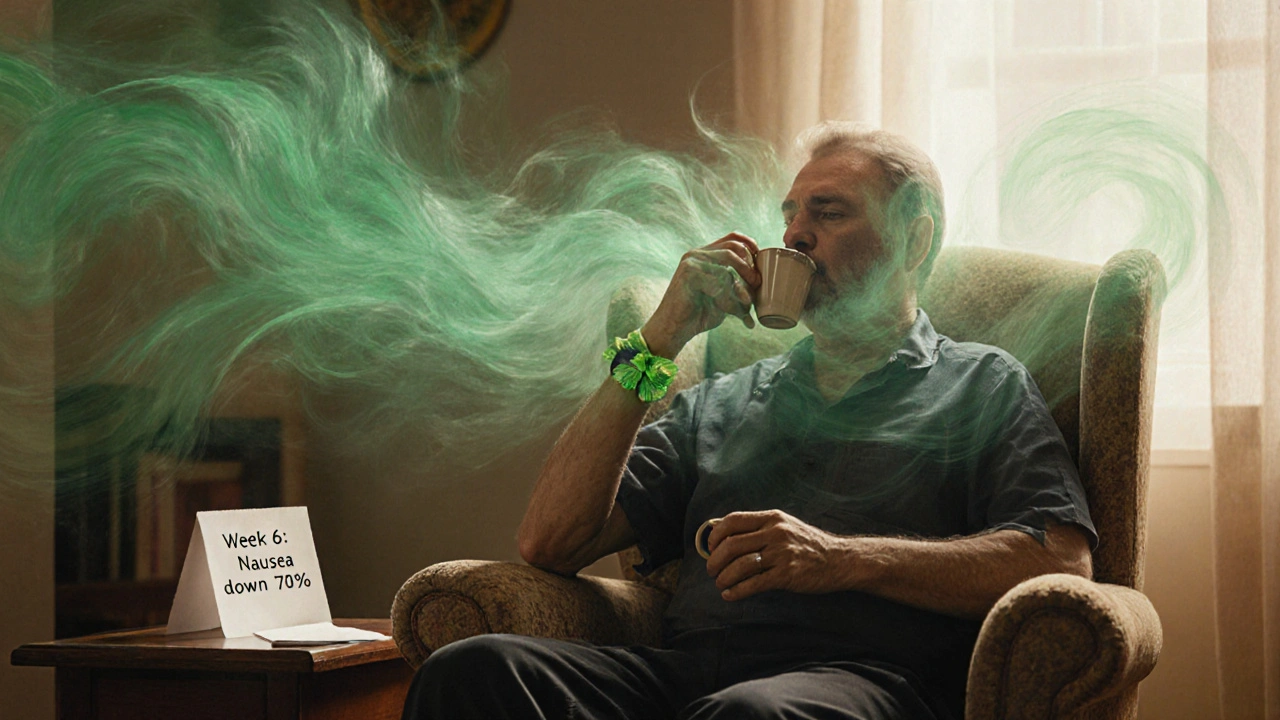
Try Ginger, Peppermint, and Acupressure Bands
Natural remedies aren’t just for folklore. Ginger reduces nausea by 62% in clinical studies. Keep ginger chews, tea, or capsules on hand. Peppermint has shown 55% effectiveness in small trials. Sip peppermint tea when you feel queasy. Acupressure wristbands - the kind used for motion sickness - are another low-risk tool. A 2023 pilot study with 31 adults found these bands worked in 80% of nausea episodes, often within 5-20 minutes. They’re reusable, drug-free, and safe. One Reddit user called them “the secret weapon I didn’t know I needed.”When to Use Anti-Nausea Medications
If diet and timing don’t help, medications can step in. Domperidone (10-20 mg, 3-4 times daily) is the top choice for most doctors. It helps the stomach empty faster without the side effects of older drugs like metoclopramide, which can cause tremors or mood changes. Ondansetron (Zofran) 4 mg orally disintegrating tablets work fast - 76% of patients at Rentia Clinic felt relief within 15-20 minutes. But don’t use these long-term. If you need anti-nausea meds for more than a month after reaching your final dose, talk to your doctor about lowering your GLP-1 dose instead.Track Your Triggers
Keep a simple journal for two weeks. Write down:- Time you took your injection
- What you ate and how much
- When and how much you drank
- Nausea level (1-10)
- Any other symptoms (bloating, vomiting, dizziness)

When to Call Your Doctor
Most nausea is normal. But some signs mean something more serious:- Vomiting more than 3 times in 24 hours
- Can’t keep fluids down for 12+ hours
- Lost more than 5% of your body weight in one week
- Nausea lasting longer than 8 weeks
- Feeling full after just a few bites, even when you haven’t eaten much
What’s Next for GLP-1 Nausea?
Pharmaceutical companies are already working on better versions. Novo Nordisk’s oral semaglutide - not yet approved - shows 18% less nausea than injectables in early trials. New formulations are being designed to protect the stomach lining and reduce irritation. Some experts predict combination therapies - like pairing GLP-1s with low-dose domperidone - will become standard in the next 3-5 years. Early data shows this cuts nausea by over half without hurting weight loss. Meanwhile, drugmakers are helping patients directly. Novo Nordisk offers free dietitian access to most insured Wegovy users. Eli Lilly sends out nausea kits with ginger chews and acupressure bands to new Mounjaro patients.Bottom Line
GLP-1 nausea is frustrating, but it’s not a reason to quit. With small meals, slow dose increases, smart hydration, and simple tools like ginger and wristbands, most people get through it. The goal isn’t to eliminate nausea completely - it’s to make it manageable enough that you can stick with your treatment and get the benefits you’re paying for. The cost of quitting? About $1,200 per person in lost health gains, according to the American Diabetes Association. Don’t let nausea steal your progress. Adjust your habits. Be patient. Your stomach will catch up.How long does GLP-1 nausea usually last?
For most people, nausea starts within the first week of treatment and peaks around weeks 2-4. It typically fades on its own within 6-8 weeks. About 80% of users report significant improvement by the end of 8 weeks. If nausea lasts longer than 8 weeks or gets worse, talk to your doctor - it could be a sign of something else.
Can I take anti-nausea meds with GLP-1 drugs?
Yes, but only under medical supervision. Domperidone is the most commonly recommended antiemetic because it helps stomach emptying without serious side effects. Ondansetron (Zofran) works fast for sudden nausea. But if you need these for more than a month after reaching your full GLP-1 dose, your doctor may suggest lowering your GLP-1 dose instead of continuing long-term anti-nausea meds.
Should I take my GLP-1 shot in the morning or at night?
If you get morning nausea, taking your injection at bedtime can help. A Harvard Health report found that 63% of patients who switched from morning to nighttime dosing saw less nausea. Sleep reduces your awareness of nausea, and your stomach has time to process the drug overnight. If you don’t have morning nausea, stick with whatever time works best for your routine.
Is ginger really effective for GLP-1 nausea?
Yes. A 2022 meta-analysis found ginger reduced nausea by 62% in people using GLP-1 drugs. Ginger chews, tea, or capsules are safe, easy to use, and widely available. Many users on Reddit and patient forums say ginger is their go-to fix. Try 1-2 grams of ginger per day - that’s about one teaspoon of grated root or one ginger chew.
Why do some people quit GLP-1 meds because of nausea?
About 10-15% of users stop GLP-1 medications due to nausea, especially if they rush the dose increases or eat large, fatty meals. The nausea feels overwhelming, and they don’t know how to manage it. But studies show that extending the titration period and changing diet habits can reduce discontinuation rates to under 4%. Nausea is treatable - it doesn’t have to mean quitting.
Do acupressure wristbands really work for GLP-1 nausea?
Yes, in many cases. A 2023 pilot study showed 80% of users got relief within 20 minutes of wearing the bands. They’re not a cure, but they’re a safe, drug-free option that works quickly. Many patients use them alongside dietary changes. They’re especially helpful during travel or when you’re away from home.
Can GLP-1 nausea lead to gastroparesis?
Rarely, but it can. Gastroparesis is a condition where the stomach stops emptying properly. It affects about 0.5% of GLP-1 users. Signs include persistent nausea beyond 8 weeks, vomiting, feeling full after just a few bites, and weight loss. If you have these symptoms, see your doctor right away. It’s not common, but it’s serious and needs medical attention.
Are there new GLP-1 drugs with less nausea?
Yes. Novo Nordisk’s oral semaglutide - currently in Phase 3 trials - shows 18% less nausea than injectable versions. Other companies are developing next-gen formulations with built-in stomach protection. Combination therapies with prokinetic agents (like domperidone) are also being tested and could become standard in the next few years.
Glory Finnegan
November 14, 2025 AT 03:43GLP-1 nausea? More like GLP-1 *nay-sayers* with a side of overpriced placebo vibes 🤮💸
Dean Pavlovic
November 14, 2025 AT 13:53Let’s be real-most people can’t even handle a 300-calorie meal without whining. You’re not ‘nauseous,’ you’re just used to eating like a raccoon at a buffet. Slow titration? Yeah, because your stomach is a fragile snowflake. The drug works. Adapt or quit. 🤷♂️
Jessica okie
November 15, 2025 AT 11:52They’re hiding something. The pharmaceutical companies know this nausea is intentional-it’s a feature, not a bug. They want you dependent. They don’t want you healthy. They want you hooked. Read the fine print. The FDA doesn’t tell you this.
Benjamin Mills
November 16, 2025 AT 07:57I cried in the shower on week three. I swear to god, I thought I was dying. Then I tried ginger tea and acupressure bands and now I’m 18 lbs lighter and emotionally stable. This isn’t just medicine-it’s a spiritual awakening. 🙏😭
Craig Haskell
November 16, 2025 AT 22:19It’s critical to acknowledge the neurogastroenterological feedback loop here: GLP-1 agonists modulate gastric motility via vagal afferent pathways, which in turn trigger emetic centers in the dorsal vagal complex-hence, nausea as a pharmacodynamic byproduct. But! With proper dietary micro-timing, caloric density reduction, and circadian-aligned dosing (i.e., bedtime), we observe a statistically significant attenuation of GI distress (p<0.01). Also, ginger works. Who knew?
Ben Saejun
November 18, 2025 AT 05:47I went from 300 lbs to 190. Nausea? Yeah. For 10 weeks. I didn’t quit. I didn’t cry. I didn’t post about it. I just ate rice, chicken, and water between meals. And I didn’t need a damn wristband. You’re overcomplicating it. The science is simple: slow down. Eat less. Drink apart. Done.
Visvesvaran Subramanian
November 18, 2025 AT 06:55Small meals help. Ginger helps. Patience helps. Your body is not broken. It is adjusting. Many of us in India have been doing this for centuries with turmeric and light meals. You don’t need expensive bands or pills. Just listen.
Christy Devall
November 19, 2025 AT 15:20They sell this like it’s a miracle drug-but it’s just a slow-acting toxin with a marketing budget bigger than your rent. Ginger chews? Acupressure bands? Please. You’re being sold a fairy tale wrapped in a clinical trial. The real fix? Stop taking it. But hey, if you want to feel like a lab rat for 12 months, go ahead.
Selvi Vetrivel
November 20, 2025 AT 15:23Wow. So you’re telling me the solution to nausea is… eating less? And drinking water at the right time? Shocking. Next you’ll tell me breathing oxygen helps with altitude sickness. 🙄
Nick Ness
November 20, 2025 AT 20:34It is imperative to emphasize that the clinical efficacy of GLP-1 receptor agonists is well-documented in peer-reviewed literature. However, patient-reported gastrointestinal adverse events remain a significant barrier to adherence. The proposed non-pharmacological interventions-including dietary modification, hydration timing, and ginger supplementation-are supported by preliminary evidence and should be considered as adjunctive strategies under physician supervision.
Rahul danve
November 21, 2025 AT 19:11They’re all lying. The real reason you’re nauseous? Your liver is crying. Big Pharma doesn’t want you to know your body is detoxing. They want you to keep paying. Ginger? Bands? LOL. You need a cleanse. And a new doctor. And maybe a new life.
Katie Mallett
November 22, 2025 AT 23:25For anyone struggling: You’re not failing. This is hard. Your body is changing. The fact that you’re trying to manage it with care instead of quitting speaks volumes. Try the small meals. Try the ginger. Try the timing. You don’t have to do it all at once. Just one thing today. That’s enough.
Joyce Messias
November 24, 2025 AT 08:36My mom took Wegovy. She was so nauseous she didn’t leave the couch for two weeks. Then she started eating oatmeal at 8am, drank water at 10am, and took her shot at 9pm. No more nausea. No drama. Just results. You don’t need a PhD. You just need to follow the damn instructions.