

When your baby’s skin is red, dry, and itchy, it’s easy to think it’s just a rash. But for many families, that eczema is the first sign of something bigger - a chain reaction called the atopic march. It’s not a guarantee, but it’s a pattern many children follow: eczema in infancy, then food allergies, then asthma and hay fever as they grow. The good news? We now know how to stop it - or at least slow it down - by protecting the skin barrier from day one.
What Is the Atopic March, Really?
The atopic march used to sound like a sure path: baby gets eczema, then develops a peanut allergy, then wheezes, then gets allergic rhinitis. But recent studies show that’s not the story for most kids. Only about 3.1% of children with eczema follow this exact sequence. That’s not nothing - but it’s far from inevitable. What’s really happening is something more complex: atopic multimorbidity. This means kids with eczema are more likely to develop other allergic conditions, but not always in order, and not always at all. About 25% of children with eczema go on to develop asthma. Around 80% become sensitized to allergens like dust mites or eggs - but only half of those actually get symptoms. Sensitization isn’t the same as allergy. You can test positive on a skin prick test and still eat peanut butter without a problem. The real risk factor isn’t having eczema - it’s how bad it is. Kids with severe eczema are 3 to 4 times more likely to develop multiple allergic conditions than those with mild cases. And it’s not random. Genetics play a big role. Mutations in the filaggrin gene, which helps build the skin’s protective layer, are found in up to half of kids with moderate to severe eczema. These same mutations are linked to higher rates of food allergies and asthma - but only when the skin barrier is broken.Why Skin Barrier Breakdown Starts the Chain
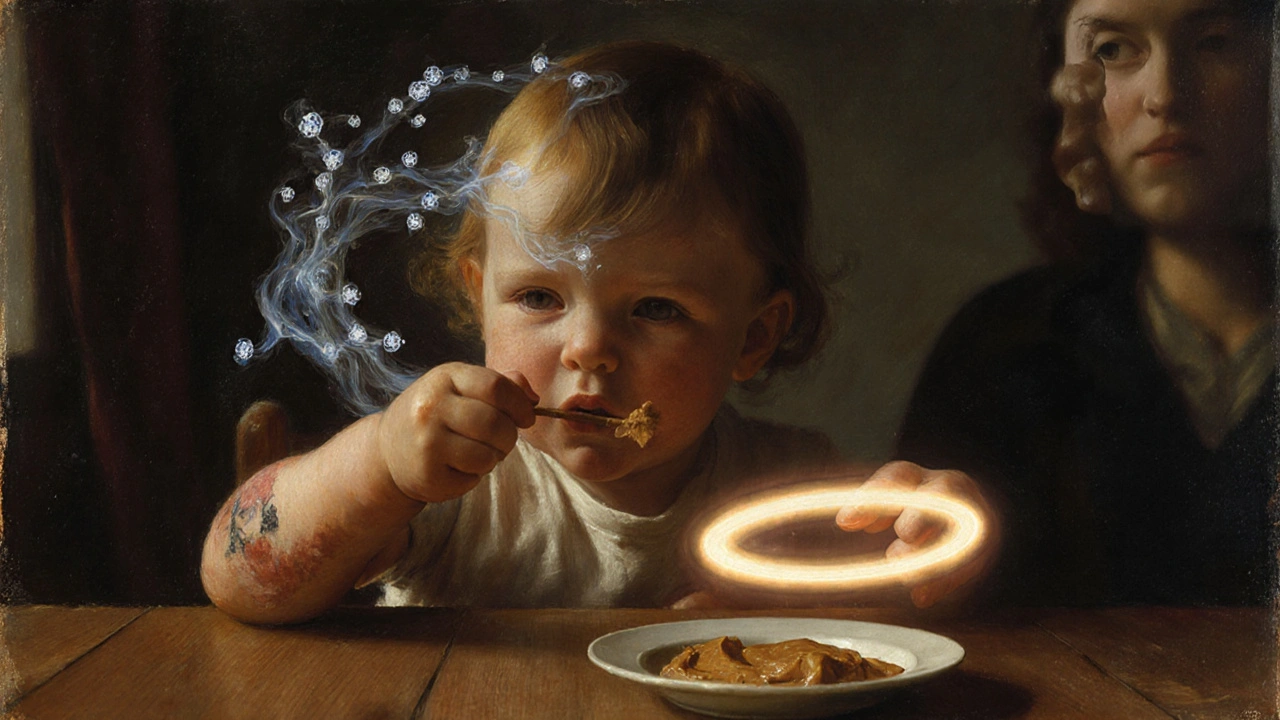
Think of your baby’s skin like a brick wall. Filaggrin is the mortar holding the bricks together. When that mortar is weak - because of genetics, dry air, harsh soaps, or even frequent bathing - tiny cracks form. These cracks let in allergens: peanut proteins from your fingers, dust mite particles from the crib, cow’s milk residue from a spilled bottle. Once those allergens slip through the skin, the immune system sees them as invaders. It starts making IgE antibodies, the same ones that trigger hives and anaphylaxis. This is called sensitization. But here’s the twist: if that same peanut protein later enters through the mouth - say, when your child eats peanut butter - the immune system learns to tolerate it. That’s the core of the dual allergen exposure hypothesis. The LEAP study proved this. Researchers gave high-risk babies (those with severe eczema) peanut protein regularly from 4 to 11 months old. By age 5, those kids had an 86% lower risk of developing peanut allergy than those who avoided it. The same logic applies to eggs, milk, and other common allergens. Skin exposure = sensitization. Oral exposure = tolerance.What Skin Barrier Care Actually Looks Like
You don’t need fancy creams or expensive oils. You need consistency. Here’s what works, based on clinical trials like PreventADALL:- Apply fragrance-free emollients (moisturizers) at least twice a day, starting in the first week of life - even if there’s no rash yet.
- Use ointments (like petroleum jelly) over creams or lotions. Ointments have less water and more oil, so they seal moisture in better.
- Apply right after bath time, while skin is still damp. Pat dry, don’t rub.
- Use gentle, soap-free cleansers. Avoid anything with sulfates, fragrances, or alcohol.
- Keep baths short (5-10 minutes) and lukewarm. Hot water strips natural oils.
- Dress in soft, breathable fabrics like cotton. Avoid wool and synthetics.
- Wash clothes with fragrance-free detergent. Rinse twice to remove residue.
It’s Not Just Skin - The Gut Matters Too
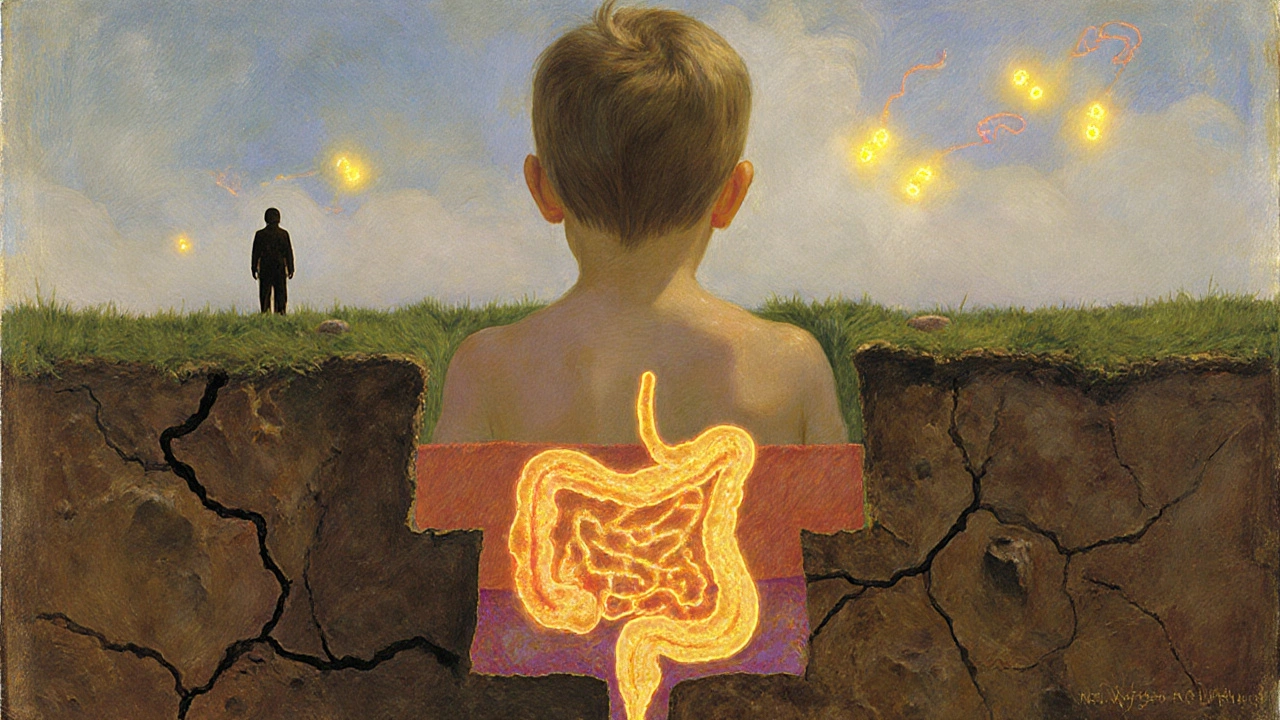
Your baby’s skin isn’t the only barrier that matters. Their gut is too. Research shows that babies who develop multiple allergies often have a gut microbiome lacking in bacteria that produce butyrate - a short-chain fatty acid that calms the immune system. These babies are born with less of the right microbes, and they don’t get enough from breast milk or diet. That’s why some experts are now studying probiotics and prebiotics for high-risk infants. Early data suggests certain strains - like Lactobacillus rhamnosus and Bifidobacterium - might reduce eczema severity and delay allergy onset. But don’t rush to buy supplements. Not all probiotics are equal. Talk to your pediatrician before starting anything. The bottom line: skin and gut health are linked. A healthy skin barrier reduces allergen exposure. A healthy gut helps the immune system learn what to ignore. Together, they form a shield.When to Worry - And When Not To
Not every itchy patch means trouble. Mild, occasional eczema on the cheeks or arms is common and often resolves on its own. But if your child has:- Red, cracked, oozing skin on the elbows, knees, or neck
- Constant scratching that wakes them up at night
- Family history of asthma, hay fever, or severe food allergies
- Early onset (before 3 months)
What’s Next for Families
The old idea - that eczema always leads to asthma - is outdated. But the new science gives us something better: control. We can’t change genes, but we can fix the skin. We can’t control all environmental triggers, but we can reduce exposure through smart habits. We can’t guarantee a child won’t develop allergies, but we can cut the odds significantly. The goal isn’t perfection. It’s protection. Start early. Be consistent. Use simple, proven methods. And remember: you’re not just treating a rash. You’re helping your child’s immune system learn the difference between danger and harmless things.Frequently Asked Questions
Can eczema cause food allergies?
Eczema doesn’t directly cause food allergies, but a broken skin barrier lets allergens like peanut or egg enter the body through the skin. This can trigger the immune system to react - leading to sensitization. If the same food is later eaten orally, the body may still react, causing an allergy. Early oral exposure, however, can teach the body to tolerate the food instead.
Should I avoid peanut butter if my baby has eczema?
No - the opposite. For babies with severe eczema, introducing peanut protein between 4 and 11 months of age reduces peanut allergy risk by up to 86%. Always consult your doctor first, especially if eczema is widespread or if there’s a family history of severe allergies. Start with a small amount, watch for reactions, and continue regular exposure.
What moisturizer is best for eczema-prone skin?
Ointments like petroleum jelly (Vaseline) or ceramide-based creams are best. They lock in moisture better than lotions or creams. Avoid anything with fragrance, alcohol, or essential oils. Look for products labeled "hypoallergenic" and "pediatrician-tested." Apply twice daily, especially after bathing.
Does breastfeeding prevent the atopic march?
Breastfeeding offers many benefits, but it doesn’t reliably prevent eczema or food allergies on its own. However, breastfed babies tend to have healthier gut microbiomes, which may help regulate immune responses. If you’re unable to breastfeed, don’t blame yourself - skin barrier care and early allergen introduction are more impactful for allergy prevention.
Is the atopic march inevitable for kids with eczema?
No. Only about 25% of children with eczema develop asthma, and only 3.1% follow the classic sequence of eczema → food allergy → asthma → hay fever. Most kids with eczema don’t go on to develop multiple allergic conditions. Severity, genetics, and skin care habits are bigger predictors than eczema alone.
Justin Daniel
November 23, 2025 AT 12:18So let me get this straight-we’re supposed to slather petroleum jelly on a newborn like it’s sunscreen at a beach party? And somehow that stops their immune system from going full panic mode? I mean… I guess it works. My cousin’s kid had eczema so bad the pediatrician cried. Started the ointment routine at 2 weeks. No peanut allergy at 5. Wild.
Still feels like we’re playing Jenga with a baby’s immune system. One wrong move and boom-asthma.
Melvina Zelee
November 23, 2025 AT 18:17ok but like… i just put baby in a onesie and hoped for the best. no fancy creams, no ‘ceramide this’ or ‘filaggrin that’. my kid had eczema till like 18 months and now? zero allergies. just eats peanut butter straight from the jar like a champ. maybe the real secret is not stressing out? i dunno. maybe i just got lucky. or maybe the universe likes messy moms.
also-why is everything ‘evidence based’ now? i miss when doctors just said ‘it’ll pass’ and handed you a lollipop.
steve o'connor
November 24, 2025 AT 22:55Just came back from Dublin where they’re doing a trial on probiotics for newborns with eczema. Early results? Same as the US-better skin barrier = less sensitization. But here’s the kicker: the Irish moms? They use lard. Real lard. From the local butcher. No chemicals. Just pig fat. And their kids? Less allergies than the ones with the $40 ‘hypoallergenic’ creams.
Maybe we’ve overcomplicated this. Skin isn’t a tech startup. It just needs to be covered, not branded.
ann smith
November 25, 2025 AT 06:33This is such an important message 💙
So many parents feel guilty when their child develops allergies, but the truth is-it’s not their fault. Genetics, environment, and timing all play a role. What we *can* control is consistent, gentle skin care and early, safe allergen introduction. You’re not failing if your baby has eczema. You’re giving them a fighting chance by showing up every day with moisturizer and love.
Keep going. You’re doing better than you think.
Julie Pulvino
November 26, 2025 AT 00:40My daughter had eczema so bad she’d scratch till she bled. We tried everything-steroids, oatmeal baths, expensive creams. Nothing worked until we just… stopped trying so hard. We switched to Vaseline twice a day, no fragrances, cotton clothes, and started giving her peanut butter paste on a spoon at 5 months. No reaction. Now she’s 3 and eats everything. The docs said ‘wait till 12 months.’ We did it at 5. No regrets.
Also-don’t wash her hair every day. That’s where the real damage happens. Water + soap + dry air = skin apocalypse.
Patrick Marsh
November 26, 2025 AT 19:58Don’t overthink it. Moisturize. Don’t bathe daily. Introduce allergens early. Avoid wool. Use fragrance-free detergent. Rinse twice. That’s it. No magic. No supplements. No hype. Just basics. If you do these five things, you’ve already done better than 80% of parents.
Danny Nicholls
November 28, 2025 AT 05:42my kid had eczema at 3 weeks and now he’s 4 and eats sushi like a pro 🥳
we did the vaseline thing, no fancy junk, just kept his skin wet like a swamp (in a good way) and threw peanut butter at him like confetti. doc said ‘wait till 12’ i said ‘nah we good’
also-baths are for fun, not therapy. 5 mins max. hot water = skin murder.
ps: probiotics? maybe. but i just feed him yogurt and call it a day 🤷♂️
Robin Johnson
November 28, 2025 AT 06:28Let’s be real: if you’re not applying emollients twice a day from birth, you’re gambling with your child’s immune system. The data is clear. The LEAP study isn’t a suggestion-it’s a protocol. You want to prevent allergies? Start with skin. Not supplements. Not probiotics. Not ‘natural remedies.’ Moisturizer. Ointment. Consistency.
Stop scrolling. Start slathering.
Latonya Elarms-Radford
November 29, 2025 AT 18:39Oh, so now we’re supposed to believe that the skin is the ‘gatekeeper’ of the immune system? That the filaggrin protein is the ‘mortar’ in a metaphysical brick wall of destiny? How quaint. We’ve reduced the sacred mystery of human development to a dermatological algorithm. We’ve turned parenting into a compliance checklist: ‘Apply at 7 a.m. and 7 p.m., avoid sulfates, and whisper affirmations to your baby’s dermis.’
And yet-what of the children born into poverty, where soap is rationed, water is lukewarm at best, and ‘emollient’ is a word from a magazine they can’t afford? Do they deserve asthma because they lacked the privilege of petroleum jelly?
Perhaps the real atopic march is the march of corporate wellness culture into the nursery, selling us solutions to problems we didn’t know we had until we were told we were failing.
My child had eczema. We didn’t moisturize. He’s fine. Maybe the universe doesn’t need your ointment. Maybe it just needs your presence.
Mark Williams
November 30, 2025 AT 06:47From a translational immunology standpoint, the dual allergen exposure hypothesis is robustly supported by RCT data, particularly the LEAP and EAT trials. The key mechanistic insight is that epicutaneous exposure to allergens in the context of a compromised skin barrier induces Th2 polarization and IgE class switching, whereas oral tolerance induction engages Treg pathways and dendritic cell modulation in the gut-associated lymphoid tissue.
Therefore, topical barrier repair isn’t merely symptomatic-it’s immunomodulatory. The PreventADALL trial demonstrated a 28% reduction in food allergy incidence with early emollient use, which correlates with reduced IL-33 and TSLP expression in lesional skin.
Probiotics remain heterogenous; strain-specific effects are critical. L. rhamnosus GG has Level 1 evidence for eczema reduction; others do not. Gut microbiome dysbiosis precedes eczema onset in longitudinal cohorts, suggesting a causal cascade.
Ravi Kumar Gupta
November 30, 2025 AT 11:50In India, we’ve been doing this for centuries-coconut oil on baby skin, no soap, cotton clothes, and feeding them homemade dal and ghee from 6 months. No fancy creams. No allergen fear. Kids grow up eating peanuts, milk, eggs-no issues. We didn’t have ‘atopic march’ because we didn’t have ‘over-cleaned skin’ and ‘sterile homes.’
Now everyone’s buying $50 creams and reading blogs. Meanwhile, our grandmas knew: skin needs oil, not science. And food? Feed it early. Fear kills more than allergens.
Rahul Kanakarajan
November 30, 2025 AT 12:32Wow. So you’re telling me I didn’t need to panic when my kid had a red cheek? I just needed to slap on Vaseline and feed him peanut butter? All those expensive tests, all those allergist visits, all that guilt… for NOTHING?
And now you’re saying I should’ve started at WEEK ONE? I didn’t even know what ‘filaggrin’ was until I read this. I’m not a doctor. I’m not a scientist. I’m a dad who googled ‘baby rash’ and bought 17 different creams. I feel like a failure.
Also-why is everyone so calm about this? I’m still shaking.
New Yorkers
December 1, 2025 AT 03:22Oh, so now it’s ‘skin barrier’ this and ‘dual exposure’ that? Please. I live in New York. My kid’s skin is dry because the apartment has the humidity of a desert. We don’t have time for ‘twice-daily ointments.’ We have subway delays, work calls, and a 2-year-old who thinks the couch is a trampoline.
And you want me to bathe him in lukewarm water for 5 minutes? In this city? The water’s either scalding or freezing. And ‘fragrance-free detergent’? That’s a luxury. We use whatever’s on sale.
Stop telling parents how to parent. We’re doing our best. You can’t fix the atopic march with a jar of Vaseline and a guilt trip.
David Cunningham
December 2, 2025 AT 21:42My kid had eczema. We did the moisturizer thing. Didn’t stress. He’s 6 now. Eats peanuts, dairy, shellfish. No issues. I think the biggest takeaway? Chill out. The body’s smarter than we give it credit for. And if it does develop something? We’ve got meds, we’ve got docs, we’ve got time.
Don’t turn parenting into a science project. Just be there.
Justin Daniel
December 4, 2025 AT 07:30Wait-so if you’re not using ointment and you live in Arizona with 5% humidity, are you basically signing your kid up for asthma? 🤔
I just realized my neighbor’s kid has peanut allergy and their mom swears she ‘never used anything but baby wipes.’
…I’m going to start slathering my nephew in Vaseline tonight. Just in case.