

When your feet feel like they’re on fire, or your toes go numb without warning, it’s not just discomfort-it’s nerve damage. For nearly 7 out of 10 people with diabetes, this is a reality. Diabetic neuropathy isn’t a single condition; it’s a group of nerve disorders caused by years of high blood sugar. And while it can’t always be reversed, it can be managed-often dramatically-by focusing on two things: protecting your nerves and controlling the pain.
Why Blood Sugar Is the Foundation of Everything
No treatment for diabetic neuropathy works without stable blood sugar. High glucose levels slowly damage the small blood vessels that feed your nerves. Without proper oxygen and nutrients, nerves begin to misfire, send false signals, or go silent. The result? Burning, tingling, sharp pains, or complete numbness-especially in your feet and hands. The Diabetes Control and Complications Trial (DCCT) showed something groundbreaking: keeping HbA1c below 7% cuts the risk of developing neuropathy by 60%. That’s not a small win. It’s the single most powerful tool you have. This doesn’t mean you have to be perfect. It means consistency. Fasting glucose between 80-130 mg/dL and under 180 mg/dL after meals isn’t just a target-it’s your shield. Many people think medication is the first step. But the truth? Lifestyle changes come first. A diet rich in leafy greens, whole grains, lean proteins, and healthy fats reduces inflammation and helps your body use insulin better. Walking 30 minutes a day isn’t just good for your heart-it’s one of the best ways to improve nerve function. Studies show that people who stick with regular movement see measurable improvements in sensation within a year.What the Pain Really Feels Like
Pain from diabetic neuropathy isn’t like a sprained ankle. It’s unpredictable. Some describe it as electric shocks. Others say it feels like walking on broken glass. Some feel constant burning, even when they’re not moving. And then there’s the numbness-the kind that makes you step on something sharp and not feel it until you see the wound. This isn’t just physical. The constant discomfort leads to sleepless nights, anxiety, and depression. One in four people with painful diabetic neuropathy develops clinical depression. That’s why treatment has to be more than pills. It has to be a full plan-body, mind, and lifestyle.First-Line Medications: What Actually Works
There are only two drugs approved by the FDA specifically for diabetic nerve pain: pregabalin (Lyrica) and duloxetine (Cymbalta). But they’re not magic bullets. Pregabalin helps about 30-40% of people cut their pain by half. But it can cause dizziness, weight gain, and swelling. Duloxetine works for about 35% of users, reducing pain by 50% in those who respond. Side effects? Nausea, dry mouth, and fatigue. For many, these side effects are worse than the pain. Then there’s amitriptyline, an old tricyclic antidepressant. It’s not FDA-approved for this use, but studies show it’s more effective than either pregabalin or duloxetine-up to 63% of patients report major pain relief. The catch? It causes drowsiness, dry mouth, and can be dangerous for older adults or those with heart conditions. That’s why doctors often start with the FDA-approved options and only turn to amitriptyline if others fail.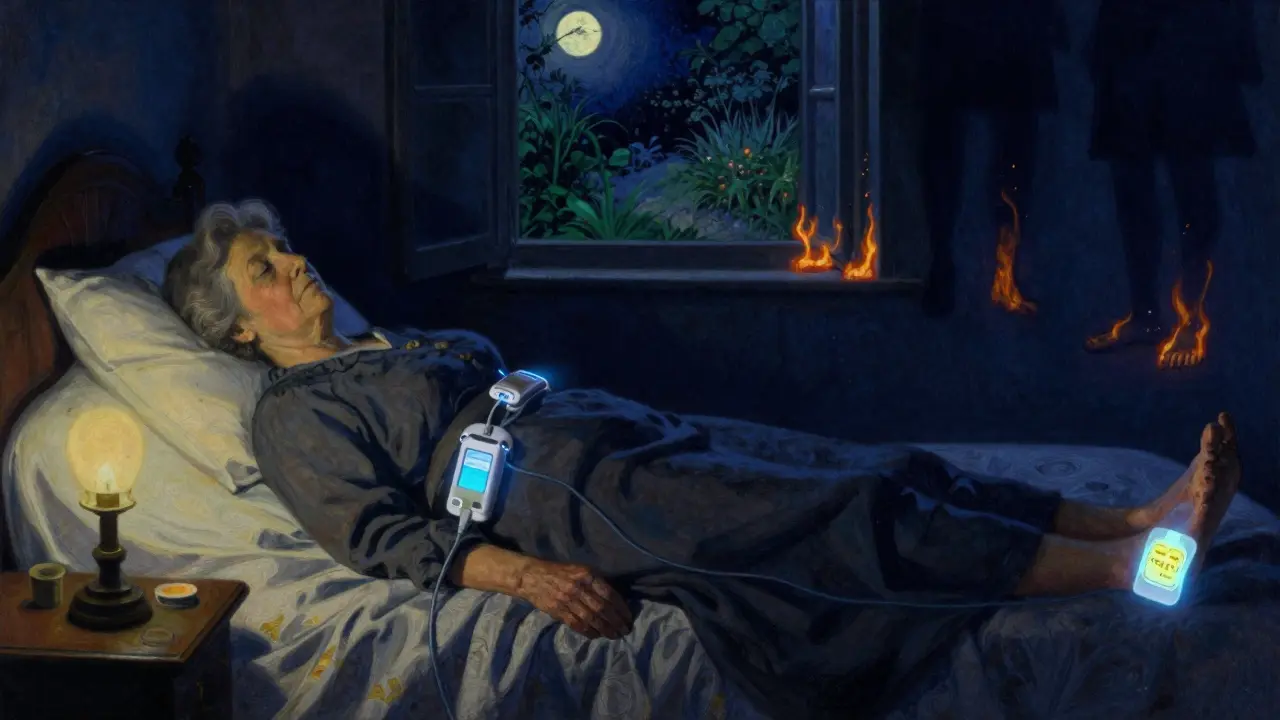
Topical Treatments: Local Relief Without Systemic Side Effects
If you’re tired of feeling foggy from pills or gaining weight, topical treatments are worth trying. The capsaicin 8% patch (Qutenza) is applied once every three months by a doctor. It works by depleting substance P, the chemical that tells your brain you’re in pain. In trials, 40% of patients saw at least a 30% drop in pain. No drowsiness. No weight gain. Just localized relief. Lidocaine patches (5%) are another option. They’re available over the counter in some places and can be taped directly over painful spots. They work well for people who have pain in one area-like the bottom of the foot or the inside of the ankle. They don’t help widespread pain, but for targeted discomfort, they’re quiet, effective, and safe.When Pills Aren’t Enough: Advanced Options
If you’ve tried three or four medications and still can’t sleep or walk without pain, it’s time to think beyond pills. Tramadol is sometimes used as a second-line option. It’s not an opioid in the traditional sense, but it acts on opioid receptors and can lead to dependence. About 8-12% of long-term users develop an addiction. It also causes nausea in 30% of people and constipation in 20%. Use it only if other options fail, and never for more than a few months. For those with severe, unrelenting pain, nerve stimulation is changing lives. Transcutaneous electrical nerve stimulation (TENS) uses a small device that sends mild pulses through pads on your skin. In one trial, 83% of users saw pain drop from 3.17 to 1.44 on a 5-point scale. It’s non-invasive, cheap, and can be used at home. Peripheral nerve stimulation (PNS) involves a tiny device implanted near the affected nerve. It delivers continuous electrical pulses that block pain signals. Studies show long-term pain reduction in over 60% of patients. It’s a minor outpatient procedure with low risk. And then there’s spinal cord stimulation. Once considered experimental, it’s now covered by many insurance plans. A small wire is placed near the spine, delivering pulses that interrupt pain signals before they reach the brain. What’s surprising? Many patients report not just less pain-but improved sensation. Numbness begins to fade. Some can feel their toes again after years of numbness. It’s not a cure, but it’s the closest thing we have to reversing damage.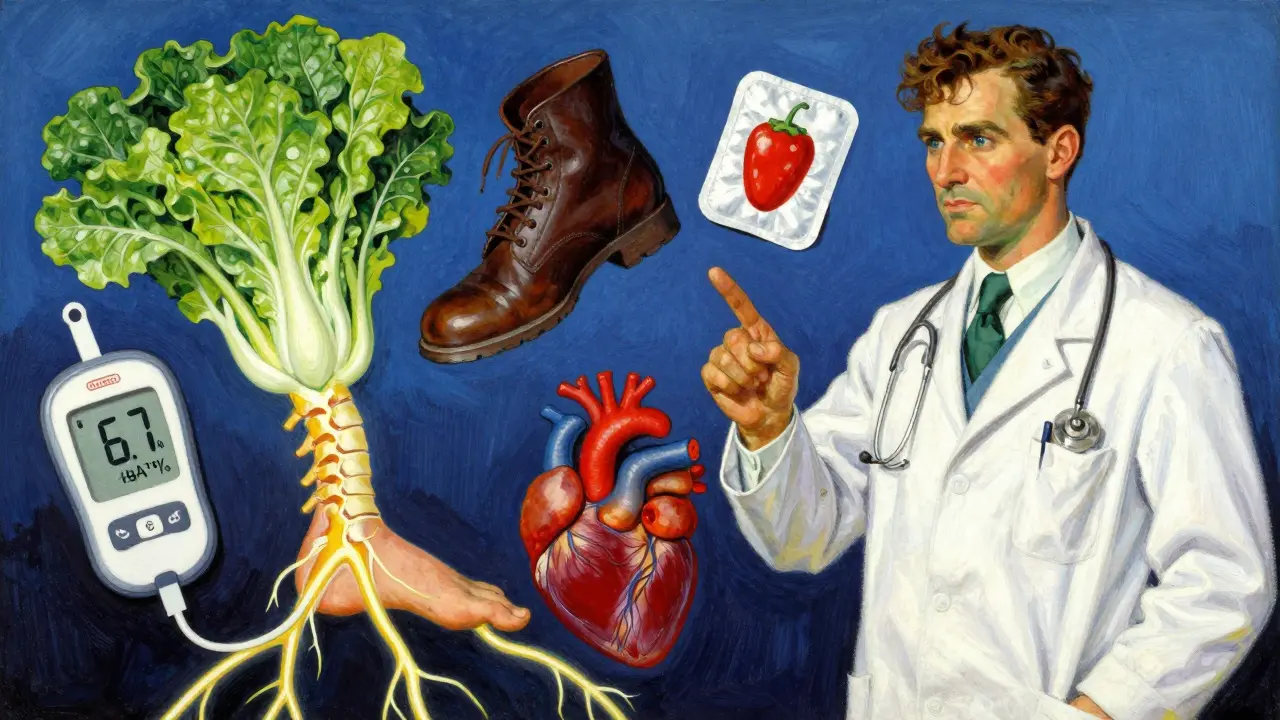
What Doesn’t Work (and Why You Should Avoid It)
Ibuprofen, naproxen, and other NSAIDs are often tried first because they’re easy to get. But they’re dangerous for people with diabetes. Long-term use increases heart attack risk by 10-20% and can damage kidneys-something you’re already at higher risk for. The FDA warns against using NSAIDs for chronic nerve pain. Alcohol might seem like a quick fix to dull the pain. But it’s toxic to nerves. Drinking even moderately speeds up nerve damage. Quitting alcohol is one of the most underreported steps in managing neuropathy. And while some supplements like alpha-lipoic acid or B vitamins are marketed heavily, there’s no strong evidence they reverse damage. They might help slightly in early stages, but they’re not replacements for proven treatments.Real-Life Success: What Patients Actually Do
The most successful patients don’t rely on one thing. They combine approaches. One man in Calgary, 68, had burning feet for five years. He tried pregabalin-made him dizzy. Duloxetine-gave him nausea. He switched to lidocaine patches for his soles, started walking daily, and got his HbA1c from 8.4% down to 6.7%. Within eight months, the burning faded. He still feels occasional tingling, but he sleeps through the night and walks his dog without fear. Another woman, 52, used TENS every evening after dinner. She added mindfulness meditation to handle the stress. Her pain didn’t disappear, but her reaction to it changed. She stopped dreading the pain and started living again. The common thread? Consistency. Not perfection. Not one magic pill. Daily habits, steady blood sugar, and finding the right mix of tools.What to Expect in the Next Year
If you get your blood sugar under control and stick with a treatment plan, you can expect real progress. Mild to moderate neuropathy can improve significantly within 12 months. Numbness may begin to fade. Pain intensity often drops by 40-60%. You won’t feel like you did in your 20s-but you can feel like yourself again. For severe cases, recovery is slower. But even then, pain can be controlled. The goal isn’t to erase every sensation-it’s to stop it from controlling your life. New drugs are on the horizon. Researchers are testing compounds that target specific pain channels in nerves (Nav 1.7 antagonists) and even molecules that may help nerves regrow. In the next five to ten years, we may have treatments that don’t just mask pain but actually repair damage. Until then, the best medicine is still what you do every day: eat well, move often, check your feet, and keep your numbers steady.Can diabetic neuropathy be reversed?
Mild to moderate diabetic neuropathy can improve with strict blood sugar control and lifestyle changes-especially within the first year. Numbness and tingling may fade. Pain often decreases significantly. But if nerves have been severely damaged for years, full reversal is unlikely. The focus then shifts to stopping further damage and managing symptoms effectively.
What’s the best painkiller for diabetic neuropathy?
There’s no single best painkiller-it depends on your health and tolerance. Duloxetine and pregabalin are FDA-approved and often tried first. Amitriptyline is more effective for some but has stronger side effects. Topical capsaicin or lidocaine patches work well for localized pain without systemic side effects. Tramadol should be used only as a last resort due to addiction risk.
Can I use ibuprofen for diabetic nerve pain?
No. Ibuprofen and other NSAIDs don’t treat nerve pain effectively and can be dangerous for people with diabetes. They increase the risk of heart problems and kidney damage-both already higher in diabetic patients. Avoid them for chronic nerve pain.
How long does it take to see improvement in neuropathy?
With consistent blood sugar control and lifestyle changes, many people notice reduced pain and improved sensation within 6-12 months. Medications may show results in 2-6 weeks, but full benefits often take longer. The key is patience and persistence-improvement is gradual but real.
Is exercise safe if my feet are numb?
Yes-but choose low-impact activities like swimming, cycling, or seated exercises. Check your feet daily for cuts or blisters. Wear proper footwear. Walking is excellent if you can feel pressure in your feet. If you have severe numbness or open sores, consult a specialist before starting any new routine.
Can nerve stimulation help with numbness, not just pain?
Yes. Spinal cord stimulation and peripheral nerve stimulation have been shown in clinical studies to not only reduce pain but also improve sensation in patients with long-term numbness. Some patients report being able to feel their toes again after years of no sensation. This is one of the most promising developments in neuropathy treatment today.
Do I need to take these medications forever?
Not necessarily. If you achieve and maintain good blood sugar control, some patients are able to reduce or stop medications over time. Pain may become manageable with lifestyle tools alone-exercise, topical treatments, and stress management. But stopping meds should always be done under a doctor’s supervision.
What’s the most important thing I can do right now?
Check your blood sugar daily and get your HbA1c tested every 3 months. Keep it under 7%. Then, start walking 30 minutes a day. These two steps alone can prevent further nerve damage and may even improve what you have. Everything else-meds, patches, stimulation-is built on this foundation.
Stephen Craig
January 4, 2026 AT 02:07Consistency over perfection. That’s the real takeaway. Not some magic pill. Not a miracle patch. Just showing up every day, checking your numbers, walking when you don’t feel like it. That’s the quiet heroism of managing this.
Connor Hale
January 4, 2026 AT 13:59I’ve seen people chase every supplement under the sun while ignoring the one thing that actually matters-blood sugar. It’s not sexy, but it’s the foundation. Everything else is just rearranging deck chairs.
Roshan Aryal
January 5, 2026 AT 20:12USA medical industry profits off chronic pain, not cures. Why do you think they push Lyrica and Cymbalta? Because they’re expensive. Amitriptyline? Cheap as dirt. They don’t want you to know this. The system is rigged.
Jack Wernet
January 6, 2026 AT 15:40This is one of the most thoughtful, evidence-based summaries on diabetic neuropathy I’ve encountered in a public forum. The emphasis on lifestyle as the primary intervention-supported by DCCT data-is both accurate and profoundly humane. Thank you for this.
Terri Gladden
January 7, 2026 AT 03:29OMG I JUST FOUND OUT I HAVE THIS AND NOW I’M CRYING IN THE BATHROOM BECAUSE MY FEET FEEL LIKE THEY’RE ON FIRE AND I CAN’T SLEEP AND I JUST ATE A DONUT AND NOW I’M SORRY AND I DON’T KNOW WHAT TO DOOOOO
Jennifer Glass
January 7, 2026 AT 23:22It’s wild how much the emotional toll gets ignored. The pain isn’t just in the nerves-it’s in the dread of stepping on something sharp, the guilt of not walking enough, the shame of needing help. This post gets that.
melissa cucic
January 8, 2026 AT 09:40It’s critical to note, however, that while topical treatments like capsaicin and lidocaine patches are valuable adjuncts, they are not substitutes for systemic glucose control; furthermore, the efficacy of TENS is highly variable across patient populations, and should be evaluated on an individualized basis with clinical oversight.
en Max
January 8, 2026 AT 15:47Based on the clinical trial data referenced, it is evident that the pharmacological intervention hierarchy-prioritizing FDA-approved agents before off-label tricyclics-aligns with current ADA guidelines. Moreover, the integration of neuromodulatory modalities, such as PNS and SCS, represents a paradigm shift in chronic neuropathic pain management, particularly in refractory cases.
Angie Rehe
January 8, 2026 AT 20:25Why are they still pushing NSAIDs if they’re dangerous? Because pharma pays doctors to keep prescribing them. And don’t even get me started on how insurance won’t cover TENS units unless you’re bankrupt. This whole system is broken.
Jacob Milano
January 10, 2026 AT 00:43I had numb toes for 3 years. Tried everything. Then I started walking after dinner-just 20 minutes-and my HbA1c dropped from 8.9 to 6.5 in 6 months. The tingling didn’t vanish, but it stopped screaming. You can do this. Not perfect. Just persistent.
Dee Humprey
January 10, 2026 AT 08:24Just a quick tip: if you’re using lidocaine patches, put them on clean, dry skin and rotate spots. I used to put them on the same spot every day and got a rash. Also, try a foam mat in the kitchen if you stand a lot. Changed my life. 💪
Allen Ye
January 10, 2026 AT 11:40Let’s contextualize this within the broader framework of metabolic syndrome and neuroinflammation. The microvascular damage underlying diabetic neuropathy is not isolated-it’s part of a systemic cascade initiated by insulin resistance, oxidative stress, and advanced glycation end-products. Therefore, any therapeutic approach that ignores the inflammatory milieu is inherently incomplete. Lifestyle interventions, while foundational, must be augmented with targeted anti-inflammatory strategies-dietary polyphenols, omega-3 fatty acids, and circadian rhythm optimization-to maximize neuroprotection. The current paradigm remains too narrowly focused on glucose alone.
mark etang
January 10, 2026 AT 23:40Adherence to the prescribed regimen is paramount. Failure to maintain glycemic targets constitutes non-compliance and significantly increases the risk of progression. We must emphasize discipline, accountability, and structured follow-up protocols.
John Ross
January 12, 2026 AT 00:22Let’s be real-most of this is just corporate pharma propaganda dressed up as science. TENS? A placebo. Spinal stimulators? Expensive toys. The only thing that works is cutting out sugar and walking. Everything else is a distraction.
Stephen Craig
January 13, 2026 AT 08:45They said the same thing about smoking. ‘Just quit.’ But for some, it’s not that simple. That’s why we need tools-patches, TENS, meds. Not shame.