

Most people think of corticosteroids as a miracle cure-something that turns a crippling flare-up into manageable pain in just a couple of days. And for good reason. If you’ve ever had a sudden asthma attack, a bad case of rheumatoid arthritis, or a painful joint swelling, a shot or a short course of prednisone can feel like a lifeline. Within 24 to 48 hours, the swelling drops, the fever breaks, the breathing clears. It’s fast. It’s powerful. And for many, it’s the only thing that works when everything else has failed.
How Corticosteroids Actually Work
Corticosteroids are synthetic versions of cortisol, the hormone your body naturally makes to handle stress and inflammation. When you’re injured or sick, your body releases cortisol to calm down the immune system. But sometimes, your immune system goes rogue-attacking your joints, lungs, or skin. That’s where corticosteroids come in. They flood your system with anti-inflammatory power, shutting down the overactive immune response almost immediately.
There are different types, each with different durations. Hydrocortisone is short-acting, lasting less than 12 hours. Prednisone and prednisolone are the most commonly prescribed-intermediate-acting, with effects lasting 12 to 36 hours. Then there’s dexamethasone, a long-acting option used in hospitals for severe cases, with effects lasting over 36 hours. The route matters too: oral pills make up nearly 70% of prescriptions, but injections into joints (like cortisone shots) or lungs (for asthma) deliver targeted relief without flooding the whole body.
The Immediate Payoff: Why Doctors Reach for Them
Compared to other treatments, corticosteroids are lightning-fast. Disease-modifying drugs like methotrexate or biologics can take weeks or even months to kick in. NSAIDs? They help with pain, but they don’t stop inflammation the way steroids do. A 2021 study in Arthritis & Rheumatology showed that within one week, corticosteroids reduced joint inflammation scores by 2.1 points-more than double the effect of NSAIDs and seven times better than a placebo.
Real-world stories back this up. One Reddit user, u/RheumWarrior, described how 20mg of prednisone during a lupus flare cut their joint swelling by 70% in under two days. Another patient with a peritonsillar abscess avoided surgery entirely after a single steroid dose. For acute emergencies-severe asthma attacks, anaphylaxis, or sudden organ inflammation-corticosteroids are often the difference between hospitalization and home.
The Hidden Cost: What Happens After the Relief
But here’s the catch: the same mechanism that shuts down inflammation also messes with nearly every system in your body. The side effects don’t wait months to show up-they can appear within days.
Within a week of starting even a low dose, many people report trouble sleeping, increased appetite, and sudden weight gain-often 5 to 10 pounds in just two weeks. Mood swings, irritability, and even panic attacks are common. One patient on a HealthUnlocked forum described developing a round, puffy face-what’s called "moon face"-within 14 days of taking just 10mg of prednisone daily.
But the real dangers are deeper. A major analysis of 1.5 million patient records found that even a short course (under 30 days) increases your risk of:
- Sepsis by 430%
- Blood clots by 230%
- Bone fractures by 90%
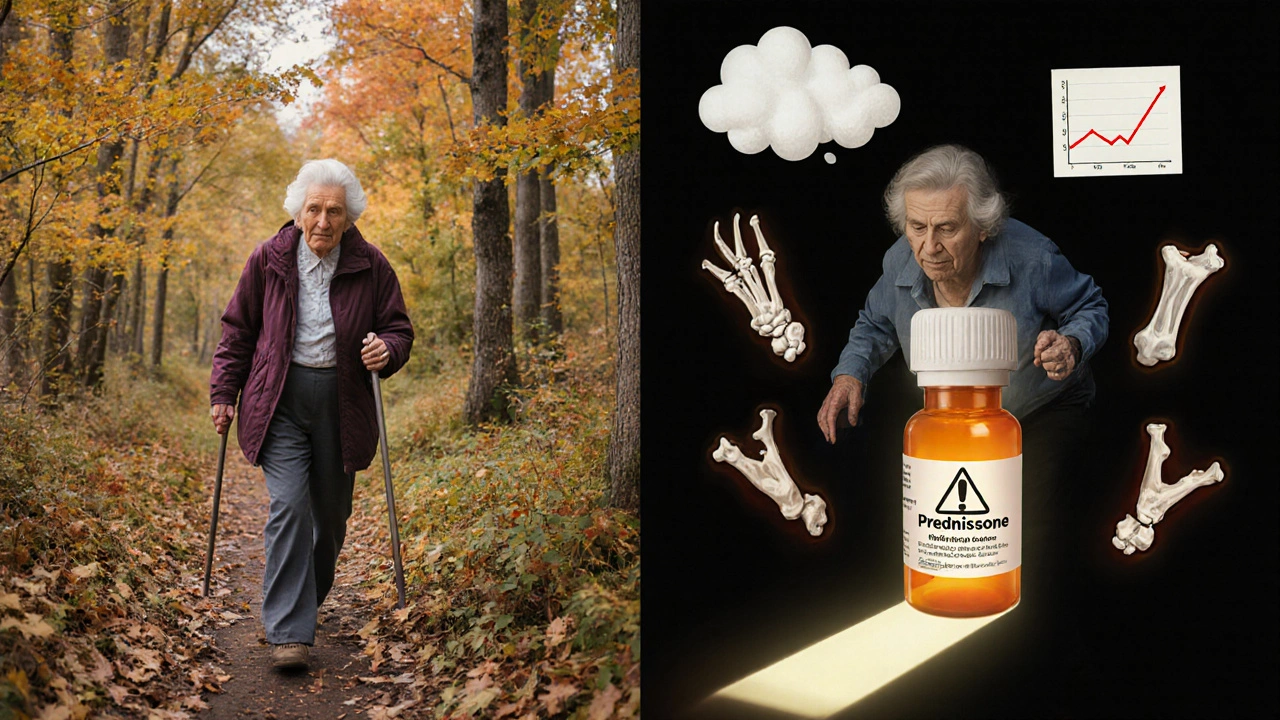
And it’s not just about big, scary events. Blood sugar spikes happen in 41% of users-even if they’ve never had diabetes before. Many end up on insulin or metformin after just a few weeks. For older adults, the bone loss starts fast: 3% to 5% per month in the first six months. That’s faster than osteoporosis from aging. And it doesn’t always reverse when you stop taking the drug.
Who’s Getting Prescribed Too Much?
Here’s the uncomfortable truth: nearly half of all corticosteroid prescriptions in the U.S. are for conditions where they don’t help. The CDC and American College of Family Physicians report that 22 million prescriptions are written every year. Of those, 47% are for things like the common cold, bronchitis, or nonspecific back pain-illnesses where the body’s natural immune response is the best healer.
Dr. Robert Simon of NYU Langone called this a "quality-of-care failure." Why? Because the risks outweigh any tiny benefit. A 2021 study found steroids provided no meaningful improvement for acute bronchitis, yet they were prescribed in 22% of cases anyway. The cost? Over $1.2 billion a year in preventable hospitalizations for things like infections, fractures, and diabetic emergencies.
Older adults are hit hardest. People over 65 get corticosteroid prescriptions 2.3 times more often than those under 45. And in rural areas, inappropriate prescriptions are 1.7 times more common than in cities. Why? Limited access to specialists, pressure to "do something," and lack of follow-up monitoring.
How to Use Them Safely-If You Must
If your doctor recommends corticosteroids, ask these three questions:
- Is this condition on the list of FDA-approved uses? (Think: lupus, rheumatoid arthritis, severe asthma, some skin conditions.)
- What’s the shortest possible course? (Most guidelines say: 7 to 14 days max for acute issues.)
- Will I get monitored? (Blood sugar, bone density, eye exams?)
For anything longer than two weeks, you need a taper. Stopping cold turkey can trigger adrenal crisis-your body forgets how to make cortisol on its own. That’s life-threatening. The American College of Physicians says every course over 14 days must be slowly reduced over at least a week.
If you’re on more than 7.5mg of prednisone daily for over three months, you should have:
- A DEXA scan to check bone density
- Monthly blood sugar tests
- Calcium and vitamin D supplements
- Annual bone-strengthening injections like zoledronic acid
Yet, only 42% of primary care doctors follow these basic monitoring rules, according to a 2022 JAMA audit. That means more than half of long-term users are flying blind.

What’s Changing in 2025?
There’s new hope. In December 2023, the FDA approved fosdagrocorat, the first selective glucocorticoid receptor modulator (SGRM). Unlike traditional steroids, it targets inflammation without triggering as many metabolic side effects. In trials, it cut hyperglycemia risk by 63% compared to prednisone at the same dose.
Health systems are also waking up. Since January 2024, Medicare Advantage plans require pre-authorization for any steroid course longer than 10 days. Electronic health records now flag inappropriate prescriptions in 87% of U.S. hospitals-and those systems have cut misuse by 31%.
But the biggest shift is in mindset. The European League Against Rheumatism now says: "No patient should be on systemic steroids beyond six months without trying at least two advanced biologics first." That’s a huge change. Steroids are no longer seen as a long-term solution-they’re a bridge, not a home.
The Bottom Line
Corticosteroids aren’t evil. They’re tools. Powerful, dangerous, and irreplaceable in emergencies. But they’re not meant to be a daily pill for years. The relief they offer is real-but so are the costs. Weight gain, broken bones, diabetes, infections. These aren’t rare side effects. They’re predictable outcomes.
If you’re on steroids, know this: your body is under siege from the inside. The inflammation you’re fighting is being replaced by new threats. That’s why monitoring isn’t optional-it’s survival.
Ask for alternatives. Push for a plan to get off. And if you’re prescribed steroids for a cold or a sore back? Say no. The risk isn’t worth it.
For acute flare-ups? Use them fast, use them hard, and get off them fast. That’s the only way to keep the benefits without paying the price.
Are corticosteroids safe for short-term use?
Short-term use (under 14 days) is generally safe for most people when used appropriately. But even brief courses carry risks: increased chances of infection, blood clots, high blood sugar, and bone fractures. These risks rise sharply after 7 days. Always take the lowest effective dose and never stop abruptly-tapering is required after more than a week.
How long does it take for corticosteroid side effects to appear?
Some side effects show up within days. Weight gain, insomnia, and mood changes often begin in the first week. Moon face and fluid retention can appear in 10 to 14 days. Blood sugar spikes happen quickly, especially in those with prediabetes. Serious risks like bone loss and infections build over time but can start as early as 3 to 4 weeks into treatment.
Can you stop taking corticosteroids cold turkey?
Never stop abruptly if you’ve been taking corticosteroids for more than 7 days. Your adrenal glands shut down and stop making cortisol naturally. Stopping suddenly can cause adrenal crisis-low blood pressure, vomiting, confusion, and even death. Always taper under medical supervision. For courses longer than 14 days, tapering should take at least 7 days, sometimes weeks.
Do steroid injections cause less harm than pills?
Injections, like cortisone shots into joints, deliver the drug locally and reduce systemic exposure. That means fewer side effects than pills. But they’re not risk-free. Repeated joint injections can damage cartilage. Systemic absorption still happens, especially with high doses. And if you get multiple injections over months, you’re still at risk for bone loss, high blood sugar, and infection. They’re safer than daily pills-but not safe forever.
Are there alternatives to corticosteroids for inflammation?
Yes. For chronic conditions like rheumatoid arthritis or lupus, disease-modifying drugs (DMARDs) and biologics are preferred for long-term use. They take longer to work-weeks to months-but don’t cause the same metabolic damage. For acute flare-ups, NSAIDs can help with pain and swelling, though they’re less effective than steroids. Newer drugs like fosdagrocorat, approved in 2023, offer steroid-like relief with fewer side effects. Always discuss alternatives with your doctor before starting steroids.
Why are corticosteroids still prescribed for colds and bronchitis?
They shouldn’t be. Multiple studies show no benefit for viral infections like colds or acute bronchitis. But doctors still prescribe them-sometimes because patients demand relief, or because it’s easier than explaining why rest and hydration are better. Up to 47% of prescriptions are for these inappropriate uses. It’s a major quality-of-care issue. The CDC and major medical groups now warn against it. If you’re prescribed steroids for a cold, ask why-and get a second opinion.
reshmi mahi
November 28, 2025 AT 04:21shawn monroe
November 29, 2025 AT 02:16Frances Melendez
November 29, 2025 AT 07:19Kaleigh Scroger
November 29, 2025 AT 14:23Gayle Jenkins
November 29, 2025 AT 16:15Rebecca Price
December 1, 2025 AT 14:07Allison Turner
December 2, 2025 AT 10:00Cecily Bogsprocket
December 4, 2025 AT 06:09Elizabeth Choi
December 4, 2025 AT 19:28marie HUREL
December 6, 2025 AT 03:58Savakrit Singh
December 7, 2025 AT 16:40sharicka holloway
December 9, 2025 AT 07:17Miriam Lohrum
December 9, 2025 AT 17:26Edward Batchelder
December 10, 2025 AT 01:41