

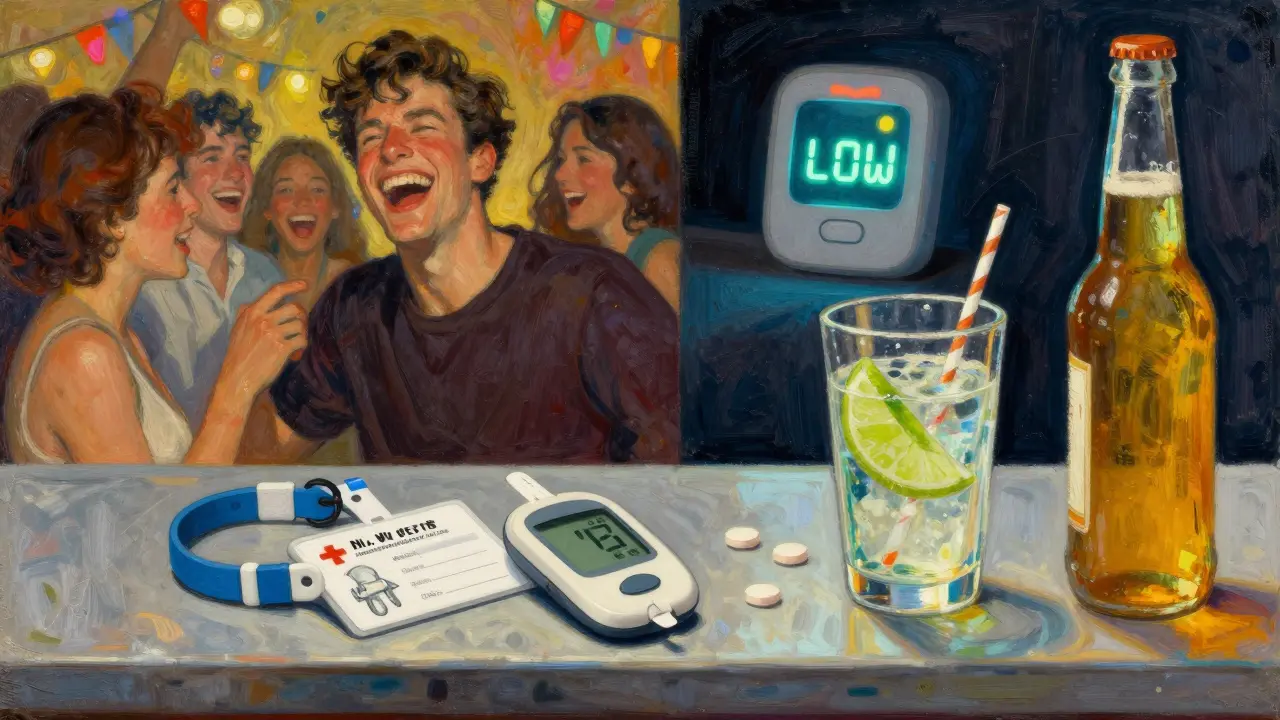
Drinking alcohol with diabetes isn’t as simple as having a beer or a glass of wine. For many people, it’s a minefield of hidden risks-especially when blood sugar drops without warning. The problem isn’t the alcohol itself, but how it interferes with your body’s ability to keep glucose stable. Even one drink can trigger a dangerous drop in blood sugar that lasts for hours, sometimes long after you’ve gone to bed. And because the symptoms of low blood sugar-dizziness, confusion, sweating-look just like being drunk, others might not realize you’re in medical danger.
How Alcohol Throws Blood Sugar Out of Balance
Your liver is the main player here. Normally, it releases glucose into your bloodstream when your levels drop. But when alcohol is in your system, your liver prioritizes breaking it down. That means it stops releasing glucose. For someone on insulin or medications like sulfonylureas, this can cause blood sugar to plummet-sometimes to life-threatening levels.
The effect isn’t immediate. You might feel fine while drinking, especially if you’re having a sugary cocktail. But 3 to 8 hours later, when your liver is still busy processing alcohol, your blood sugar can crash. That’s why most hypoglycemic episodes happen at night, when you’re asleep and not checking your levels. A 2023 study from Mount Sinai found that alcohol can block glucose production for up to 12 hours after your last drink.
And here’s the twist: some drinks spike your blood sugar first. Sweet wines, sugary mixers, and craft beers can cause a quick rise, making you think you’re safe. But then comes the fall-hard and fast. This rollercoaster is why so many people with diabetes say alcohol makes their numbers unpredictable.
What Counts as a Safe Drink?
Not all drinks are created equal. The American Diabetes Association defines one standard drink as:
- 12 ounces of regular beer (5% alcohol)
- 5 ounces of wine (12% alcohol)
- 1.5 ounces of hard liquor (80 proof, 40% alcohol)
Stick to these amounts. And here’s what to choose:
- Safest options: Dry red or white wine, light beer, hard seltzers (under 5g carbs), and spirits mixed with soda water or diet tonic.
- Avoid: Sweet wines, liqueurs, margaritas, piña coladas, and regular sodas as mixers. A single margarita can pack 25g of carbs-that’s like drinking a candy bar.
Watch out for “diabetic” beers or ciders. They’re marketed as safe, but they often have higher alcohol content-sometimes 2-3% more than regular versions. More alcohol means more risk of hypoglycemia, not less.
When to Say No to Alcohol
There are times when drinking isn’t just risky-it’s dangerous. Don’t drink if:
- Your blood sugar is below 100 mg/dL or above 300 mg/dL
- You’ve exercised in the last 2 hours
- You’re feeling unwell or have an infection
- You have diabetic neuropathy, pancreatitis, or liver disease
- You’re pregnant
People with nerve damage from diabetes (neuropathy) should avoid alcohol entirely. It worsens tingling, burning, and pain in the feet and hands. And if you’re on metformin, heavy drinking can lead to lactic acidosis-a rare but serious condition. Alcohol also increases the risk of low blood sugar by 50% if you’re taking sulfonylureas like glipizide or glyburide.

How to Drink Safely: The Step-by-Step Plan
If you choose to drink, follow these steps every single time:
- Check your blood sugar before drinking. Make sure it’s between 100 and 140 mg/dL. If it’s lower, eat a snack with 15-30g of carbs first.
- Always drink with food. Never drink on an empty stomach. Eat a meal that includes protein and complex carbs-like chicken with brown rice or a sandwich with whole-grain bread.
- Drink slowly. Space your drinks out over the evening. Don’t chug. Aim for no more than one drink per hour.
- Use sugar-free mixers. Soda water, diet tonic, or plain sparkling water are your best friends. Avoid juice, regular soda, or syrupy cocktails.
- Check your blood sugar every 2 hours while drinking. And check again before bed-even if you feel fine. If your level is below 100 mg/dL, eat a small snack with carbs and protein (like peanut butter on toast).
- Wear medical ID. 92% of endocrinologists recommend it. If you pass out from low blood sugar, someone needs to know you have diabetes.
- Carry fast-acting glucose. Keep glucose tablets or gel in your pocket, purse, or car. 15g of carbs can save your life.
What the Community Is Saying
Online forums like Reddit’s r/diabetes and Breakthrough T1D are full of real stories. One user wrote: “I had a few hard seltzers at a party. Checked my sugar before, it was 120. Didn’t check again. Woke up at 4 AM with a heart racing, drenched in sweat. My CGM showed 48.”
Those who stick to the rules report better outcomes. Users who always eat before drinking, use sugar-free mixers, and check their levels before bed say they have 82% fewer low blood sugar events. Hard seltzers get 4.5 out of 5 stars in user reviews. Margaritas? 1.8 out of 5.
The biggest warning? “Alcohol masks hypo symptoms.” People don’t feel shaky or sweaty-they just feel buzzed. That’s why so many emergencies happen at night. If you live alone, tell someone you’re drinking. Ask them to check on you later.
New Tech Is Helping
Technology is stepping in. The Dexcom G7 continuous glucose monitor now includes an Alcohol-Diabetes Safety Algorithm. It gives real-time alerts when alcohol is likely causing your blood sugar to drop. In trials, it cut severe hypoglycemia events by 37%.
The ADA is also moving toward personalized guidelines. Instead of saying “one drink per day,” they’re starting to use your own CGM data to figure out how your body reacts. If your sugar crashes every time you have wine, the system will warn you before you even take a sip.
At Joslin Diabetes Center, researchers are testing time-restricted drinking windows: only allowing alcohol during a 2-hour window after a meal. Early results show this reduces hypoglycemia risk by 28% compared to the old advice.
Is Any Alcohol Good for You?
Some studies say moderate red wine might improve insulin sensitivity by 12%. Others suggest light drinkers with type 2 diabetes have a 15-20% lower risk of heart disease. But here’s the catch: the American Diabetes Association doesn’t recommend starting to drink for health reasons. The risks outweigh the benefits for most people.
If you don’t drink, don’t start. If you do drink, keep it minimal. There’s no safe amount that’s also beneficial enough to justify the danger.
Final Reality Check
One in four people with type 1 diabetes and one in seven with type 2 will have at least one alcohol-related low blood sugar emergency each year. That’s not rare. That’s common. And most of these episodes are preventable.
Alcohol doesn’t have to be off-limits-but it does require discipline. It’s not about giving up social life. It’s about protecting your health. You can still enjoy a drink. Just make sure you’re not gambling with your blood sugar.
Check your levels. Eat with it. Drink slowly. Know your limits. Carry glucose. Tell someone. That’s the whole guide.
steve rumsford
January 7, 2026 AT 16:38Been there. Had a few hard seltzers at a BBQ last summer, checked my sugar before - 115. Felt fine. Woke up at 3 AM with my heart pounding like a drum. CGM said 42. No idea how I didn’t die in my sleep. Now I always eat before and check before bed. No exceptions.
Andrew N
January 8, 2026 AT 17:09Actually the ADA guidelines are outdated. The 1.5 oz liquor standard assumes 40% ABV but many craft spirits are 45-50%. That’s 1.7 to 1.9 oz equivalent. Also, the study from Mount Sinai was observational - correlation doesn’t equal causation. You need RCTs to prove alcohol blocks gluconeogenesis long-term.
Aparna karwande
January 9, 2026 AT 02:02Why do Americans treat alcohol like a medical condition? In India, we drink wine with dinner, no panic, no CGMs, no snacks. Diabetes is a lifestyle, not a prison sentence. You don’t need to check your sugar every two hours - just eat real food, avoid sugar, and stop drinking like it’s a competition. Your body isn’t broken, your habits are.
Jessie Ann Lambrecht
January 9, 2026 AT 11:32THIS. So many people think they have to give up everything - but you don’t. I switched to dry sparkling wine with soda water and lime, always eat protein with it, and check before bed. My lows dropped from 3-4 a month to 1 every 3 months. It’s not about restriction, it’s about strategy. And yes, carry glucose. I keep a pack in my purse, my car, my work desk. It’s not paranoia - it’s preparedness.
Vince Nairn
January 11, 2026 AT 11:30So if I drink a beer and eat a steak, I’m basically doing a science experiment on myself? Cool. I’ll just call it ‘alcohol and diabetes: the slow-mo tragedy’ and enjoy the ride. Also, why does everyone act like hard seltzers are magic? They’re just fizzy water with a side of false security
Ayodeji Williams
January 12, 2026 AT 20:21bro i tried drinking once with my sugar at 120 and i woke up at 4am sweating like i was in a sauna and my hand was shaking like i had the tremors 😵💫💀 i thought i was dying but it was just my liver saying ‘nah fam, i’m busy’ 🤡 now i just drink tea and vibe
Kyle King
January 14, 2026 AT 19:24Let’s be real - the ADA is just following Big Pharma’s playbook. They don’t want you to know that alcohol actually helps insulin sensitivity. The ‘hypoglycemia risk’ is exaggerated to sell more CGMs and glucose gel. I’ve been drinking wine for 15 years with type 2 and never had a low. They’re lying to keep you scared and buying their gadgets.
Kamlesh Chauhan
January 15, 2026 AT 18:30why do we even need all this info its just alcohol drink if you want to die slow or dont drink its not that hard
Rachel Steward
January 17, 2026 AT 15:18The entire framework here assumes that blood sugar is a linear, controllable variable - but it’s not. It’s a dynamic system influenced by circadian rhythm, stress hormones, gut microbiome, sleep quality, and even barometric pressure. The ‘one drink per hour’ rule ignores the fact that your liver’s metabolic rate changes by 30% depending on when you eat and how much cortisol you’re producing. We’re treating a complex biological dance like a recipe from a magazine. And the ‘safety algorithm’ on Dexcom? It’s trained on data from mostly white, middle-class Americans. What about people with different genetics, diets, or insulin resistance profiles? The whole system is built on assumptions, not biology.
Adam Gainski
January 17, 2026 AT 15:19Great breakdown. I’d add one thing - if you’re on metformin, don’t just avoid heavy drinking, avoid binge drinking entirely. Lactic acidosis is rare, but it’s real. I had a friend who drank 4 cocktails after a long hike and ended up in the ER. He’s fine now, but it was terrifying. Also, if you’re using insulin, always set an alarm to check your sugar at 2 AM if you’ve had more than one drink. It’s not a hassle - it’s insurance.